自分の現在地を選択してください:

場所

Digital Twins, Simulation, and Robot Offline Programming: Key Questions and Answers

Digital twins, simulation, and robot offline programming help manufacturers design, test, and optimize production systems in a virtual environment before they are implemented on the shop floor. In this FAQ, we answer some of the most common questions about digital twins, simulation, and modern engineering processes in manufacturing.


What Is a Digital Twin?

A digital twin is a virtual representation of a real-world system, such as a robot cell, machine, production line, or even an entire factory.

Unlike a standalone 3D model, a digital twin enables manufacturers to simulate, analyze, and optimize processes in a virtual environment. This makes it possible to test, validate, and improve production systems before they are deployed.

Why Are Digital Twins Becoming More Important in Automation?

Manufacturing systems are becoming increasingly complex. Robots, autonomous mobile robots (AMRs), AGVs, software, control systems, and material flows are more interconnected than ever. 

Digital twins help manufacturers: 

  • Identify potential risks earlier 
  • Speed up commissioning 
  • Improve production efficiency 
  • Reduce uncertainty around investments 
  • Make decisions based on virtual testing and validation 

As a result, analysts expect continued growth in the digital twin market in the years ahead. 

As KUKA Group CEO Christoph Schell notes: "Simulation is no longer an optional engineering tool – it is a strategic capability." This shift reflects the growing role of simulation and digital twins in helping manufacturers manage complexity and make better decisions throughout the lifecycle of a production system. 

Visual Components software interface for factory simulation and digital twin modelling, showing production layout planning and component configuration tools
Factory layout & simulation interface: Design and optimise complete production systems in a virtual environment before implementation.

What Role Do Digital Twins Play in Automation 2.0? 

In the context of Automation 2.0, automation systems are increasingly viewed as connected ecosystems rather than collections of individual machines, robots, or software tools. The focus shifts to the entire lifecycle of a production system. 

Digital twins support this approach by providing a virtual representation of production systems that can be used from the earliest planning stages onward. Simulation, offline programming, and virtual commissioning become part of a continuous digital workflow. 

By helping manufacturers manage complexity and connect engineering, automation, and continuous optimization, digital twins support key principles of Automation 2.0.

What Is Offline Robot Programming?

Offline Programming (OLP) refers to creating and optimizing robot programs in a virtual environment.

Instead of programming robots directly on the shop floor, robot paths and process sequences are first simulated and validated virtually. The programs are then transferred to the physical system.

This approach can help reduce production interruptions and streamline project execution.

Graphics showing a virtual commissioning workflow in Visual Components, integrating conveyor system simulation with PLC controls for automated production validation
Test and validate control logic and material flow through robot offline programming.

What Is Virtual Commissioning?

Virtual commissioning involves testing robot programs, PLCs, and production processes before physical commissioning begins.

This allows manufacturers to verify how system components interact within a virtual environment.

Virtual commissioning can help:

  • Detect issues earlier
  • Shorten project timelines
  • Reduce startup risks
  • Bring production systems online more quickly

Solutions

What Software Solutions Are Available for Robot Simulation, Offline Programming, and Virtual Commissioning?

iiQWorks is KUKA’s engineering suite for digital manufacturing. Combined with the iiQKA.OS2 operating system, it provides the foundation for end-to-end digital engineering, covering everything from configuration and the creation and use of digital twins to robot simulation, offline programming, and virtual commissioning. A seamless flow of data across all engineering stages simplifies planning, reduces potential sources of error, and accelerates the implementation of automation projects.

Robot simulation and offline programming environment showing an industrial robot performing automotive body manufacturing operations in a virtual cell
Simulate robot motion, analyse cycle times, and prevent collisions with accurate digital twins of robotic systems.

A key component of the suite is iiQWorks.Sim. The simulation software enables the virtual planning, simulation, and optimization of robotic applications using digital twins. This allows processes to be tested, validated, and optimized before physical commissioning, increasing planning reliability and reducing investment risk.
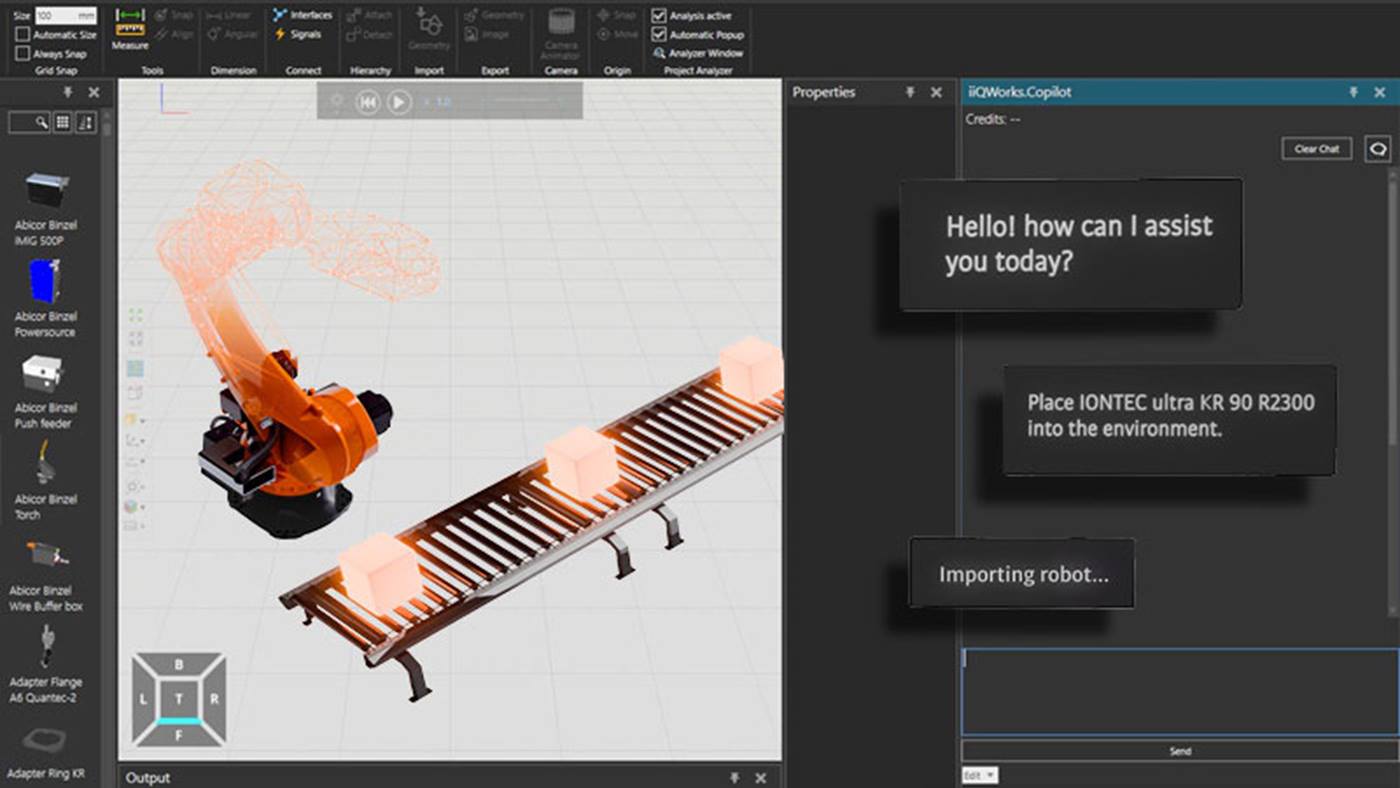
The suite is further enhanced by the iiQWorks Copilot, which supports engineering teams with AI-powered assistance. Engineers can find information more quickly and complete engineering tasks more efficiently. In addition, the iiQWorks AppBuilder enables users to create custom applications for specific automation requirements and flexibly extend existing workflows.

Companies benefit from an integrated engineering platform, seamless data flow between planning, simulation, and production, shorter project timelines, and faster, more reliable commissioning. In this way, iiQWorks helps manufacturers move toward a more efficient, transparent, and cost-effective digital production environment.


Key benefits at a glance:

  • End-to-end digital engineering on a single platform
  • Seamless data flow between planning, simulation, and production
  • Faster project execution and commissioning
  • Greater planning reliability and investment confidence through digital twins
  • AI-powered support for more efficient engineering processes
  • Flexible creation and extension of applications with AppBuilder
  • Fewer errors, reduced engineering effort, and higher productivity through integrated engineering workflows

Visual Components, part of the KUKA Group, offers software solutions for:

  • 3D manufacturing simulation
  • Factory layout planning
  • Robot simulation
  • Offline programming
  • Virtual commissioning
  • Production optimization
  • These tools help manufacturers design, test, and optimize production systems virtually before implementing changes on the shop floor

Contact us

If you're ready to explore how simulation and virtual commissioning can bring new life to your operations. 

What Is New in Visual Components 5.1? 

Visual Components 5.1 was developed to address the growing complexity of modern manufacturing environments.  

According to Mika Anttila, CTO of Visual Components:  

“Manufacturers are under increasing pressure to deploy more autonomous and flexible production systems, but the complexity of those environments is growing faster than many existing tools can handle. Our customers need to validate how hundreds of moving resources, robots, vehicles, products, and people interact before anything is installed on the factory floor. With 5.1, we’re giving them a much more scalable and realistic way to do that.” 

Key enhancements include: 

  • Simulation of hundreds of AMRs and AGVs within a single environment 
  • Enhanced physics simulation 
  • Dynamic collision avoidance 
  • Up to 10x higher performance 
  • Expanded virtual commissioning capabilities 
  • Improved offline programming functionality
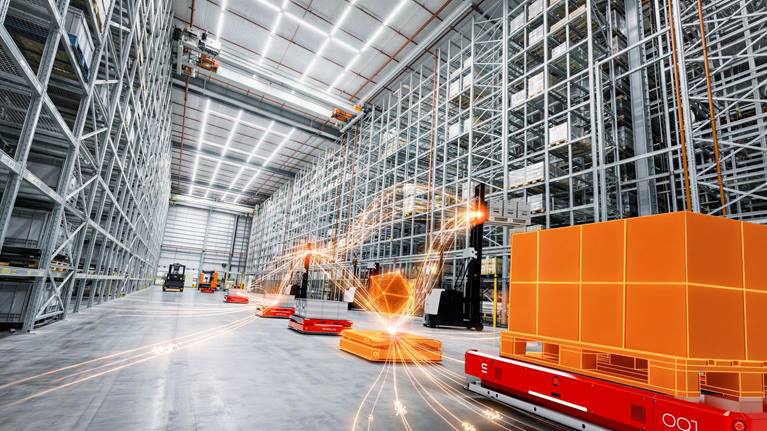
Graphics with the text "Visual Components - Introducing 5.1" Showing a factory simulation software with autonomous mobile robots (AMRs), AGVs, and production resources operating in a digital twin environment
Validate complex, dynamic production environments with Visual Components 5.1 — before deployment.

As Mikko Urho, CEO of Visual Components, explains:

“Manufacturing environments are becoming increasingly dynamic. Mobile robots, automation, and connected production systems create new opportunities, but also new complexity. Before making investments or changes on the factory floor, manufacturers need confidence that their plans will work in practice. Visual Components 5.1 allows manufacturers to validate complex operations earlier in the planning process, reducing risk before deployment.”


The Future of Digital Twins in Manufacturing

Automation is becoming increasingly software-defined. As a result, manufacturers are moving more planning, engineering, and optimization activities into the digital world.

The more complex production systems become, the more important it becomes to understand, validate, and optimize them before implementation. As a result, digital twins are evolving from an engineering tool into a strategic foundation for modern manufacturing.