Escolha a sua localização:

Localização

Cobots vs. Industrial Robots

Differences, applications, programming, cost-effectiveness, and guidance on choosing between cobots and industrial robots.


Which robot is right for your application?

Choosing between a cobot and an industrial robot depends on your manufacturing needs, production goals, and automation strategy. Cobots are designed for flexible automation, easy deployment, and space-constrained environments, while industrial robots excel in high-speed, high-payload, and high-volume production. Key decision factors include payload capacity, cycle times, safety requirements, production output, scalability, and long-term automation objectives.

Cobot or industrial robot – what's the difference?

Both cobots and traditional industrial robots automate manufacturing processes. The key difference lies in their design and primary area of application.

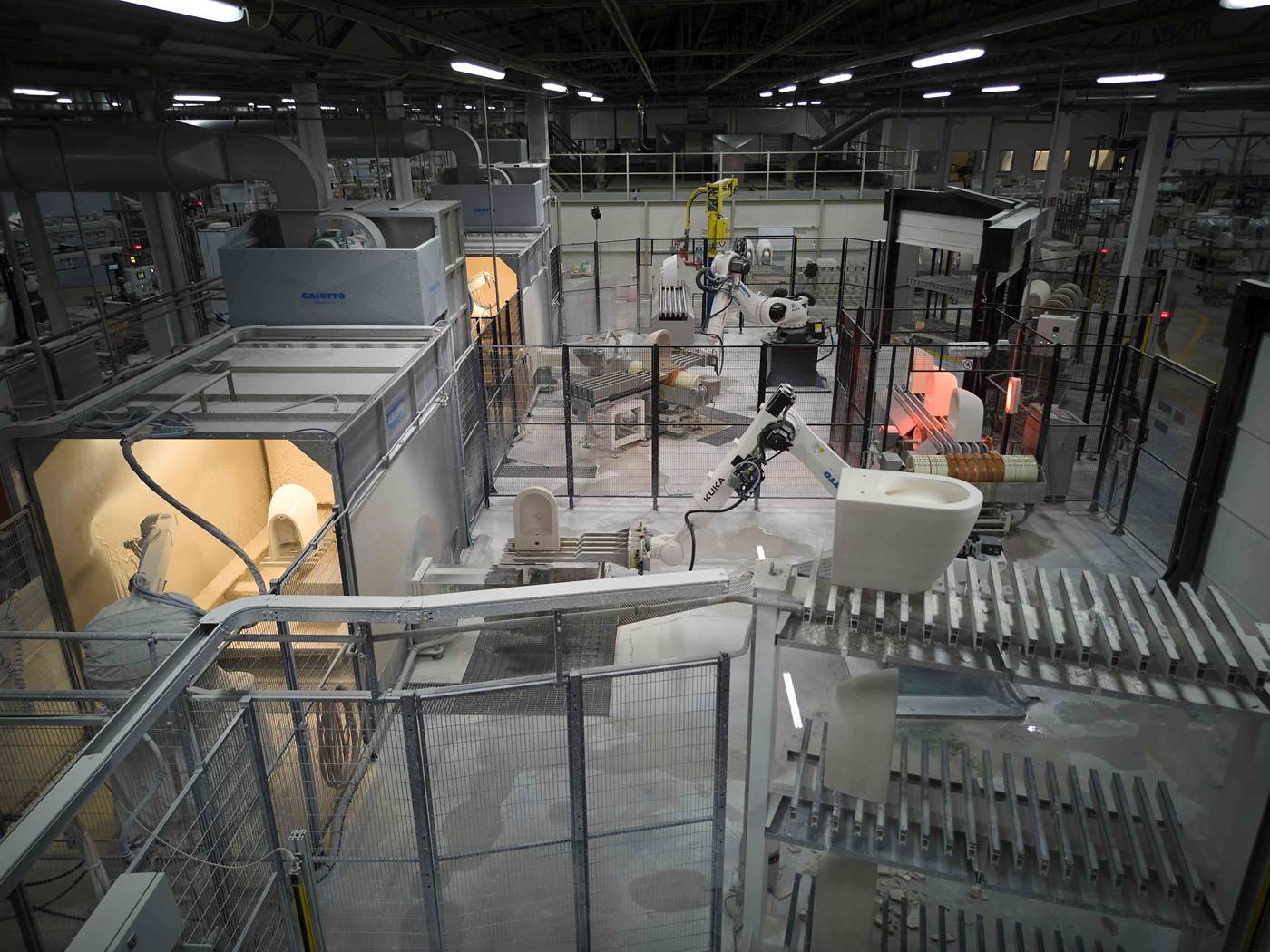
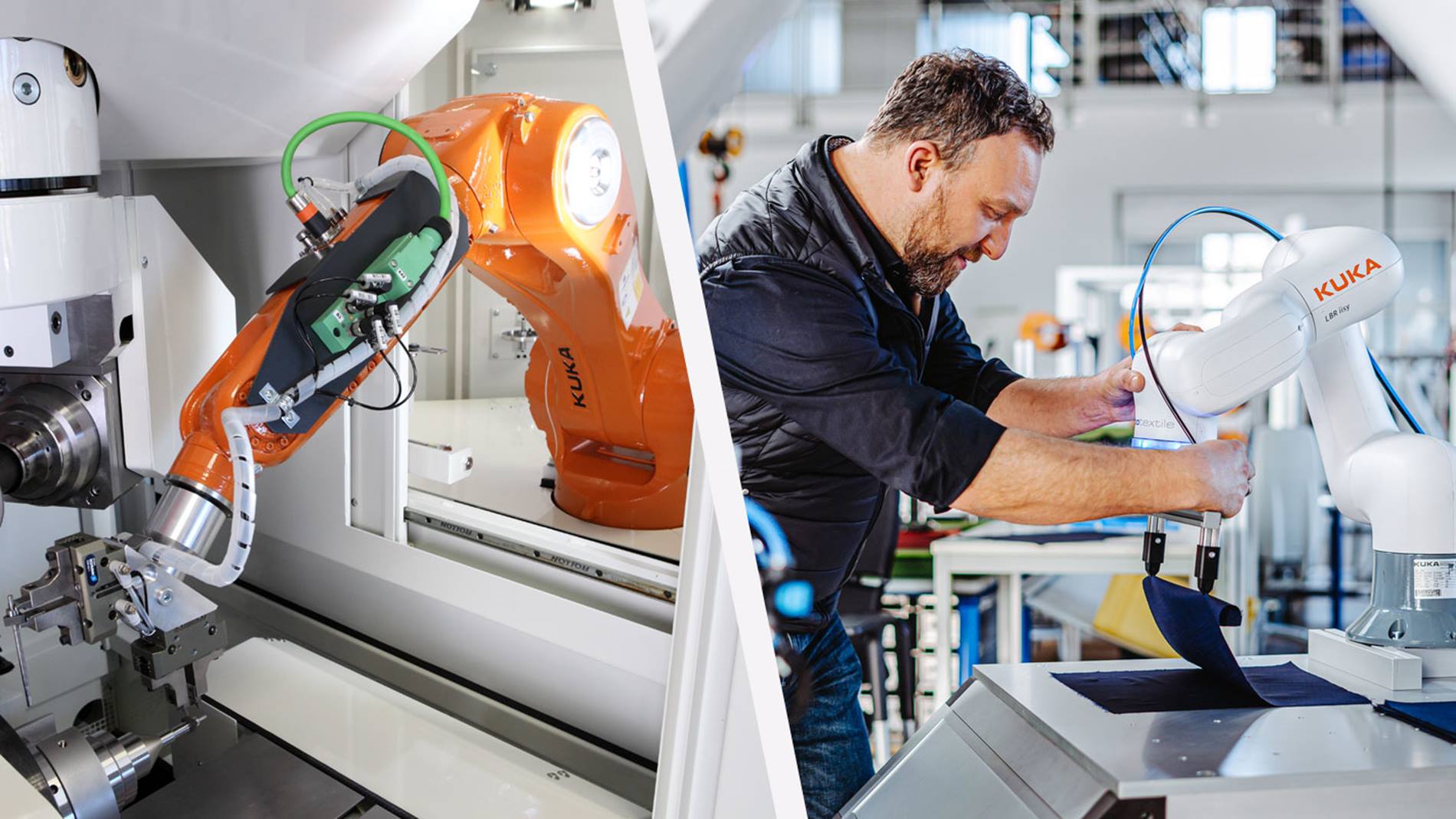
Traditional industrial robots are engineered for maximum speed, precision, and productivity. They typically operate in automated robot cells and handle demanding manufacturing and material-handling tasks that need high payloads and fast cycle times.

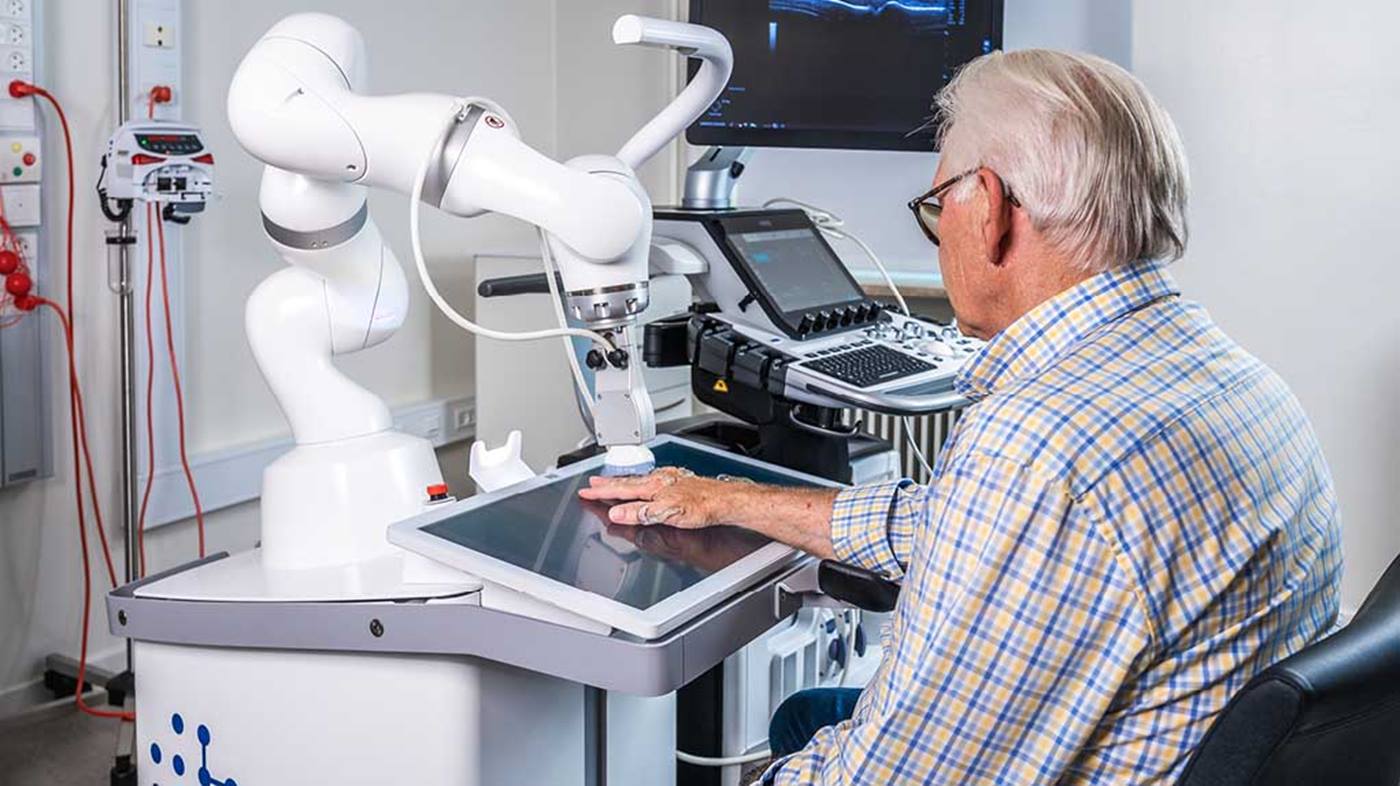
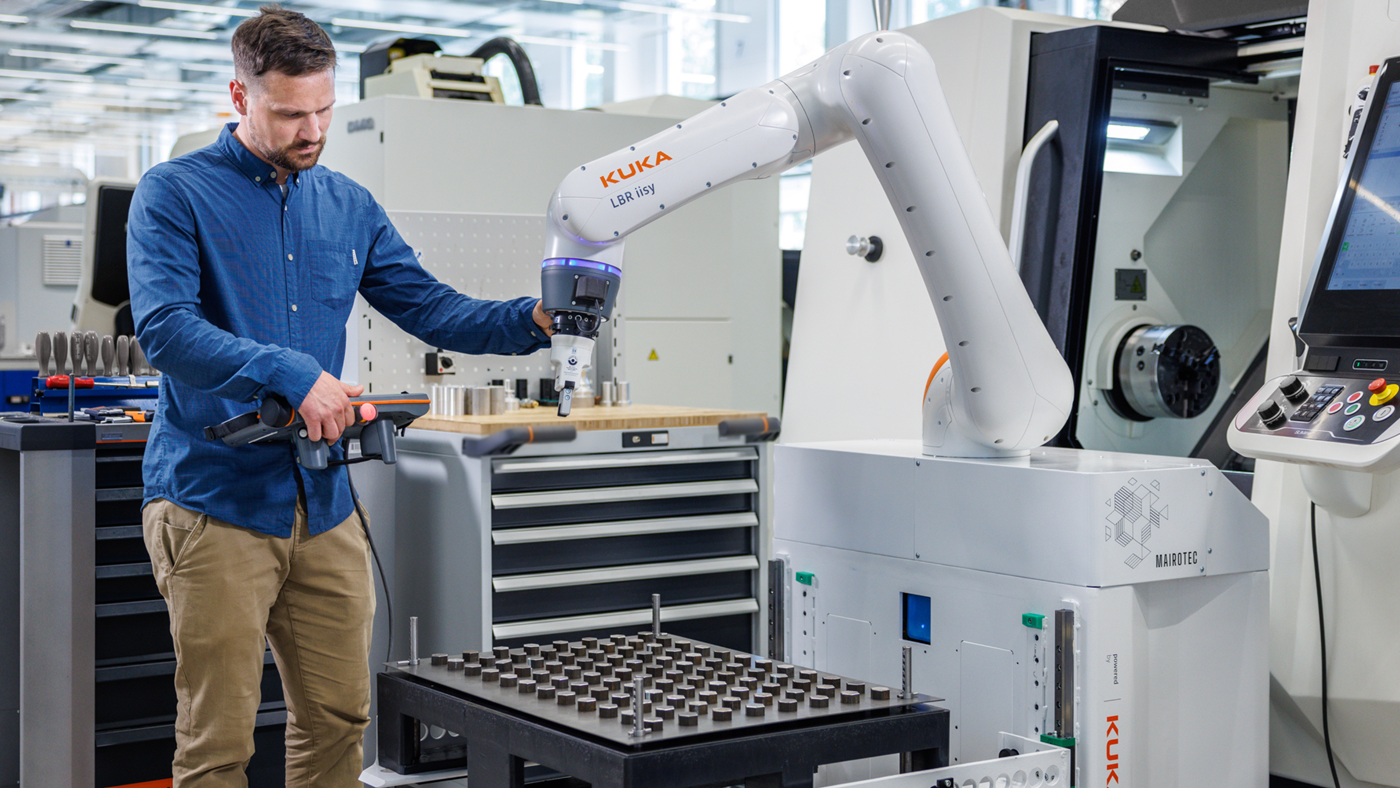
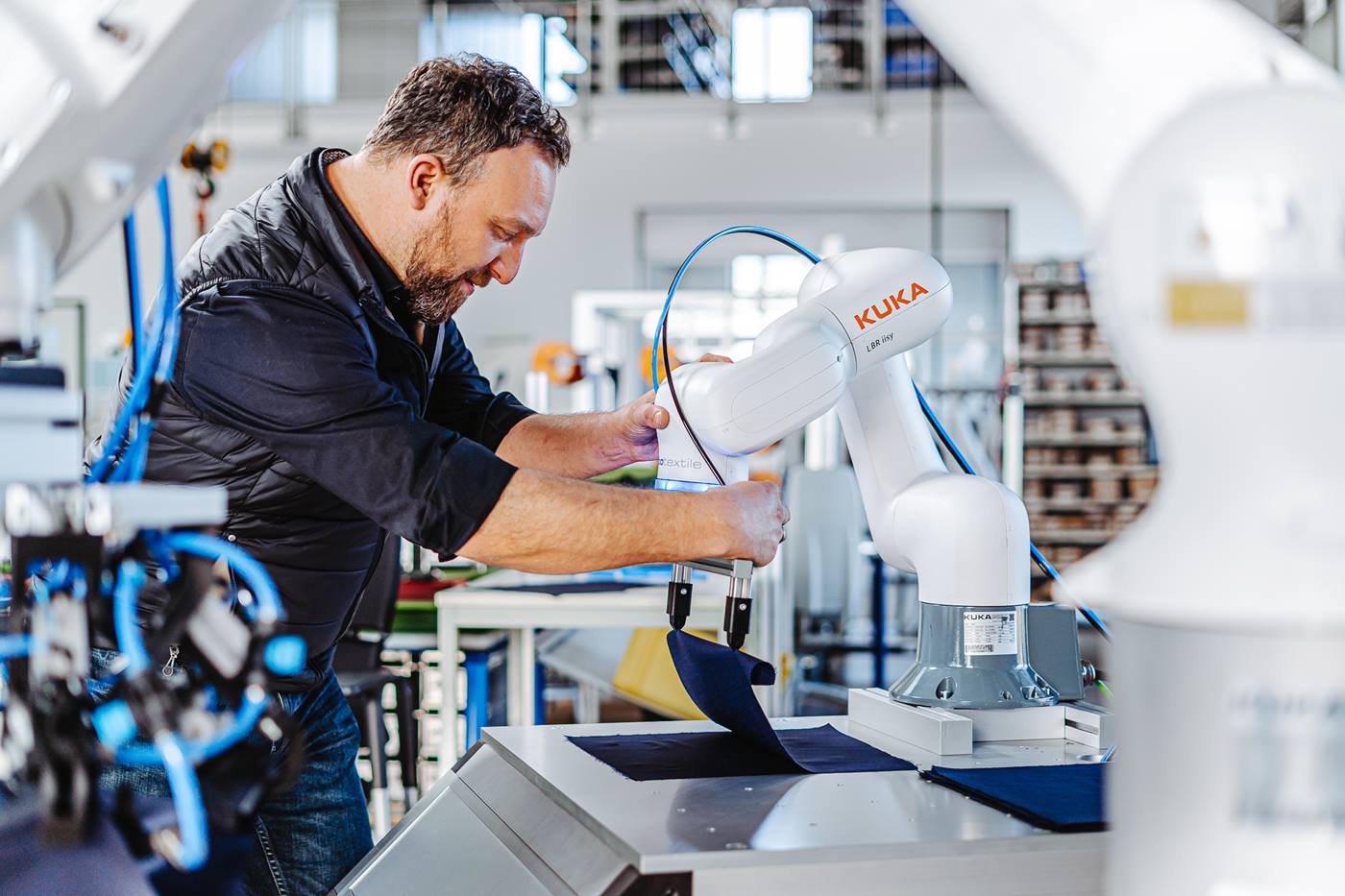
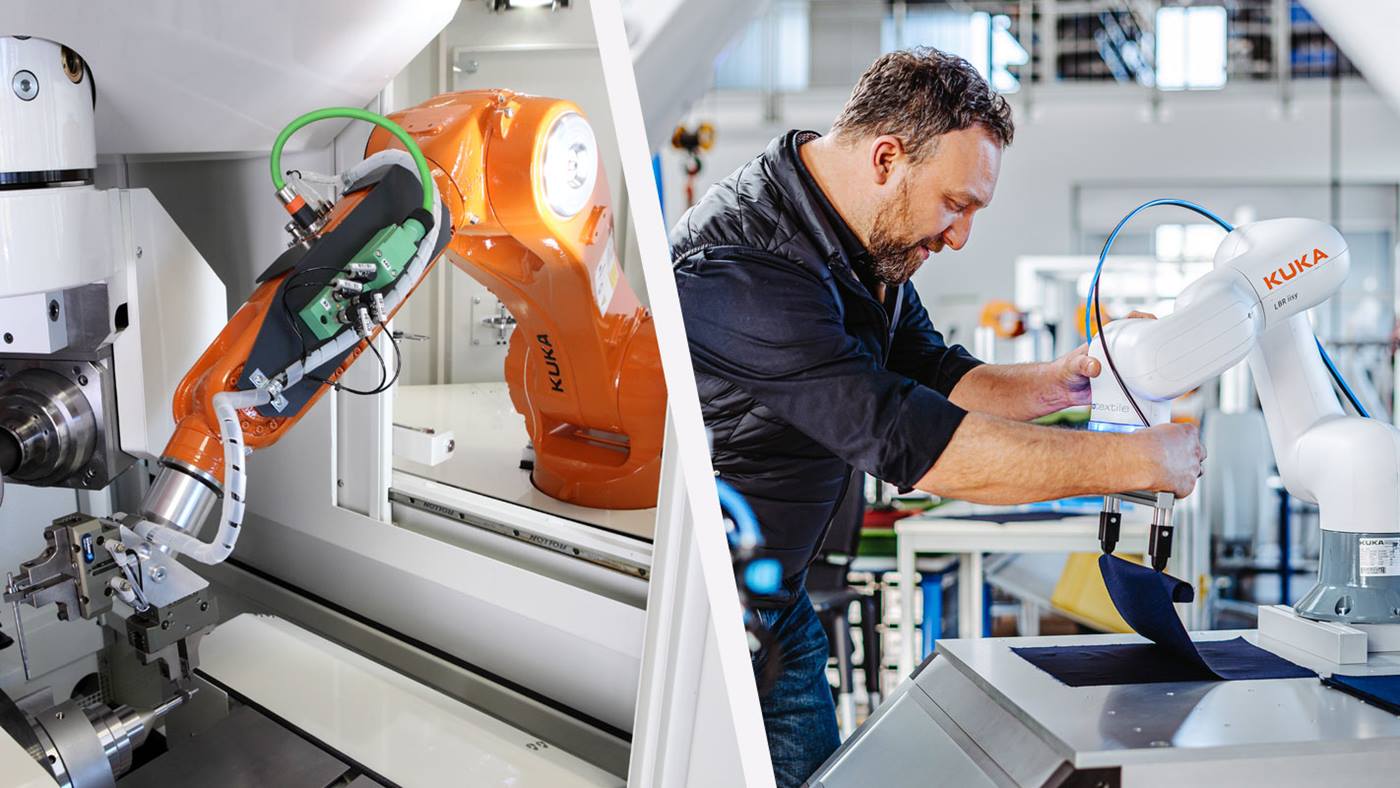
Cobots (collaborative robots) are designed to work alongside human operators in shared workspaces. They are easy to integrate, require minimal floor space, and can be quickly adapted to changing tasks and production requirements.

Cobot or industrial robot: which delivers the better ROI?

Cobots often provide a cost-effective entry point into automation and stand out for their fast deployment and short implementation times.

Traditional industrial robots deliver the greatest economic benefits in high-volume production environments with long operating hours and maximum throughput requirements. As production volumes increase, manufacturers can take greater advantage of the speed, precision, and productivity offered by industrial robot systems.

`

What applications are best suited for cobots?

Cobots make it possible to automate tasks in areas where traditional industrial robots may be too large, complex, or costly to deploy. They are particularly well suited for flexible production environments where people remain actively involved in the process and tasks change frequently. Thanks to their easy integration, intuitive operation, and compact design, collaborative robots can be quickly deployed within existing workflows.

A cobot is the right choice if...

  • Quick deployment and ease of use are key requirements

    • Intuitive operation and programming are important.
    • Fast integration into existing production environments is required.
    • Engineering effort should be kept to a minimum.
  • Your production environment requires a high degree of flexibility.

    • Rapid changeovers between applications are essential.
    • New processes and tasks must be implemented quickly.
    • Product variants and production volumes change frequently.
  • Available floor space is limited.

    • Space-saving, compact design.
    • Can be integrated directly into existing workstations.
    • No traditional robot cell is required.

Get started with cobot automation

With KUKA’s industrial cobots and preconfigured application packages, you can automate common production tasks quickly and cost-effectively. Benefit from rapid deployment, reduced engineering effort, and a faster path to automation.

When is an industrial robot the better choice than a cobot?

Traditional industrial robots are the preferred choice for applications requiring high payloads, fast cycle times, and maximum throughput.

  • High-payload applications

    • Handling heavy parts and components
    • Supporting large grippers and tooling
    • Palletizing and moving heavy loads
  • Large work envelopes and extended reach requirements

    • Covering large work areas and extended reaches
    • Tending multiple stations with a single robot
    • Complex automated manufacturing cells
  • High-speed production and maximum throughput

    • Fast cycle times
    • High-volume production and throughput
    • Maximum equipment uptime and availability
    • Efficient 24/7 manufacturing operations
  • Advanced manufacturing and process-intensive applications

    • Arc welding
    • Resistance spot welding
    • Laser welding
    • Thick-material and multi-pass welding
    • Heavy-duty material handling

Find the right industrial robot – new or used

Whether you're looking for a new industrial robot or a certified pre-owned system, KUKA offers the right automation solution for your application. Benefit from proven KUKA quality, reliability, and long-term performance.

Cobot vs. industrial robot: Which is the better choice?

  • Cobots are best suited for flexible automation, high product variability, low-volume production, and collaborative work environments.
  • Industrial robots are the preferred solution for high-throughput manufacturing, heavy payloads, and applications requiring maximum productivity.

Cobot vs. industrial robot: Key differences at a glance

Criteria Cobot (Collaborative Robot) Industrial Robot
Human collaboration Direct human-robot collaboration possible (HRC), often without safety fencing Typically separated from workers by safety fencing or safeguarding systems
Safety Integrated safety features such as force and torque sensing for safe interaction Safety typically provided through external safeguards, scanners, and safety systems
Speed Reduced in collaborative operation Designed for maximum speed and productivity
Payload Low to medium payload capacities, depending on the model From a few kilograms to several tons
Precision High Very high
Programming Easy and intuitive, often with hand-guided teaching More complex and typically requires specialist expertise
Deployment Fast and easy, often plug-and-play oriented More extensive integration, safety engineering, and programming required
Flexibility High – ideal for changing tasks and low-volume production Best suited for stable, standardized processes
Initial investment Lower entry costs, especially attractive for small and medium-sized businesses Higher due to integration and infrastructure requirements
Productivity Lower than traditional industrial robots Optimized for maximum throughput and 24/7 operation
Typical applications Assembly, pick-and-place, and light automation Welding, heavy material handling, and high-speed manufacturing
Footprint Compact with a small footprint Larger footprint including safety zones
Operating model Humans and robots work side by side Fully automated, enclosed production processes

Need help choosing between a cobot and an industrial robot?

Our robotics experts help you choose the right solution for your application based on payload, reach, cycle times, safety requirements, footprint, and return on investment.

Are cobots and industrial robots programmed differently?

No. As a manufacturer of both cobots and industrial robots, KUKA provides a common software platform for both robot types.

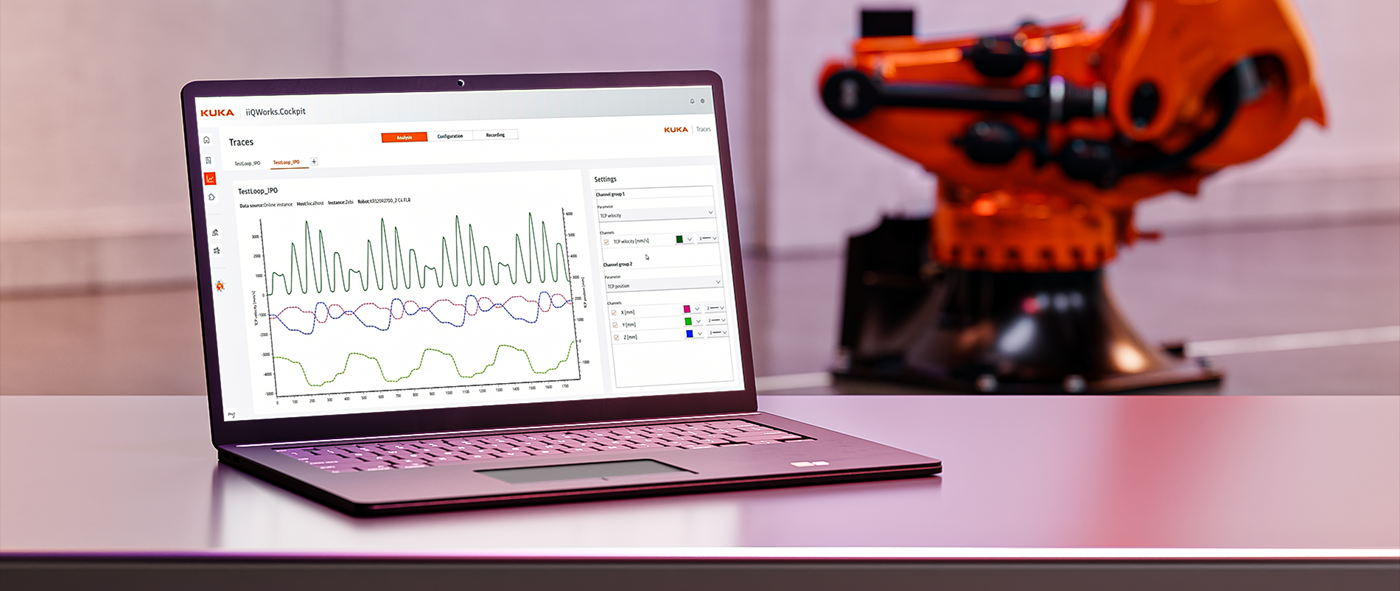
All new KUKA robot generations are based on iiQKA.OS2. This enables companies to use the same operating concepts, engineering tools, and workflows across different robot types. Applications can be standardized more easily, scaled efficiently, and transferred to additional robot systems.

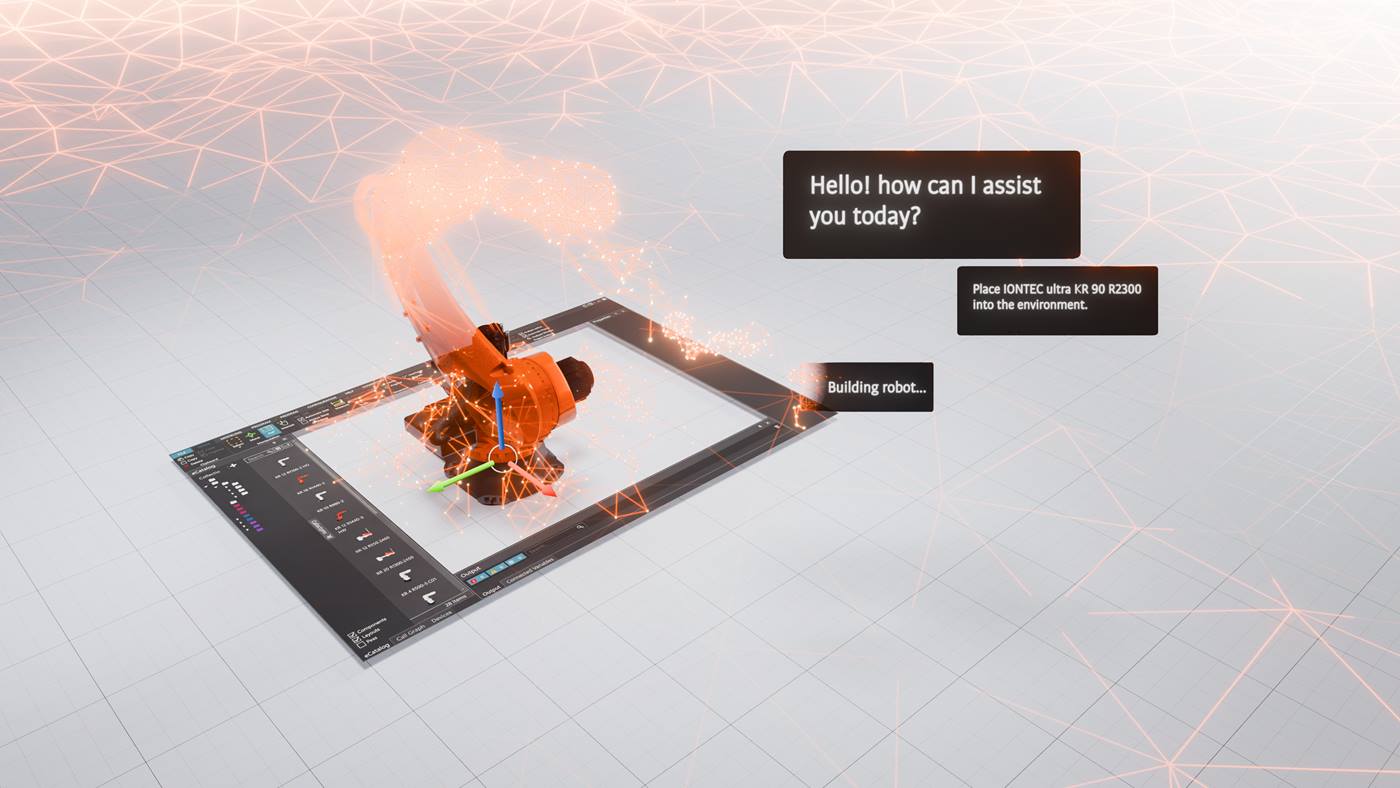
Depending on the application, programming can be carried out using graphical user interfaces, teach-in methods, or traditional robot programming. AI-assisted features, simulation, and virtual commissioning further support users in creating and optimizing robot applications quickly and efficiently.


One software ecosystem for cobots and industrial robots