eBook: How Autonomous Mobile Robots are Rethinking Material Flows
Drawing on real-world examples and expert knowledge, this eBook explores current applications, potential, and challenges in autonomous mobile robotics (AMR).
How are AMRs evolving from transport vehicles to strategic components of modern production systems?
Today, production and intralogistics processes must be more flexible, efficient, and scalable than ever before. This is exactly where autonomous mobile robots come into play. Increasing product variety, shorter product life cycles, and fluctuating demand require the highest degree of flexibility. At the same time, traditional material flows with fixed transport routes and rigid structures are increasingly reaching their limits.
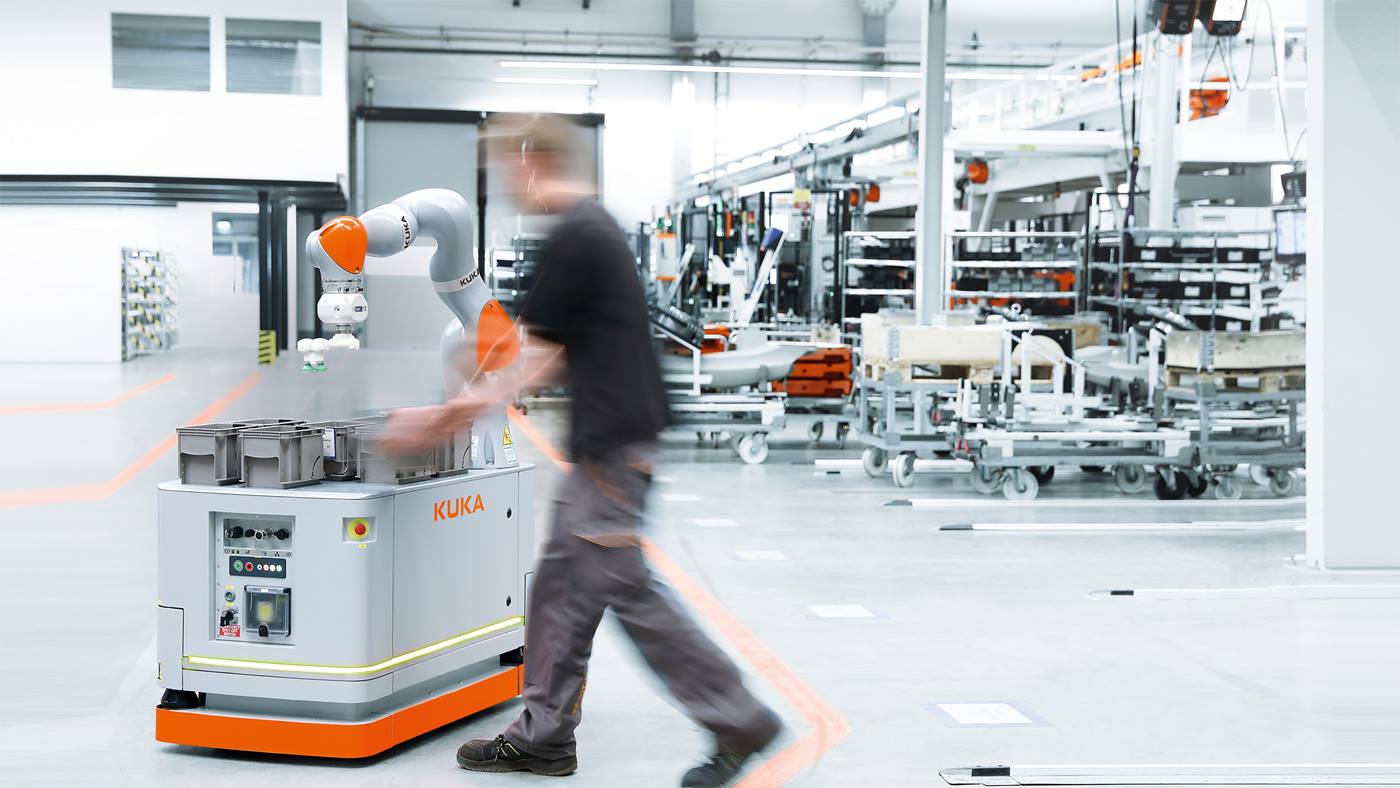
Autonomous mobile robots are considered a key technology in modern intralogistics. They not only handle automated material transport but also connect warehousing, production, and logistics into a flexible, integrated system. Companies use AMRs to streamline material flows, automate processes, and respond more quickly to changing requirements.
Their potential extends far beyond individual transport tasks. Through integration into production systems, warehouse management, and ERP environments, autonomous mobile robots are becoming a central component of digital production and intralogistics. Combined with intelligent fleet management, they enable scalable automation solutions that grow with a company’s needs.
The key question, therefore, is no longer whether autonomous mobile robotics can be deployed, but rather how companies can successfully integrate autonomous mobile robots, optimize material flows, and scale their automation over the long term.
From Material Transport to Smart Automation: AMRs in Action
Get a first impression of how manufacturers are using AMRs in production and intralogistics. For deeper insights into integration, scalability and ROI, download the eBook.
How are AMRs changing production and intralogistics?
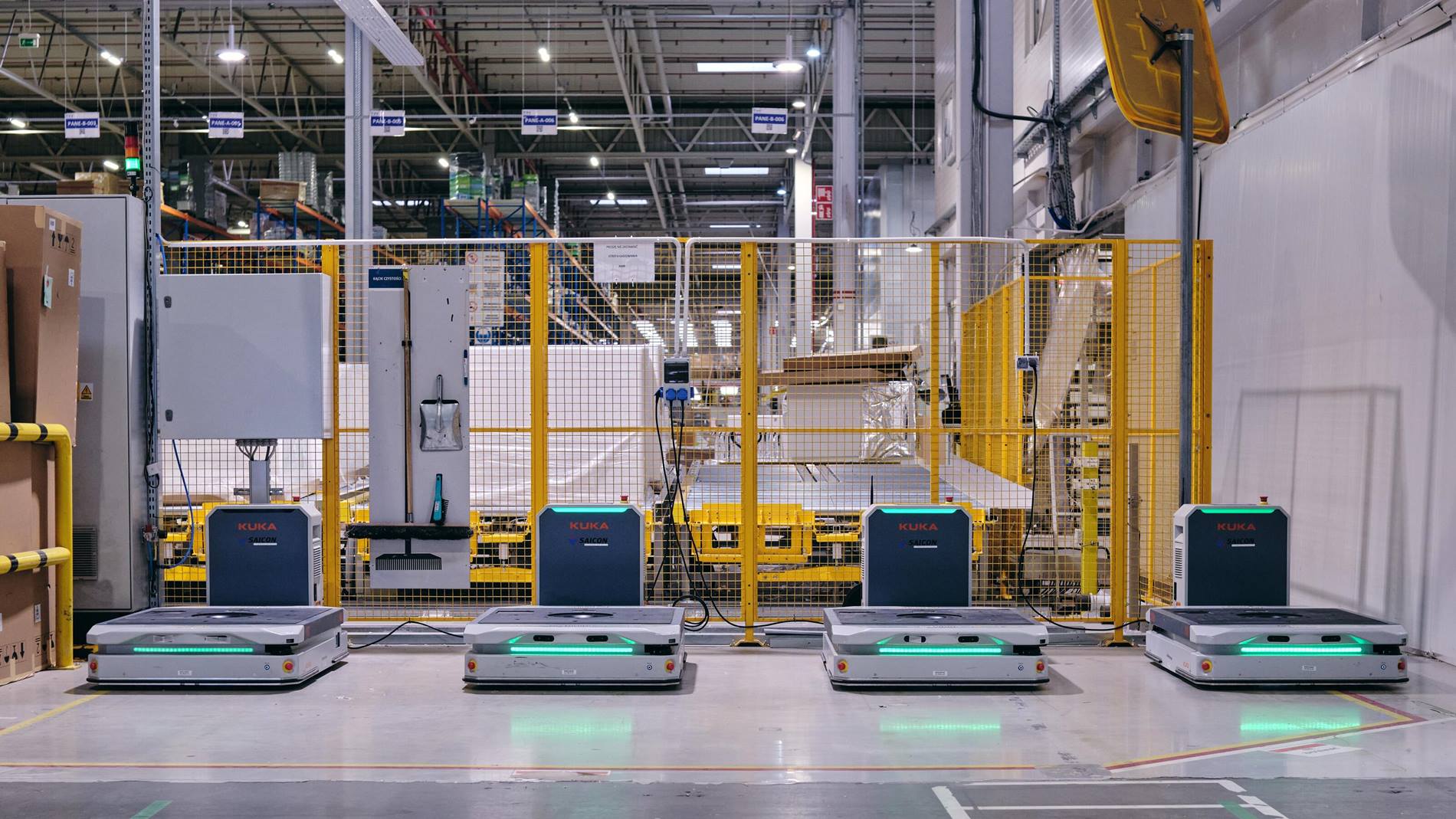
Autonomous mobile robots are evolving from mere means of transport to a central component of modern production and intralogistics. They automate material transport, connect warehouses and manufacturing facilities, and enable flexible material flows along the entire value chain. Companies benefit from greater efficiency, increased transparency, and scalable automation that can be adapted to changing requirements.
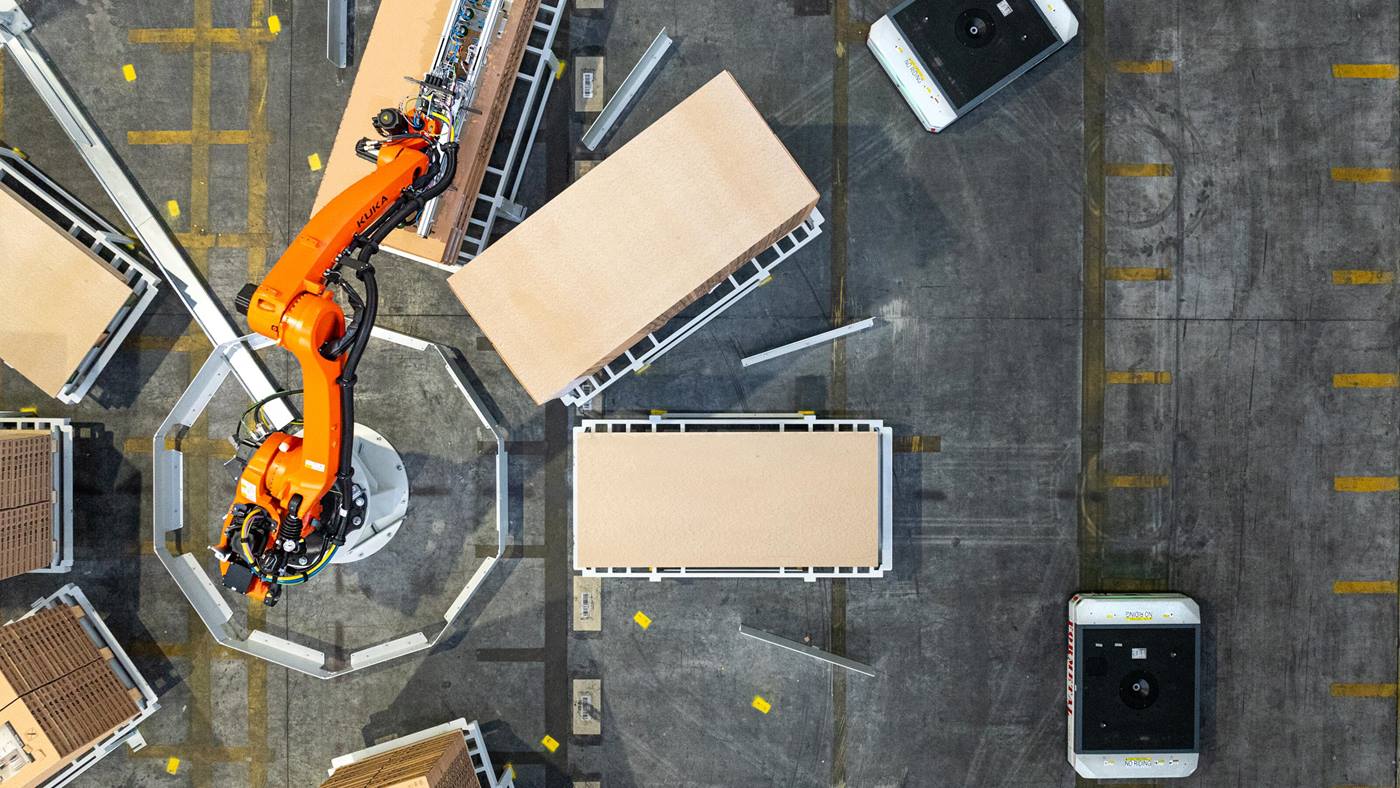
How can AMRs be integrated into existing production and logistics systems?
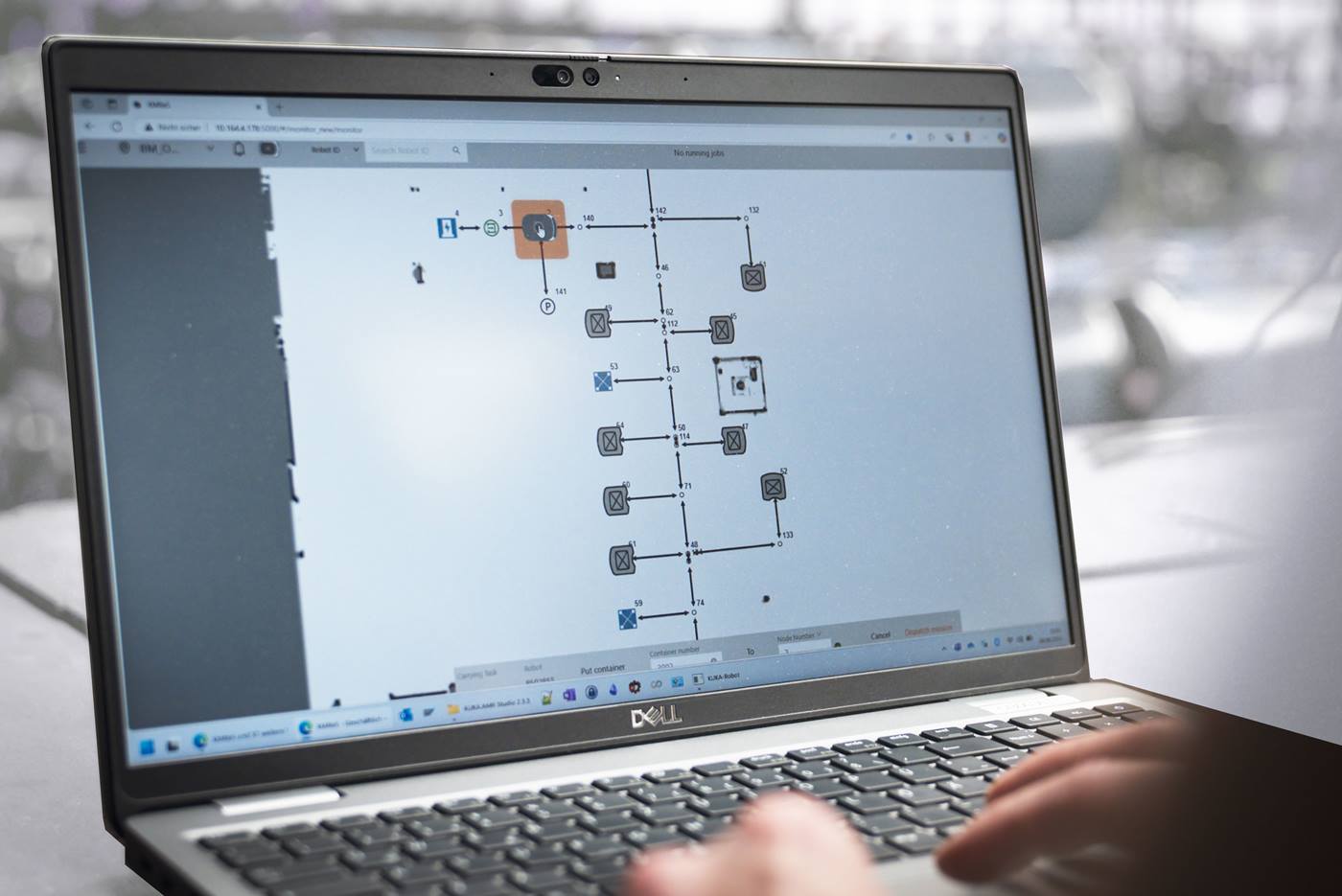
The added value of autonomous mobile robots often only becomes apparent once they are integrated into existing production and logistics processes. Modern AMR fleets can work together with production systems, warehouse management systems (WMS), and ERP solutions to automatically coordinate transport orders and efficiently manage material flows. As a result, autonomous mobile robots become an integral part of intralogistics. They connect warehousing, production, and shipping, increase transparency across material flows, and help companies build more flexible processes. Seamless integration into existing IT landscapes and efficient fleet management are crucial for long-term success.
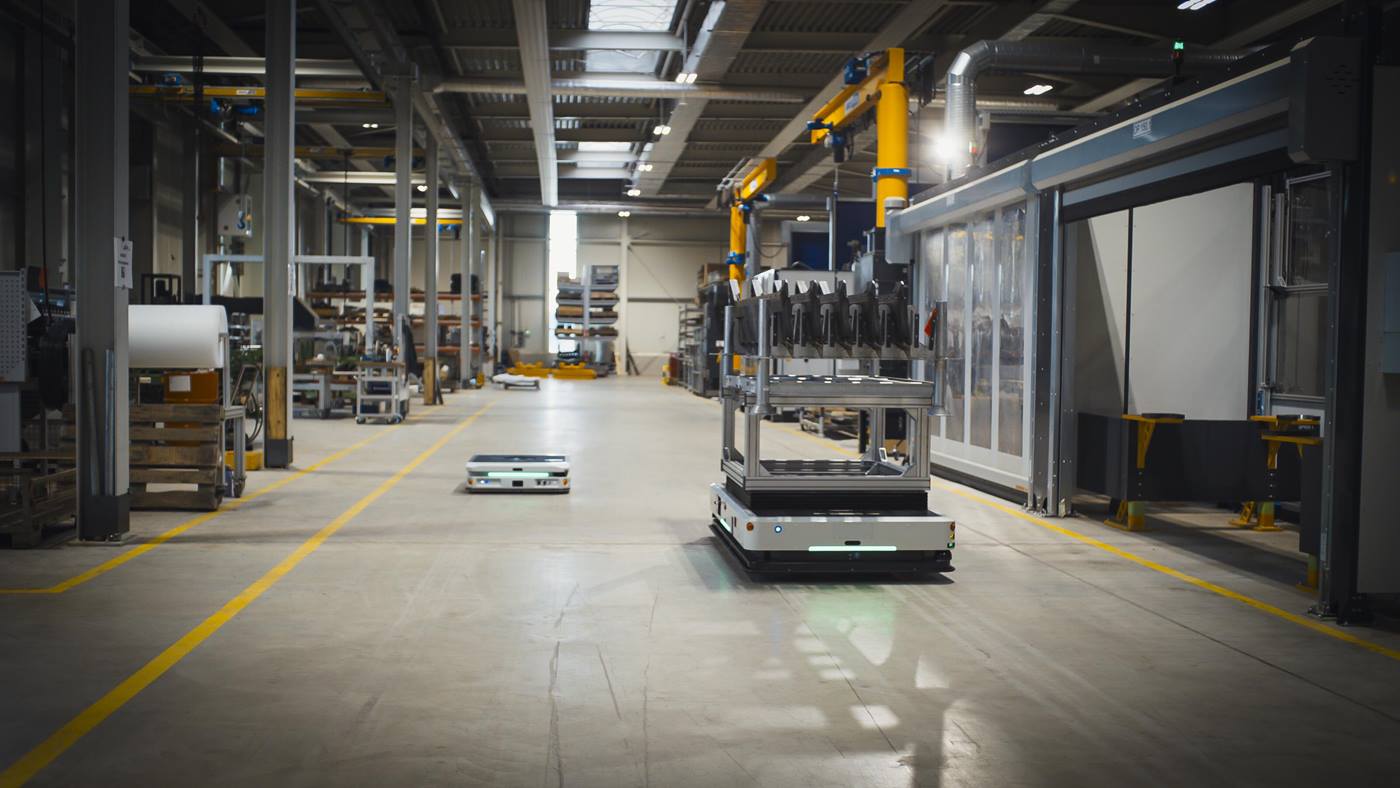
How does an AMR project become a scalable automation solution?
Many companies start with a few vehicles to automate initial processes and gain experience. Long-term success, however, depends on how material flows can be expanded, additional vehicles integrated, and new requirements incorporated into existing production and logistics processes.
High-performance fleet management, simulation, and flexible production concepts play a central role in this. They help companies efficiently coordinate AMR fleets, optimize material transport, and assess the impact of process changes at an early stage. Step by step, a pilot project thus evolves into a scalable automation solution that grows alongside the demands of production and intralogistics.
Discover in the eBook which factors are critical for scaling AMR projects successfully and which best practices have proven effective in real-world applications.