La versione del browser Internet Explorer in uso non è aggiornata. Per una rappresentazione ottimale vi consigliamo un aggiornamento del browser
Integrated End-of-Line Intralogistics with AMRs: the Technowrapp Approach
Founded in 2002 and headquartered in Fonzaso (Belluno, Italy), Technowrapp designs and manufactures customized pallet wrapping machines and integrated end‑of‑line intralogistics solutions. Working in close synergy with its Intralogika division, the company develops complete systems for pallet handling, material flow and traceability, combining mechanical design, automation and software integration. This expertise has recently expanded to autonomous mobile robotics, through a collaboration with KUKA aimed at exploring flexible and scalable AMR‑based solutions for end‑of‑line logistics.
Technowrapp: integrated end-of-line expertise built around pallet handling
Technowrapp is an Italian manufacturer specialized in automatic pallet wrapping machines and integrated end‑of‑line intralogistics solutions.
Over more than twenty years, the company has built a solid industrial positioning around the handling, stabilization and movement of palletized loads, combining mechanical engineering, automation and software integration within a single project responsibility. Technowrapp’s portfolio includes a wide range of automatic stretch wrapping machines — based on rotating table, rotating arm and rotating ring technologies — as well as complete pallet handling systems designed to connect packaging, wrapping, buffering and outbound logistics.
These solutions are developed to operate reliably across multiple industries, including tissue and paper, food and beverage, pet food, chemicals and general manufacturing.
“Our core business has always been palletized load handling at the end of the production process. Wrapping and intralogistics are transversal needs across many industries, and our role is to design systems that fit seamlessly into very different production environments,” says Michele Bernardi, Marketing and Sales Director.
The company primarily serves system integrators and machine builders, which account for a significant share of its business.
These partners integrate Technowrapp solutions into larger packaging and production lines delivered to manufacturing end users worldwide.
At the same time, Technowrapp works directly with final customers in selected industries, providing complete end‑of‑line systems tailored to specific operational requirements.
“What differentiates us is the ability to manage the whole project: mechanical design, intralogistics, software integration and system responsibility. This approach naturally extends to new technologies when they bring real value to pallet handling and logistics flows,” Michele Bernardi explains.
Why Technowrapp is moving toward autonomous mobile robotics
Over the last years, Technowrapp has observed a clear shift in market expectations around end‑of‑line intralogistics.
While traditional conveyor‑based systems and rail‑guided solutions remain effective in stable layouts, manufacturers are increasingly facing shorter planning horizons, higher product variability and frequent changes in production flows.
These dynamics are pushing companies to reconsider how pallet handling and internal logistics are designed and managed.
“Today, planning production and logistics over five or seven years has become unrealistic. Manufacturers need systems that can adapt quickly to changing volumes, layouts and requirements, and this is where autonomous mobile robots start to make sense,” says Michele Bernardi.
Based on this market feedback, Technowrapp has started to systematically evaluate autonomous mobile robots as a complementary technology to its established intralogistics portfolio.
Internal studies focused on comparing fixed infrastructures with mobile solutions, assessing flexibility, scalability and the ability to evolve without major structural changes.
The result was the decision to develop an internal application that demonstrates how AMRs can be integrated into end‑of‑line pallet handling, without replacing traditional systems but enhancing them where adaptability becomes a critical factor.
From market analysis to measurable operational benefits
Technowrapp’s assessment of AMR‑based intralogistics goes beyond technology trends.
The company analyzed concrete operational challenges reported by customers and system integrators, particularly in relation to labor availability, safety and the lack of visibility over internal logistics flows.
In many manufacturing environments, pallet transport is still handled manually or managed without clear performance indicators, making it difficult to identify inefficiencies and bottlenecks.
From an operational standpoint, Technowrapp expects AMR integration to deliver tangible advantages in specific scenarios: improved safety by reducing forklift traffic, better utilization of human resources by shifting operators to higher‑value tasks, and increased flexibility when layouts or outbound logistics strategies change.
While the application is not yet deployed at a customer site, internal simulations and discussions with prospects indicate clear potential in terms of reduced idle times, smoother material flow and more predictable logistics performance.
"AMRs are not a universal solution, but in the right context they offer a concrete way to improve flexibility and control in end‑of‑line logistics, especially when change becomes the norm rather than the exception", Michele Bernardi concludes.
How the application works: an end‑of‑line intralogistics flow powered by AMRs
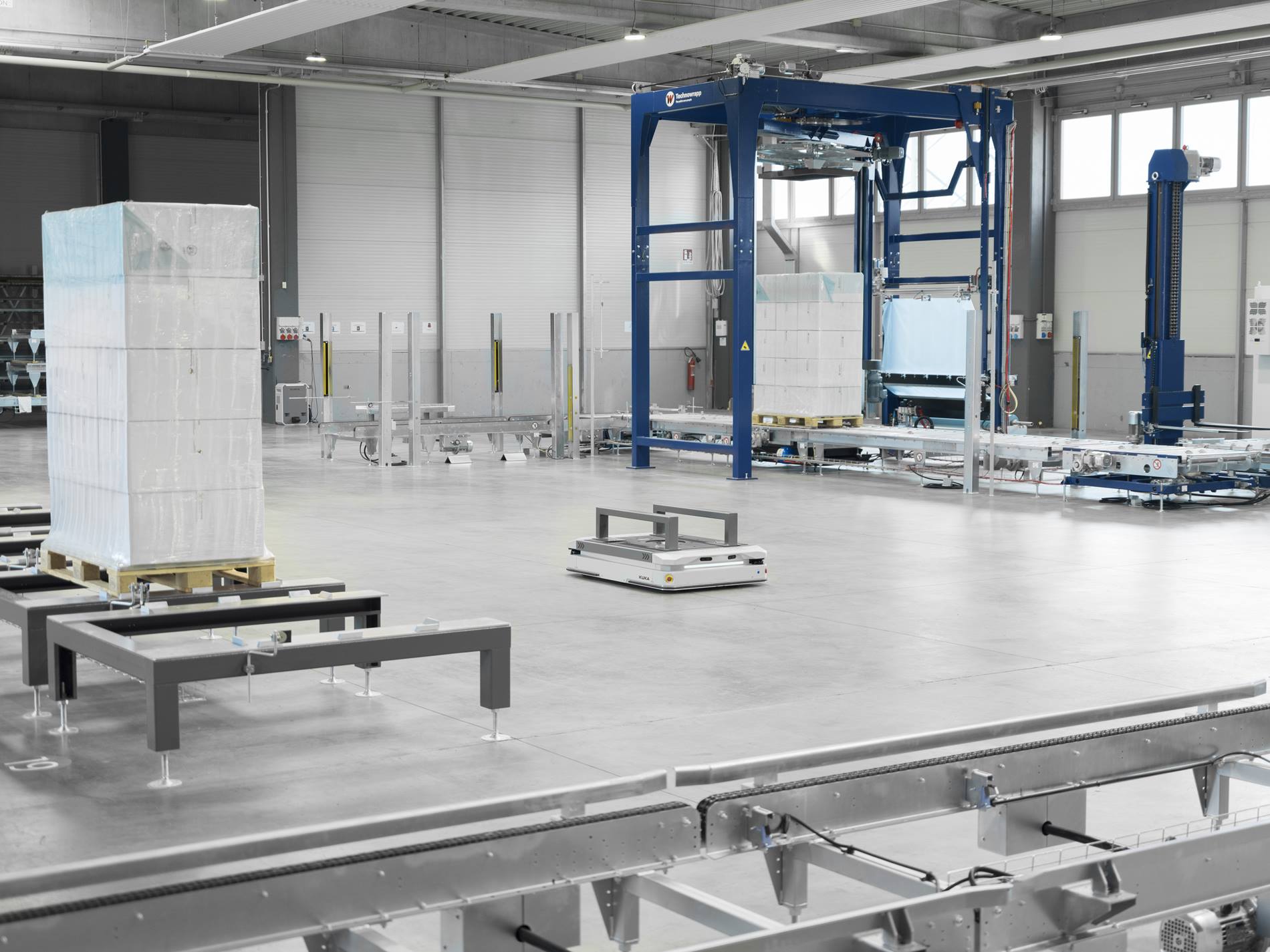
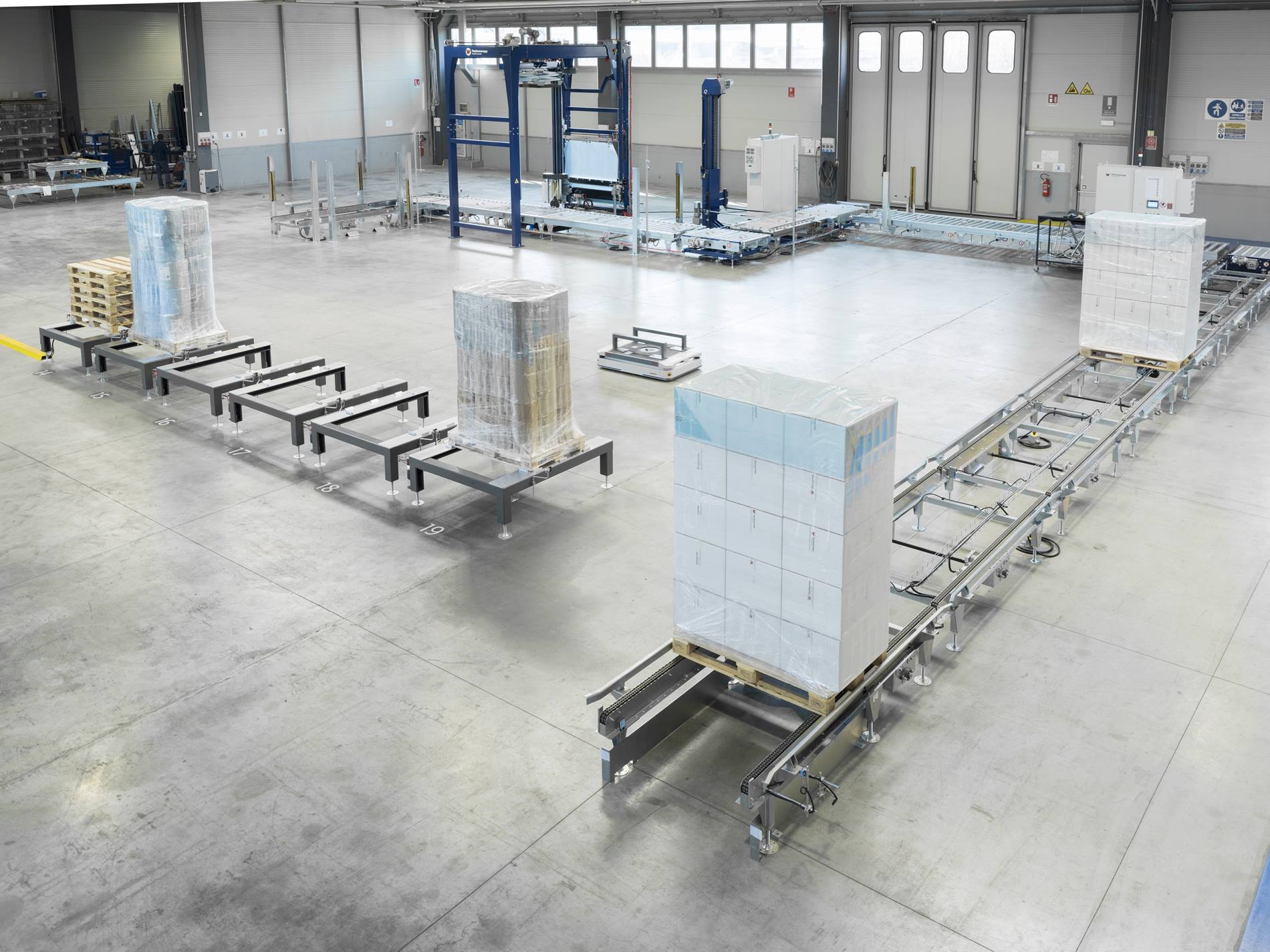
The application developed by Technowrapp is designed to illustrate how autonomous mobile robots can be integrated into a complete end‑of‑line intralogistics process, supporting both inbound and outbound pallet flows.
The system combines pallet handling machines, wrapping technologies and mobile robotics within a single, coordinated material flow.
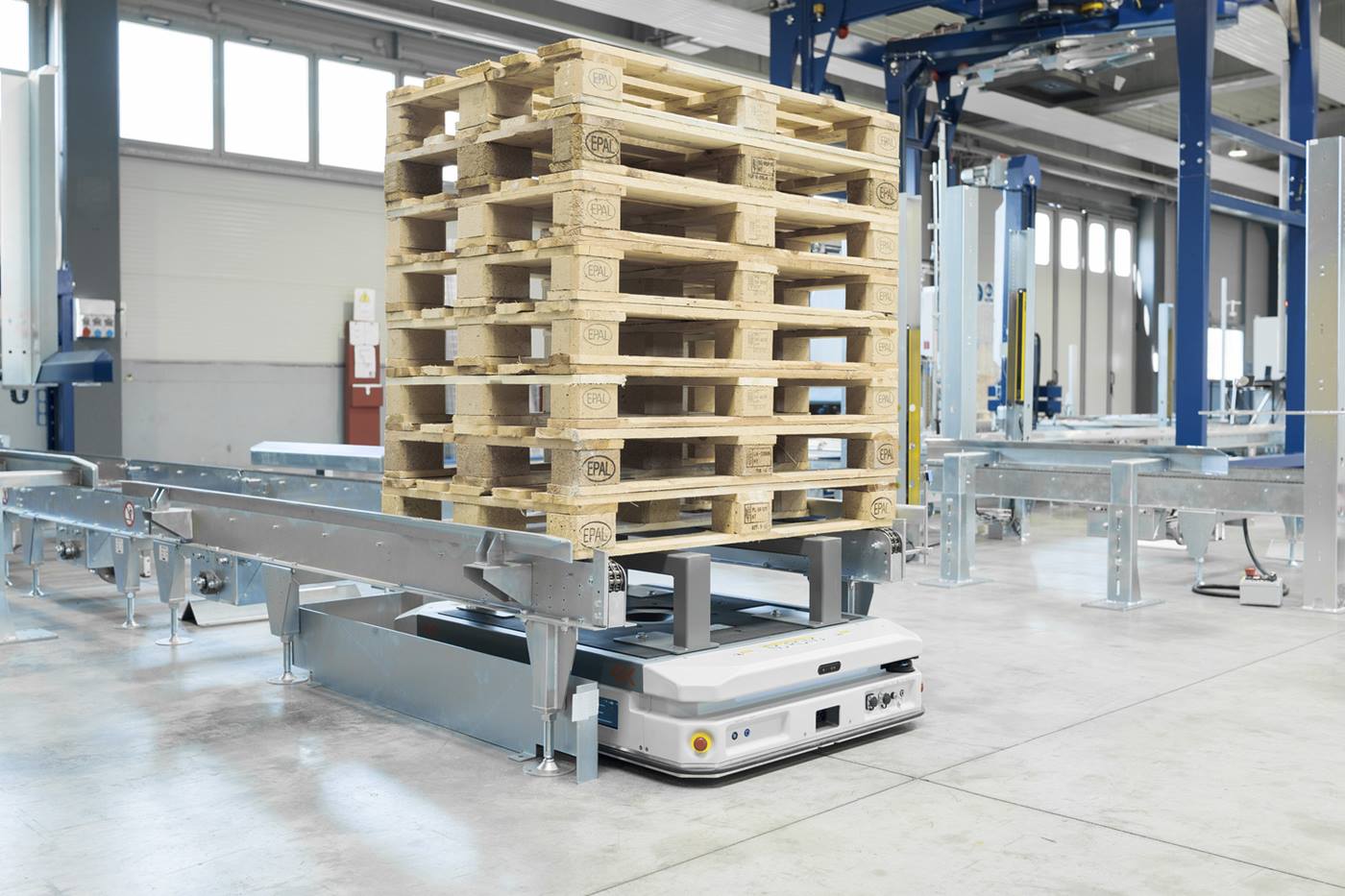
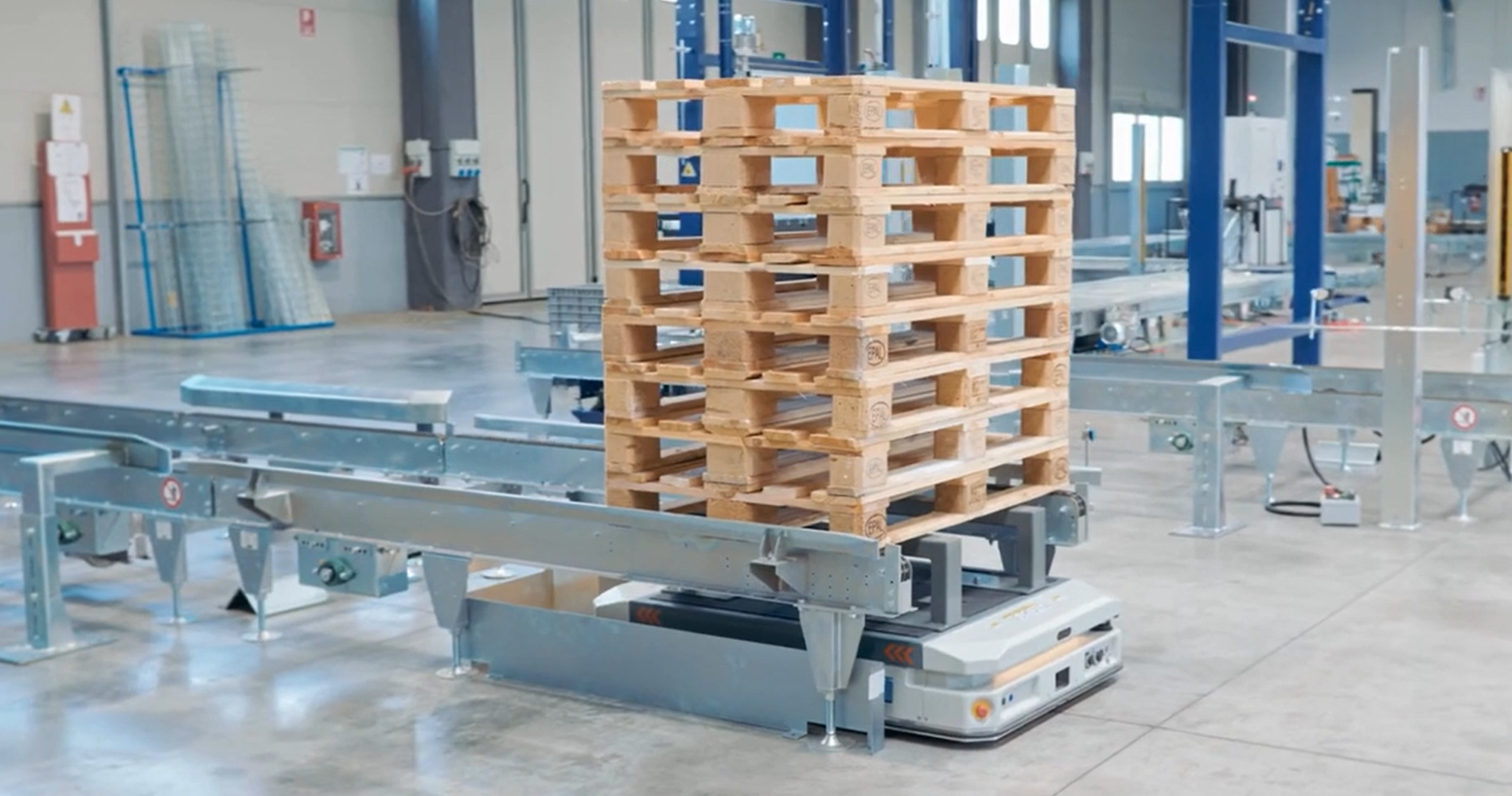
The process starts with the management of empty pallets.
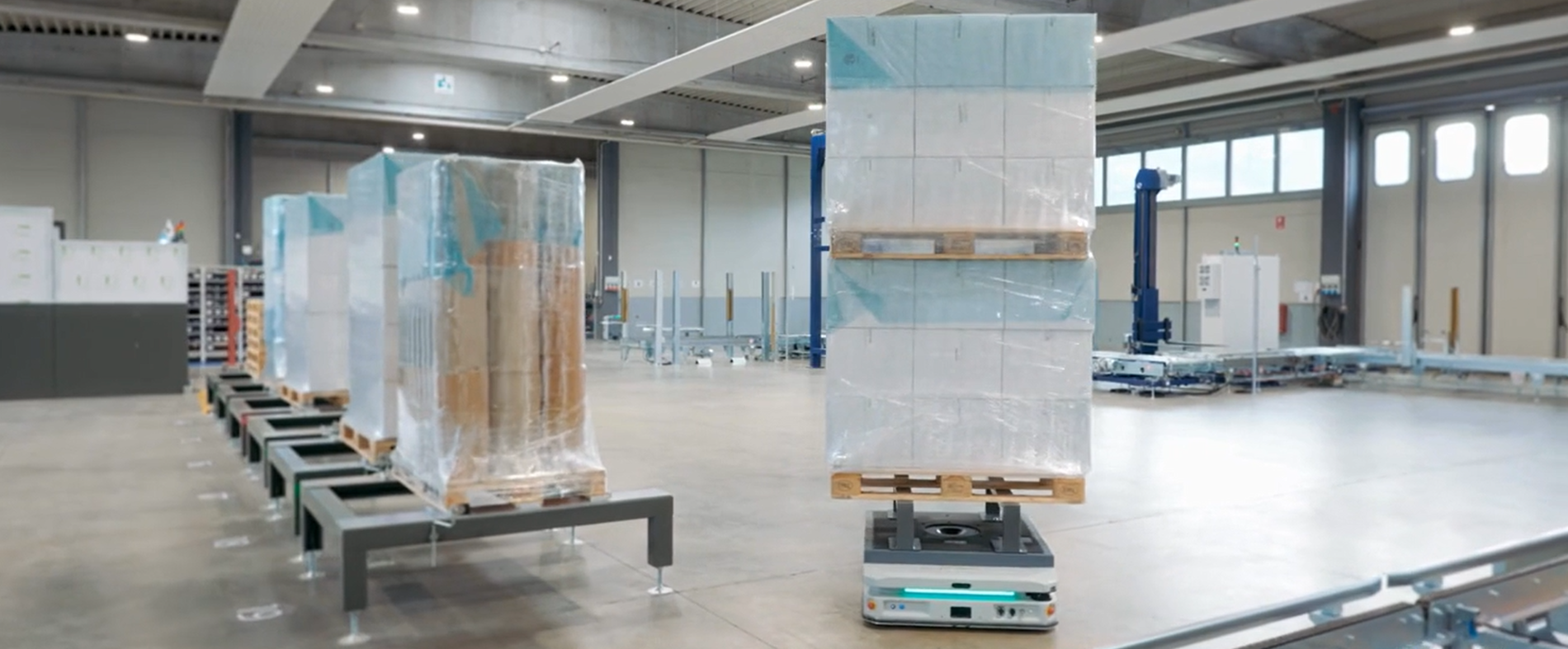
An autonomous mobile robot collects stacks of empty pallets from a designated storage area or loading bay and transports them to the packaging line.
Here, a pallet dispenser separates the stack and feeds individual pallets to the palletizing station, ensuring a continuous and automated supply without manual intervention. Once positioned, the pallet is loaded by the palletizer, which builds the product layers according to the required configuration.
This phase represents a critical connection point between production and intralogistics, where synchronization and continuity of flow are essential.
After palletizing, the loaded pallet is transferred to the automatic wrapping machine.
At this stage, the pallet is wrapped with stretch film to secure the load for internal transport and outbound logistics.
The wrapping process is fully integrated into the line and designed to ensure load stability while maintaining consistent cycle times.
AMRs as a dual‑role logistics enabler
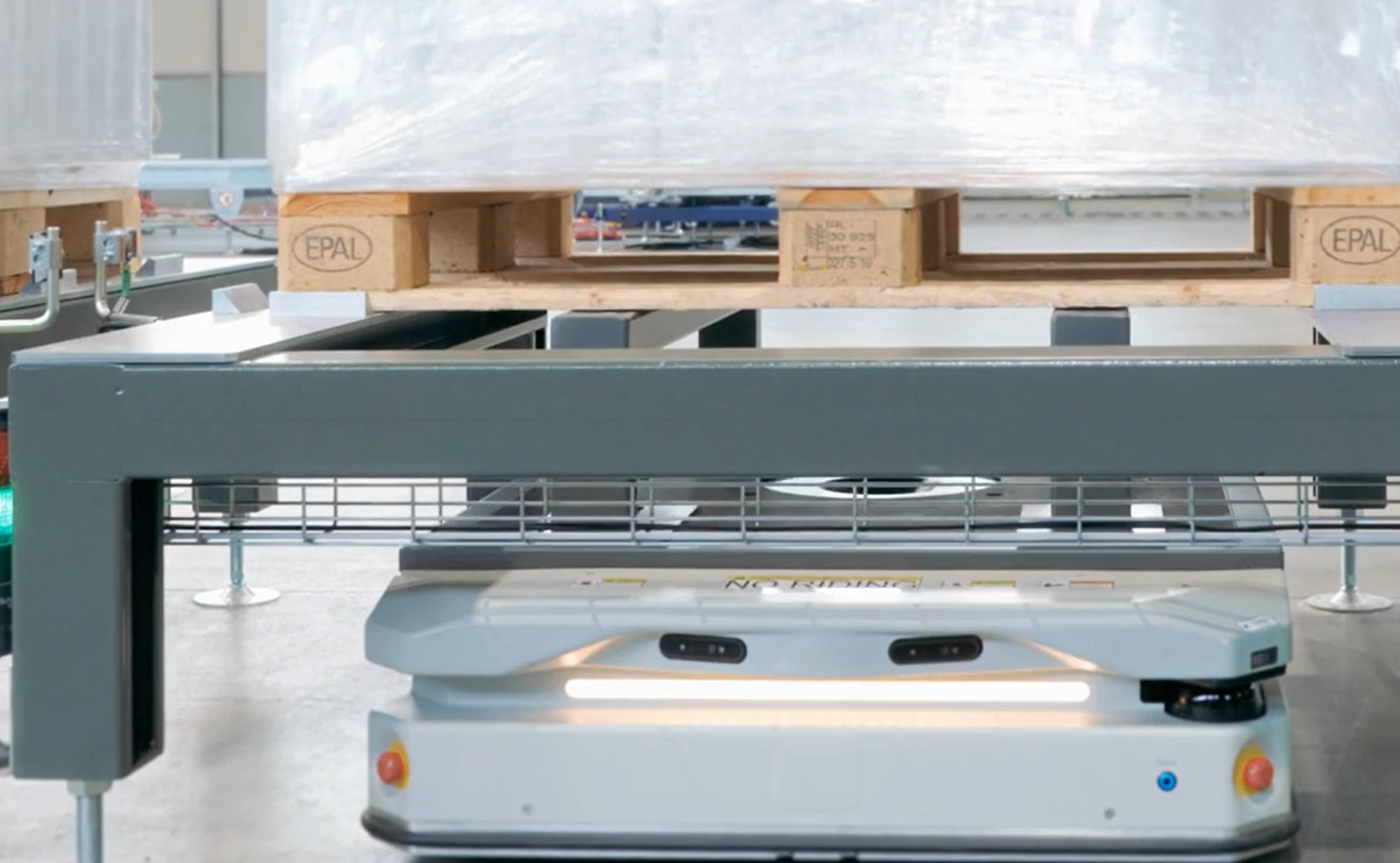
In one configuration, the wrapped pallet proceeds directly to the end‑of‑line discharge area.
From here, the AMR collects the pallet and transports it either to a shipping bay or to a finished goods warehouse, depending on logistics priorities.
Alternatively, the system can include a pallet stacker. In this case, the wrapped pallet is temporarily lifted and held while a second pallet arrives.
Once two pallets are stacked, they are jointly wrapped again to ensure stability before being released to the end‑of‑line.
The AMR then handles the transport of the stacked pallets, demonstrating its ability to manage different load configurations within the same application.
Within this application, autonomous mobile robots perform a dual function.
On the inbound side, they ensure the supply of empty pallets to the packaging line. On the outbound side, they manage the transport of finished pallets to shipping or storage areas.
This dual role highlights how AMRs can support both feeding and evacuation tasks within end‑of‑line logistics, reducing reliance on fixed infrastructure and manual handling.
The entire flow is conceived to operate within a coordinated intralogistics logic, where missions, routing and material movements are planned and traceable. Rather than replacing traditional handling systems, AMRs complement them, providing flexibility where layout changes, variable volumes or evolving logistics strategies require adaptable solutions.
Collaboration with KUKA: enabling scalable AMR-based intralogistics
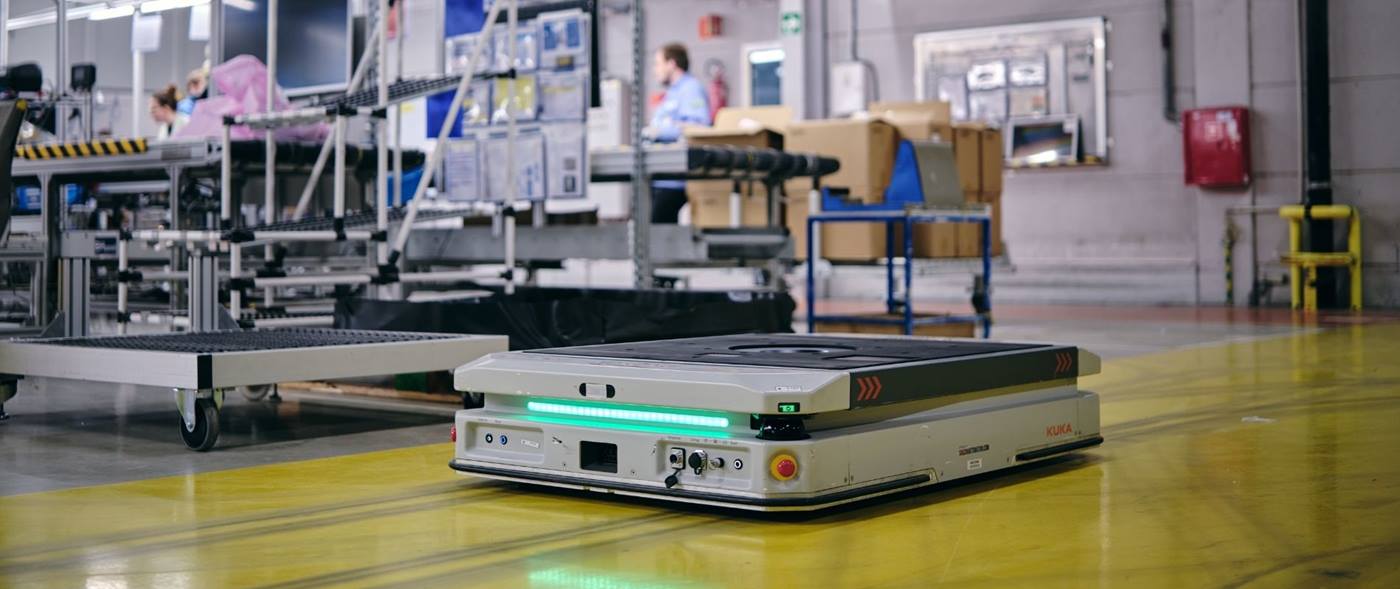
The development of this AMR-based application has been supported by a close collaboration with KUKA, selected by Technowrapp as a strategic technology partner for autonomous mobile robotics.
The partnership was built around application-level integration, technical accessibility and the joint evaluation of real industrial scenarios, rather than a purely product-driven approach.
“When we started evaluating autonomous mobile robots, we were looking for a partner that could support us not only from a technological standpoint, but also at application level. With KUKA we found both technical competence and strong availability from the very first interactions. Our applications typically involve heavy palletized loads. KUKA offered one of the most complete AMR ranges in terms of payload capacity, which was essential for us to realistically assess mobile robotics within end‑of‑line logistics", says Michele Bernardi.
Beyond technology, the collaboration also delivered tangible benefits in terms of market development.
Joint customer meetings, technical training sessions and participation in industry events allowed Technowrapp to validate its AMR approach with prospects and system integrators, while strengthening its positioning as an intralogistics partner capable of integrating both traditional systems and autonomous solutions.
"The collaboration with KUKA is giving us access not only to technology, but also to expertise, training and a broader industrial network. This is a key element as we move from concept development to scalable AMR-based intralogistics solutions for our customers,” Michele Bernardi concludes.