You are using Internet Explorer and will not be able to use our website properly. Please change to an up-to-date browser for ideal presentation of the website.
Friction Stir Welding: Battery manufacturers should invest in technology and expertise now!
For non-ferrous metals with lowmelting points and other metallic materials, friction stir welding (FSW) offersdistinct advantages over conventional welding techniques. Robotic FSW enhancesthe quality of battery housing production, setting new benchmarks in precisionand reliability. These modular and scalable robotic FSW solutions can bedeployed and customised swiftly, with minimal capital expenditure.In this context, FSW specialists Mr. Till Maier and Mr. Stefan Fröhlke fromKUKA share insights on the importance of international collaborations insuccessfully implementing FSW technologies.
What makes FSW so special?
Mr. Stefan Fröhlke:
In FSW, a rotating, pin-like tool is guided between the contact surfaces of the component. The friction heat plasticizes the material and the parts are joined together. This allows even difficult-to-weld or dissimilar materials such as aluminium to be welded to magnesium, copper, or steel. This process consumes less energy and material than traditional welding processes, which is highly relevant for Indian manufacturers seeking efficiency and sustainability.
When you purchase a friction stir welding cell from KUKA, you are not just buying a device – you are buying a ready-to-use solution!
What other advantages does robot-based FSW offer?
Mr. Till Maier:
To set up production quickly, manufacturers should always rely on the latest and most flexible technologies – such as robot-based FSW. Because it is modular and scalable, it can be used to easily implement agile production concepts that can be flexibly expanded as demand increases. This adaptability is especially important for Indian companies responding to dynamic market conditions.
Friction stir welding is a green technology!
FSW is becoming increasingly popular with battery manufacturers in the automotive industry. Why is that?
Mr. Till Maier:
FSW is superior to traditional processes in many ways. On the one hand, it produces pore free, high strength seams without a melting phase – ideal for crashrelevant components! The low heat input also reduces distortion, preserves the material structure, and ensures better tightness. In addition, the process is more sustainable because no additional material or shielding gas is required and FSW can be easily automated. These features are particularly valuable for Indian automotive manufacturers focused on quality and cost-effectiveness.
With more than 270 FSW robots in over 18 countries since 2012, KUKA has become one of the world market leaders in robot-based FSW. Which sectors are the interested parties coming from?
Mr: Till Maier:
On the one hand, we supply Tier 1 companies that work for OEMs. Our group of direct customers from the OEM sector is becoming increasingly important: We act as a general contractor for these customers, taking care of the entire logistics as well as upstream and downstream processes, such as subsequent deburring or brushing of the welded surfaces. The third group consists of scientific institutes that use KUKA R&D robot cells to conduct research into processes and procedures. This broad customer base is mirrored in India, where both industry and academia are increasingly investing in advanced welding technologies.
Have there been any research collaborations of this kind with partners in India?
Mr. Till Maier:
Yes, a few years ago we equipped the Indian Institute of Technology (IIT Kharag-pur) with a research cell. We added an additional 6D sensor to the motor spindle. This enables the robot to be measured and controlled via process forces and moments in all three spatial directions – instead of only in the Z direction, as is usually the case. The sensor is mounted between the robot flange and the spindle and is connected to the robot controller via fieldbus, i.e., analog terminals and Ethercat. Finally, we also supplied a PCD 507 for process monitoring. This collaboration demonstrates the growing expertise and interest in FSW within India’s research community.
What does the abbreviation “PCD” stand for?
Mr. Till Maier:
In the automotive industry, welding must be 100 percent correct and safe; after all, we are talking about crashrelevant components in battery housings! To avoid expensive recalls, process reliability and documentation throughout the entire process and its parameters is a central and mandatory requirement. That is why we at KUKA have developed a special control system for process monitoring: PCD, which stands for “Parameter Control and Documentation.” This allows us to monitor and store all relevant process data at 100-millisecond intervals. The data can also be easily processed in other systems via an interface, ensuring robust quality assurance for Indian manufacturers.
All of this shows that KUKA offers its partners much more than just robots and the associated FSW technology.
Mr. Stefan Fröhlke:
That's right. A process must be mastered before it can be industrialized. This is precisely what process technology is for: it defines the process and builds up knowledge in the first instance. Many customers, for example, first purchase an R&D cell from us and test various parameters in order to adjust the process. This differs significantly from the typical product business, where you set up a finished product. That's why we talk about solutions – and these include not only the products but also the decades of experience of our experts. They can set up the process, carry out investigations, and find out which solution makes the most sense for the customer. We then put these together. This includes not only the robot with spindle and control system, but also the matching tools and the design for mountings or fixtures. We deliver a complete package, including preliminary acceptance at our premises and final acceptance at the customer's premises.
How does such a project actually work in practice?
Mr. Stefan Fröhlke:
The first steps of the investigation are theoretical: First, we discuss the alloys to be processed and analyze whether they can be welded at all. Then, feasibility studies are carried out using 3D models: Can the robot reach all the relevant areas? Is there a risk of collisions with components, clamps, or tools? This is followed by the practical test phase: The weld seams are examined in detail using demonstrators, e.g., sample parts – for example, through laboratory analyses such as the creation of micrographs, which allow the seam to be viewed from the inside. In addition, bending and tensile tests are carried out. The process proceeds in stages, similar to a knockout round in sports: at each stage, checks are made to ensure that all technical specifications and quality requirements are met. Even after all tests have been successfully completed and the system can be configured accordingly, we do not leave our customers on their own: after acceptance, we take care of training the employees, for example. And if process-related questions or problems arise later, when the system is up and running, we are also available to provide advice and support.
What do the employee training courses you mentioned look like?
Mr. Stefan Fröhlke:
The basic level is our robot training course at KUKA College. Here we offer different training courses depending on the role and task, for example for commissioning engineers or system operators. This basic training can be supplemented by FSW process training, which lasts either two to three or five days. This covers the specifics of the process: What do I need to pay attention to in production? What are the framework conditions, criteria, and parameters? How do I set up the process? How does reliable process and quality control work? Basically, we can conduct all training courses at our premises in Augsburg or at the customer's site, worldwide – including India – and in doing so, we can respond very specifically to the individual conditions of the customer.
However, you not only offer customer-specific training courses, but also individualized solutions for FSW tailored to the specific requirements of each customer: How does that work?
Mr. Till Maier:
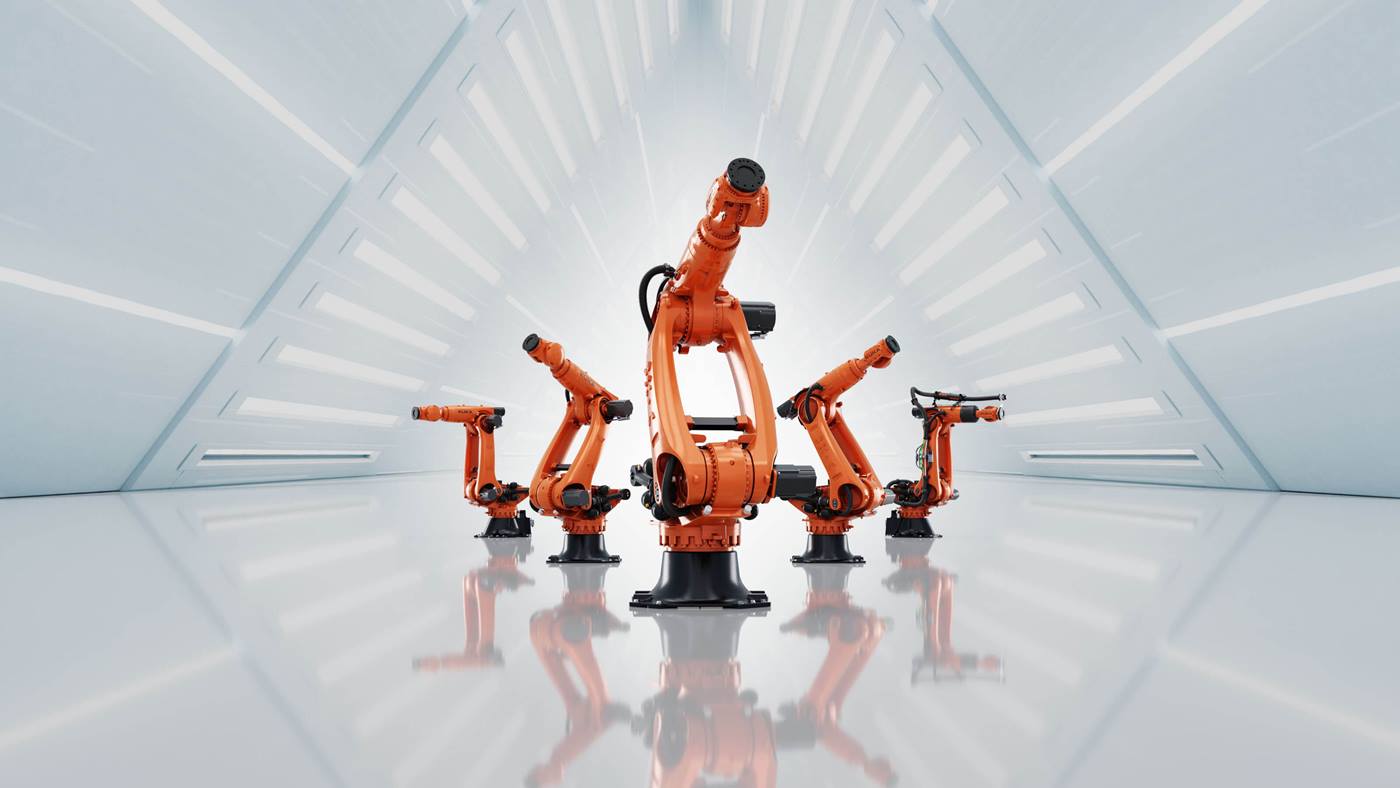
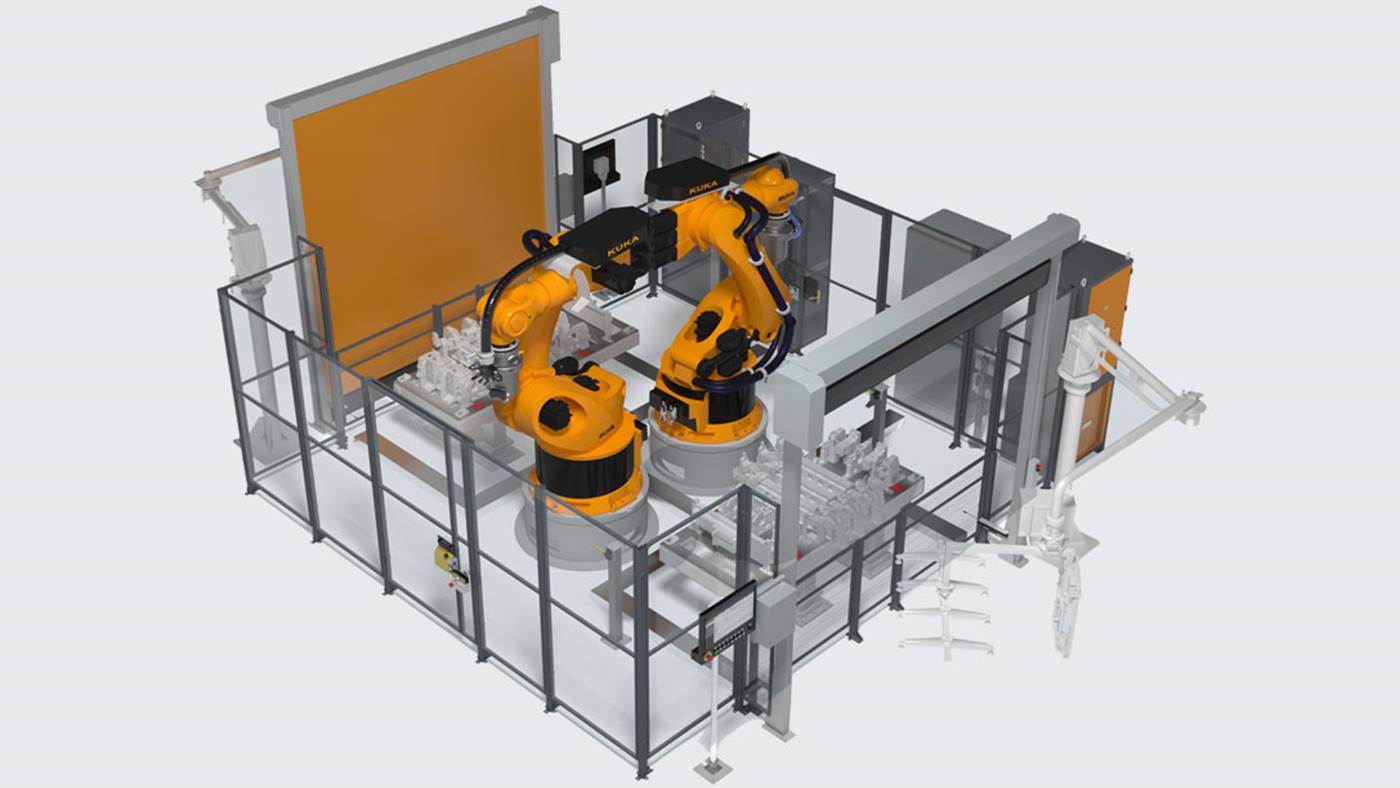
We basically have three solutions in our robot portfolio: First, the new KR FORTEC ultra in the MT version with a payload of 300 kilograms and a reach of up to 2,800 millimeters (KR 300 R2800-2 MT). We offer this robot as a universal, robot-based 3D application module for complex 2D and 3D FSW applications. Then there is the modular robot cell KUKA cell4 FSW midsize single in combination with the above mentioned robot for medium sized applications with maximum process utilization, such as HEV battery housings. And finally, the robot cell KUKA cell4 FSW large dual, also with the above mentioned robot, for large applications with maximum process utilization, such as BEV battery boxes. Our FSW robot cells have been specially developed for the growing e-mobility market. They have a modular design and are therefore scalable for different production volumes, making them very versatile with a wide range of configuration options.
Mr. Stefan Fröhlke:
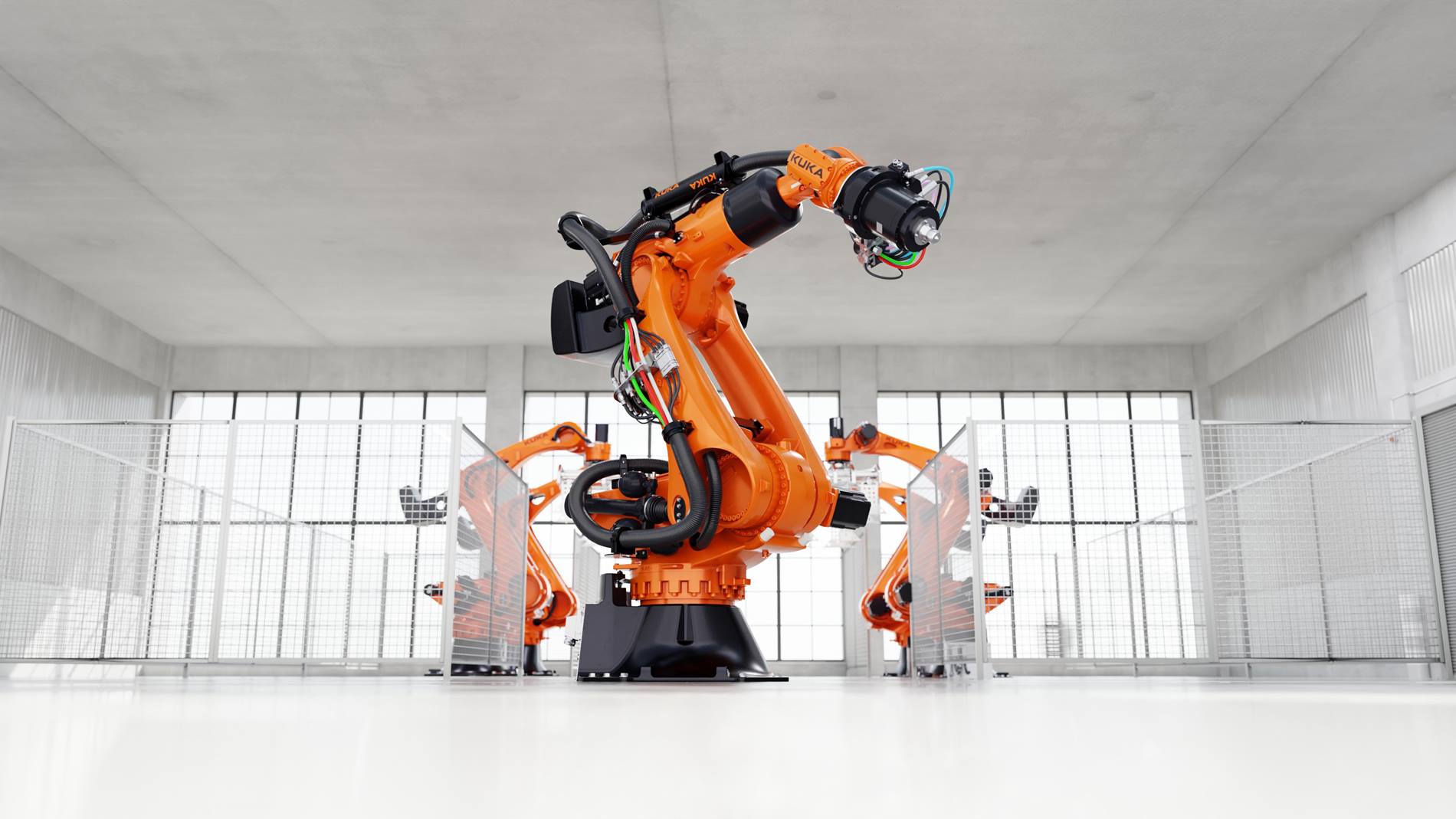
Our KR FORTEC ultra MT is not a conventional pick-and-place machine, but a special MT (machine tooling) variant. Axes 1 to 3 have been optimized with special gear stages and motors, enabling enormous process forces of up to 12 kilonewtons and in some cases even more. Thanks to the new double swing arm and new machine data, the KR FORTEC ultra MT is extremely rigid and has been specially developed for the FSW process. This ability to apply high forces with precise repeatability sets us apart from other robot manufacturers – KUKA was one of the absolute pioneers in this field. But the individual tools on the robot and the clamping devices are also customized.
What tools are these, for example?
Mr. Till Maier:
The possibilities for different FSW tools are very extensive – from conventional tools, where both the shoulder and the pin rotate, to a stationary shoulder, where only the pin rotates, to bobbin tools and many other special designs. KUKA is heavily involved in the development of FSW tools, designing new tool geometries and researching wear mechanics. We are working on coatings to increase the resistance of the tools and extend their service life, and are carrying out joint development projects with our suppliers to find new materials that offer optimum value for money. In our experience, welding tools with a fixed shoulder have proven to be the best solution. They enable high welding quality and ensure a smooth, even weld surface, which significantly reduces the amount of rework required.
Customers often argue that robot-based FSW does not meet their requirements because the robots are not rigid enough, and they invest a lot of money in large gantry systems. What do you say to them?
Mr. Stefan Fröhlke:
Quite clearly: our new KR FORTEC ultra MT and our already widely used KR 500 MT are sufficiently rigid and highly precise, and thanks to their more powerful motors, they have the necessary power to perform FSW precisely for most e-mobility applications. We have also developed a kind of path calibration system for it. This allows us to measure its position throughout the welding process using a laser tracker, respond online in real time, and keep the robot on course. Thanks to a path accuracy of less than 0.5 millimeters, high precision weld seams are possible. In short, this robot system is very well suited to the high forces involved in FSW.
Mr. Till Maier:
With the new KR FORTEC ultra MT, we have gone one step further, as it can apply up to 20 percent more process forces. The new models, available since spring 2025, also have a reach of up to 3,400 mm, which increases the effective working range for KUKA customers in FSW. But the KR FORTEC was already extremely popular before that: no other robot has been sold as frequently for FSW applications in recent years!
Do you have any examples of practical applications?
Mr. Till Maier:
We have currently received a follow up order for 12 FSW cells from a major US automotive manufacturer who had previously ordered 23 cells from us. The cells are used in several production steps: The robots weld battery carriers together and, in a second production stage, connect cooling plates to the battery carriers. However, KUKA not only supplies the technology, but is also responsible for the entire friction stir welding process – including assembly, commissioning, training, and final acceptance. What is particularly exciting here is that the comprehensively converted production facility can be used to build vehicles with combustion engines, hybrid vehicles, and electric vehicles on the same production lines.
Mr. Stefan Fröhlke:
This is remarkable because hybrid electric vehicles and exclusively battery-powered vehicles place very different demands on production. In hybrid vehicles, we have smaller battery housings made of cast aluminium. These have cooling channels, and our task is to close these cooling channels. In purely battery-powered vehicles, on the other hand, the battery housings are much larger and weigh much more. This means that many components are made of different aluminium alloys.
Mr. Till Maier:
Eight of our robots, including three FSW application modules with the KR 500 MT FORTEC in three KUKA cell4_FSW cells, have also been in operation at a major automotive supplier in Portugal since 2022. The supplier was dissatisfied with the welding quality of another manufacturer's system. We initially developed a system with two cells, each with a KR 500 MT FORTEC, for them. The customer was so impressed with the flexibility of being able to weld different battery boxes on one system that they immediately ordered another system — a cell with a robot that can operate three fixtures. This allows three different welding tasks to be performed, which would otherwise require three non-robot-based systems. The FSW robot can be utilized at up to 95 percent capacity, as the fixtures can be loaded and unloaded in a separate safety area during the welding process.
You have now given many good reasons why those interested in FSW should contact KUKA. What is the most important one?
Mr. Till Maier:
We offer manufacturers who want to grow affordable entrylevel solutions for robot-based FSW. Together with them, we develop agile production concepts that are modular and scalable and can therefore be flexibly expanded as demand increases. Customers benefit from our comprehensive expertise: Some companies supply a robot, others a spindle or special tools, but then lack the necessary process know-how. We can offer all these components, processes, and knowledge from a single source. Not only do we train the companies' employees with our decades of expertise, but we also remain at their side as a competent partner beyond the commissioning of the systems. We see cooperation as a genuine and sustainable partnership! In addition, we design and program our robots so that they are optimally tailored to the individual requirements of our customers – from conception to implementation, we have an influence on all relevant process steps.
Mr. Stefan Fröhlke:
Through our extensive, direct cooperation with end customers, we also gain valuable experience that we continuously incorporate into our solutions. We see ourselves as a solution provider that, in addition to its own robot technology, has over 20 years of expertise in clamping technology, tool development, and process technology — crucial knowledge for industrial implementation! As integrators, we vouch for the quality of a system and solve even tricky tasks using a wide variety of methods. If desired, we can offer our customers complete, turnkey solutions that are perfectly tailored to their individual requirements. In other words, KUKA is the right partner for FSW in e-mobility, from the initial product idea to the complete finished solution.
Friction stir welding: Future technology on the rise
Friction stir welding (FSW) was developed in the early 1990s by the Welding Institute (TWI) in the UK. Since then, it has established itself in various industries, such as aerospace, automotive, and shipbuilding.
In FSW, a rotating tool is guided between the contact surfaces of the component. The friction heat plasticizes the material and the parts are joined together. This allows even materials that are difficult to weld or dissimilar materials such as aluminium to be welded to magnesium, copper, or steel.
With the boom in e-mobility and increased demand for batteries, FSW is experiencing an upswing. This is being driven by extensive research and development, which is leading to constant improvements and enhancements. ISO 25239 is a specific standard for FSW that regulates and standardizes the process.