Select your location:

Location

Select your language:

  • English
  • Spanish
  • English

Robots Unload Truck Trailers, Streamline Warehousing at 3PL Company

AI-guided robotics are reshaping trailer unloading by balancing efficiency, adaptability, and worker safety in real-world logistics environments.


Automation Solves the Challenges of Truck Unloading

As a leading third-party logistics (3PL) company, States Logistics Services Inc. provides warehousing, LTL and freight transportation, packaging and freight consolidation services to manufacturers across the country. The company strives to always provide efficient, scalable, and technology-driven logistics solutions while continuously improving operations, reducing costs, and enhancing service levels for its customers. It was this drive for continuous improvement, along with an automation and innovation initiative, that resulted in the company incorporating robots for the task of unloading cartons from floor-loaded semi-truck trailers. 

Overall, the facility handles over 50 truck-trailer containers per month that are left at the facility, and once unloaded, a States Logistics Services Inc. driver swaps out the empty containers for full ones to be unloaded.  Two or three employees, depending on the product, were required to unload cases from the containers and load them onto pallets that were then shrink-wrapped and sent to storage.
AI-Powered Robots Unload Truck Trailers at States Logistics

States Logistics deploys a robotic solution from Contoro Robotics to increase efficiency in the unloading of floor-loaded trailers. 

AI-powered robotics automate the unloading of floor-loaded trailers, combining real-time perception, adaptive motion, and flexible deployment to handle complex warehouse environments.

Making the Case for Automation

According to Jesse Sevilla, Director of Sales and Operations at States Logistics Services Inc., the company had always manually unloaded containers from truck trailers before noticing issues in the quality of labor post-2020; not only because of COVID, but also because fewer individuals wanted to spend their workdays inside hot, cramped truck trailers.

The need for change wasn’t just about throughput,” said Sevilla, “but also the well-being of our employees. Safety is a top priority with us, and at the time, we were experiencing a significant amount of health insurance claims regarding back strain.”

Robotic Truck Unloading System

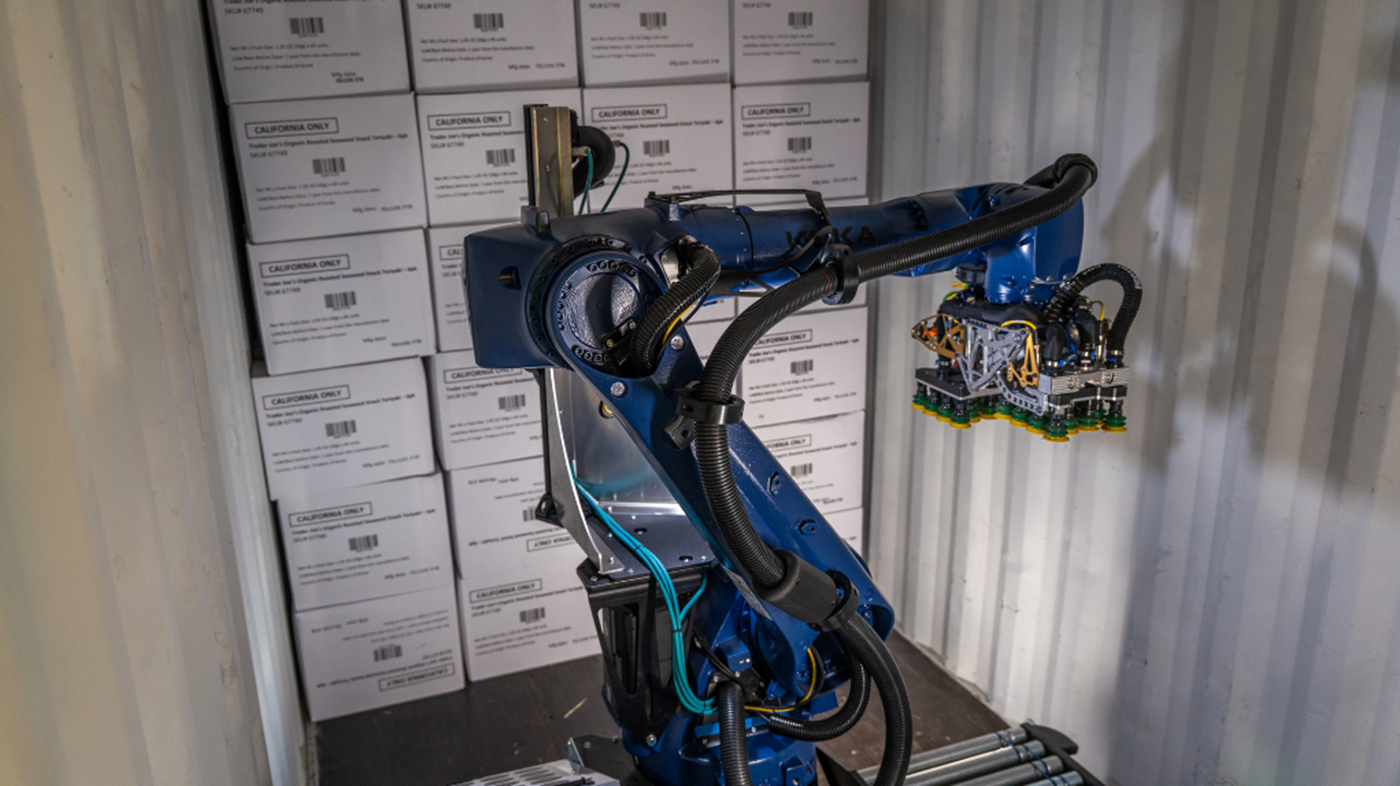
In 2023, the company – which employs more than 800 individuals across multiple facilities – started to explore some viable technology alternatives. That’s when they partnered with Contoro Robotics, who presented a very realistic solution for the company’s growing concerns. The result was a KR IONTEC industrial robotic arm from KUKA equipped with Contoro Robotics’ AdaptAI software that together would automatically unload the floor-loaded trailers
Sensor-driven automation enables the robot to continuously adjust to shifting loads and irregular trailer geometries without manual intervention.

“By implementing this automation, we’ve been able to stabilize operations while reducing labor variability, improving safety, and increasing efficiency,” said Sevilla. “It also gives us the flexibility to handle different product sizes and configurations, which is something that fixed automation systems like gantries are unable to manage as effectively.”

Contoro's AI-powered algorithm assigns tasks to the KR IONTEC and its grippers, essentially telling them how to grasp cartons, whether from the top or sides. 
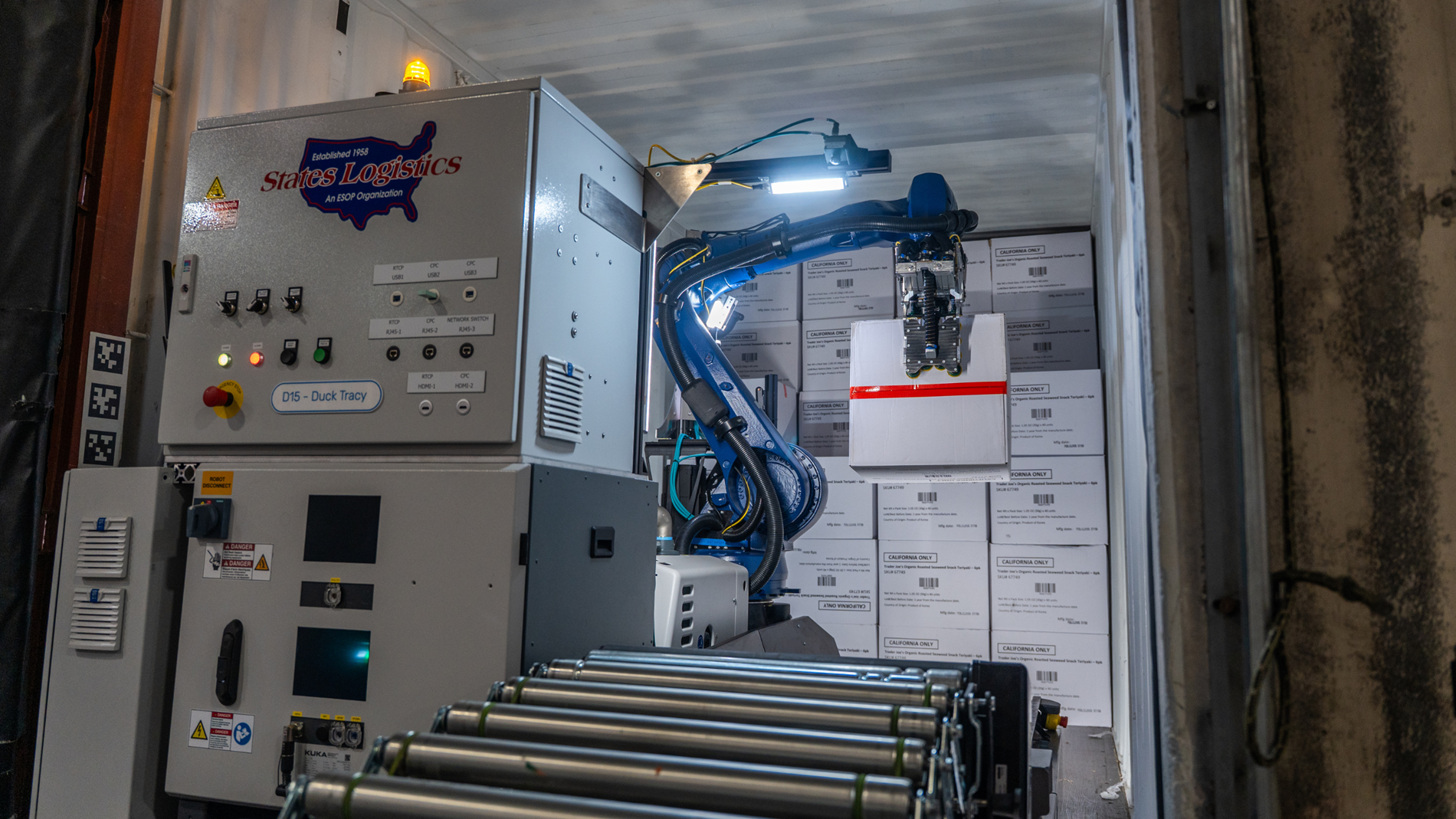
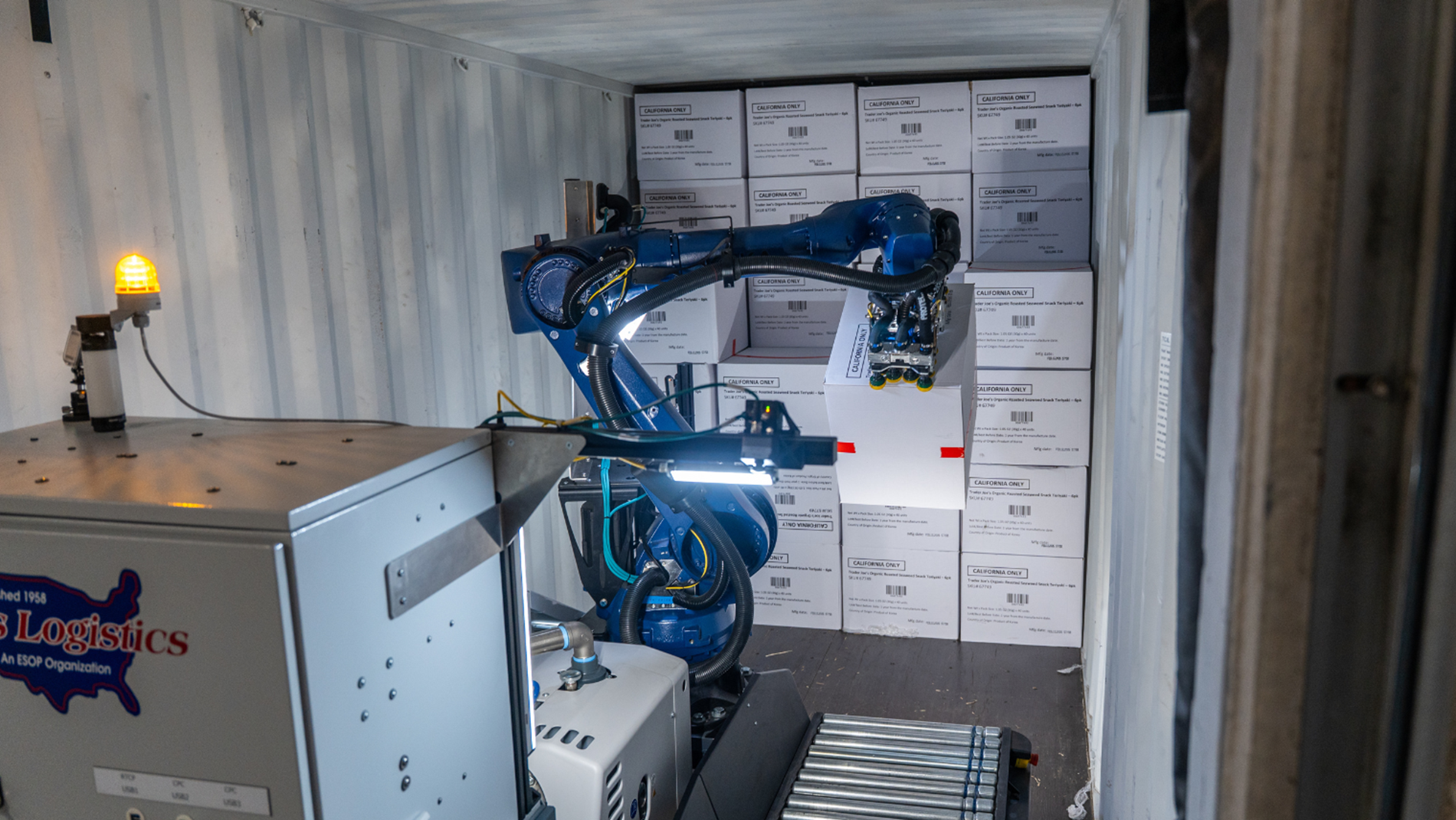
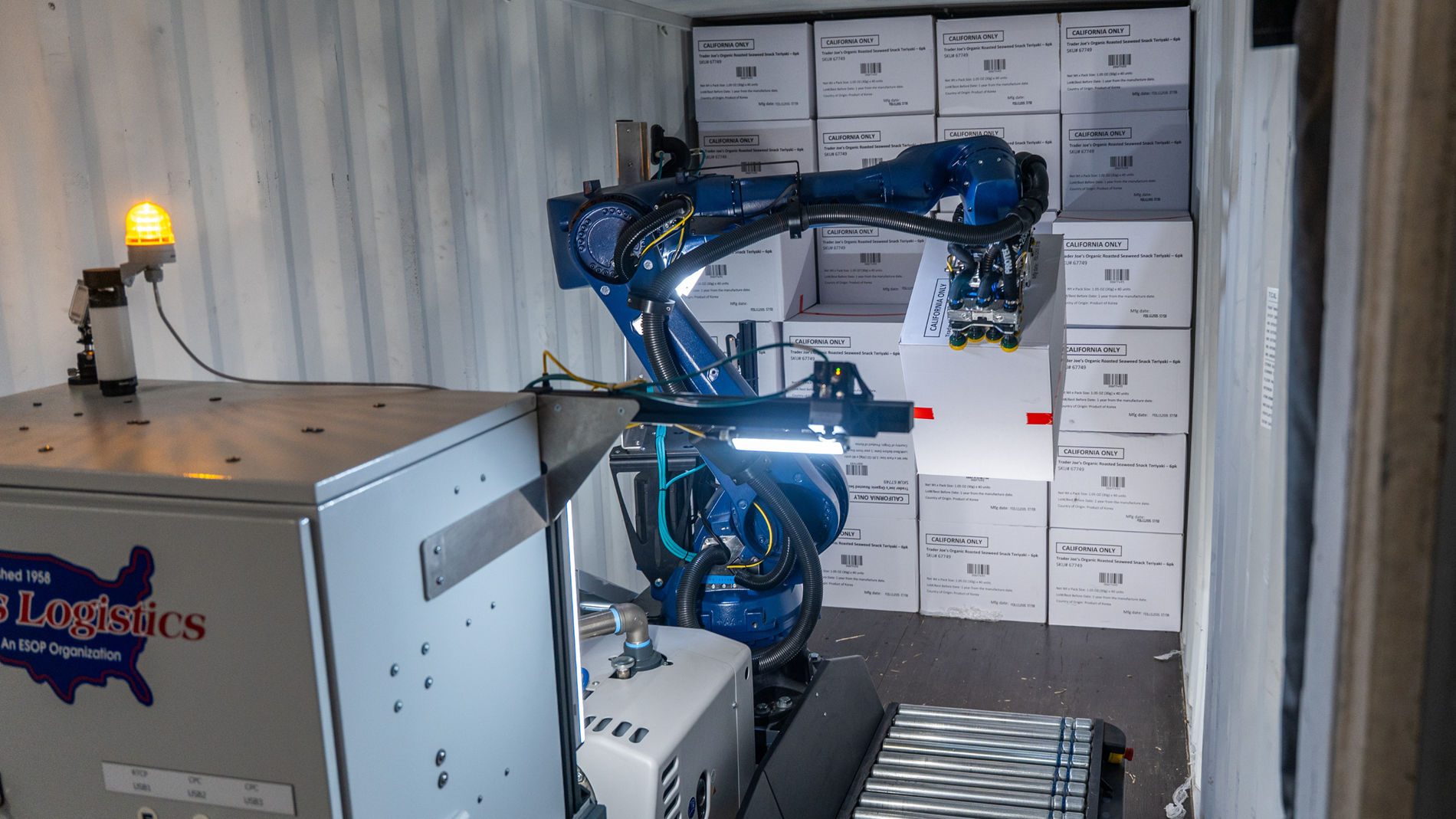
Once a trailer is positioned at a dock, the robotic system moves in to identify and locate cases. The robot, using AI-guided vision, picks up the cases and places them on a powered conveyor that moves them out of the trailer. A secondary robot then removes cases from the conveyor and places them onto pallets that are wrapped and moved to storage or outbound staging areas. 

Adapting Robotics to Unstructured, Real-World Environments

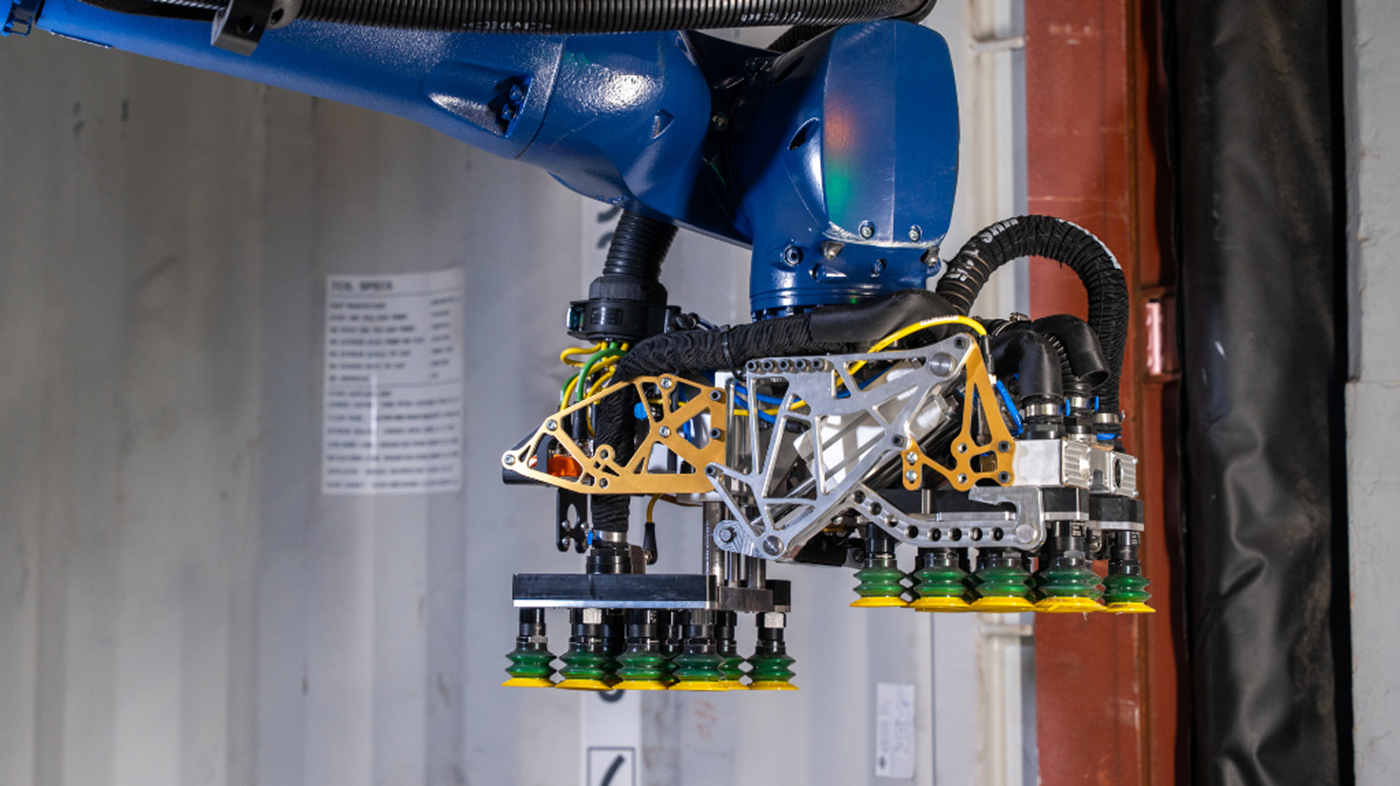
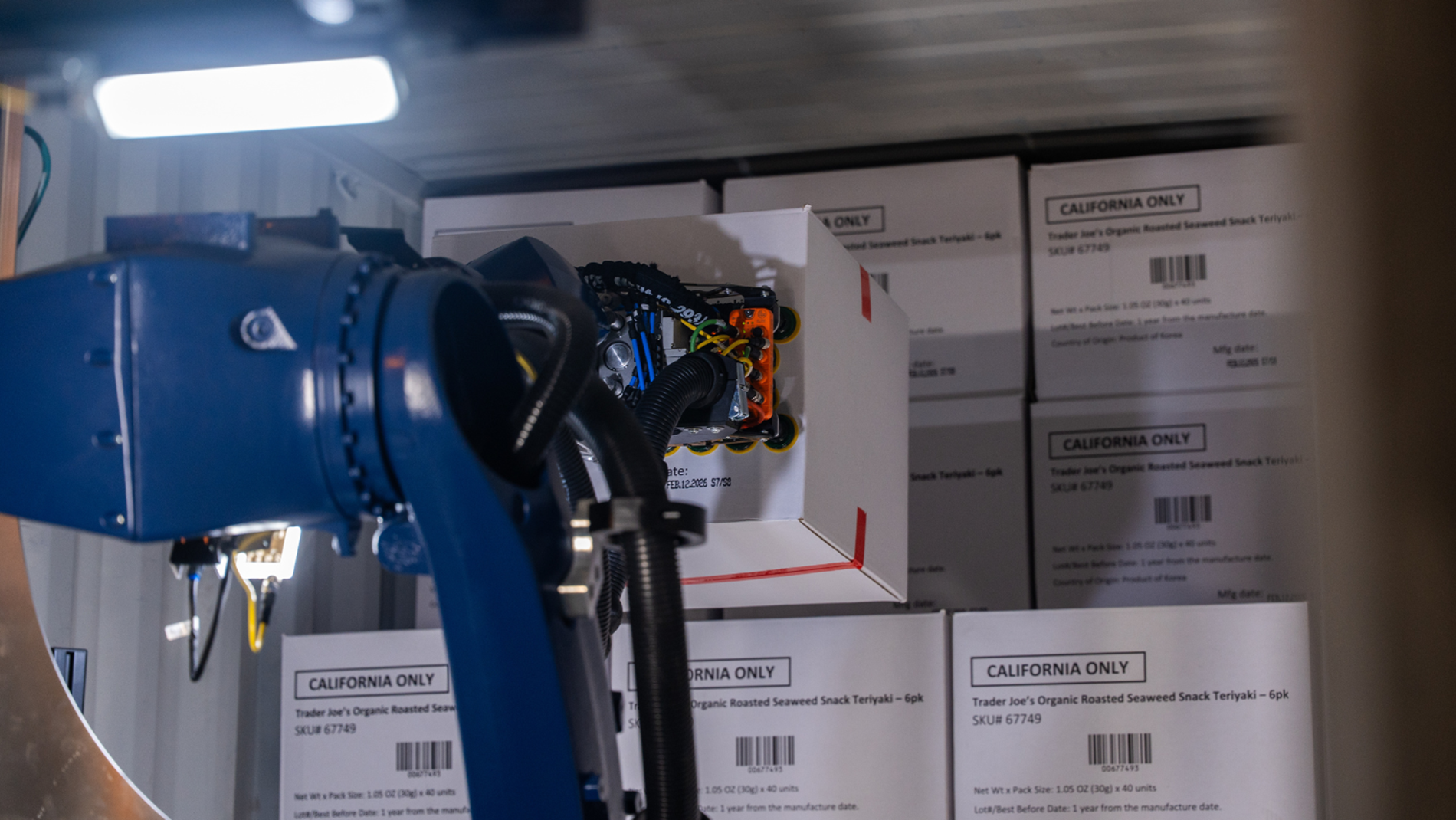
Contoro outfitted the KUKA robot with advanced cameras and sensors to collect vital information about the trailers, including wall locations, box positions, stacking, and sizes. This data creates a virtual environment for AdaptAI, which generates hundreds of optimized, collision-free paths based on box size, location, condition, and weight. Contoro’s DuoGrasp gripper securely handles cases from two sides, enabling industry-leading payload capacity.
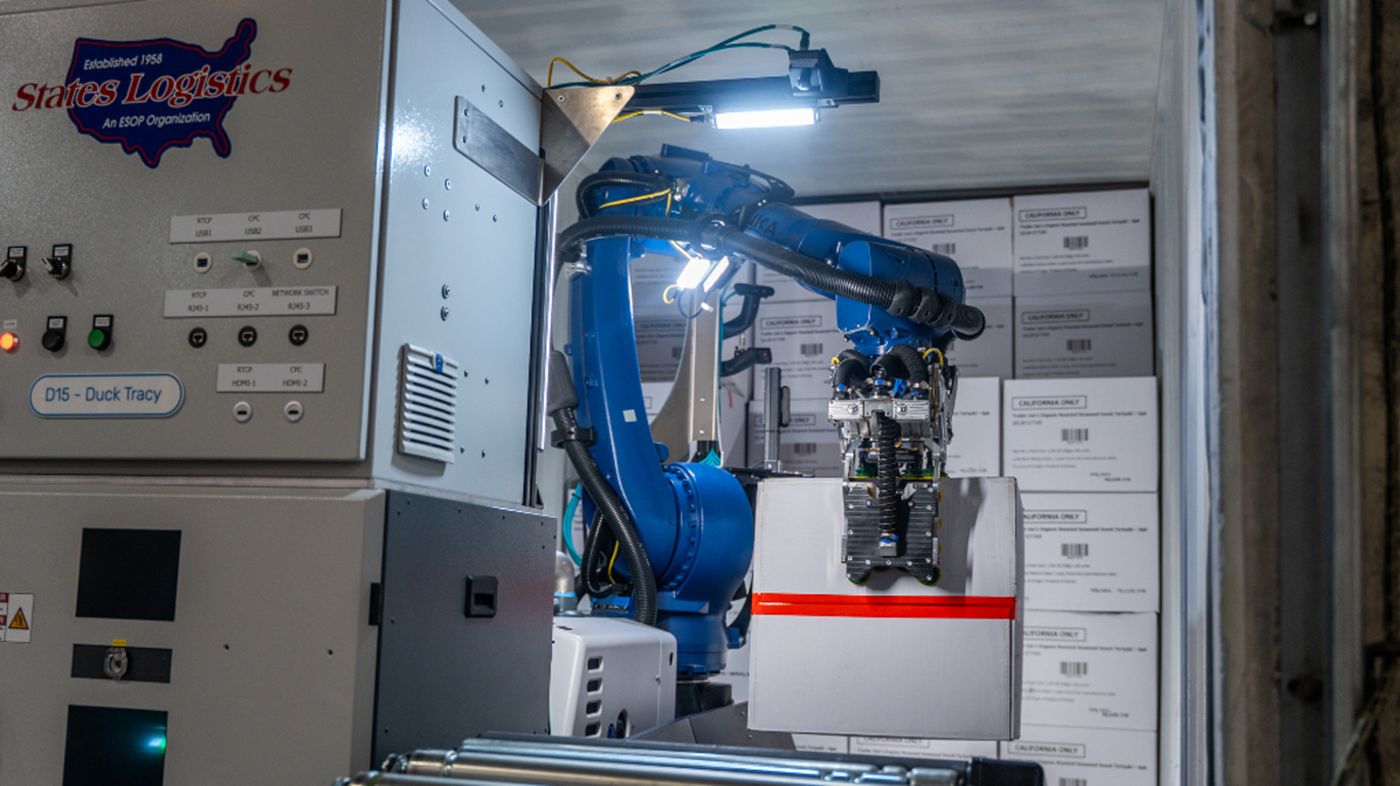
Contoro’s gripper can securely and reliably grasp diverse and heavy boxes by grabbing two sides simultaneously.

“KUKA met our needs completely, not only through their automated solution, but also their consistent support,” said John Cook, Business Development Manager for Contoro Robotics. “Even though we were a relatively new company at the time, they were very responsive and patient with us. Their lead times were spot on for where we needed them to be, and they were more than willing to engage with us.”

For States Logistics Services, Inc., the automated system has reduced physical strain on employees and created a more consistent unloading process that results in improved efficiency, better production times, reduced turnover, and lower labor and injury-related costs.

Robotics-as-a-Service Enable Warehouse Automation

Sevilla emphasized that the primary value lies in the service model and its ongoing operational benefits. Delivered through a robotics-as-a-service (RaaS) model with predictable per-trailer pricing, the solution enhances labor efficiency and streamlines operations without requiring significant upfront investment. By shifting costs away from traditional capital expenditure, it lowers barriers to entry and aligns more closely with customers’ operating budgets. Contoro requires a minimum monthly volume to ensure effective deployment, and the transition from capital expenditure to operating expenditure has been well received by customers. Additionally, controlled robotic handling enables more consistent pallet builds, improved carton positioning, and a reduced risk of product damage.
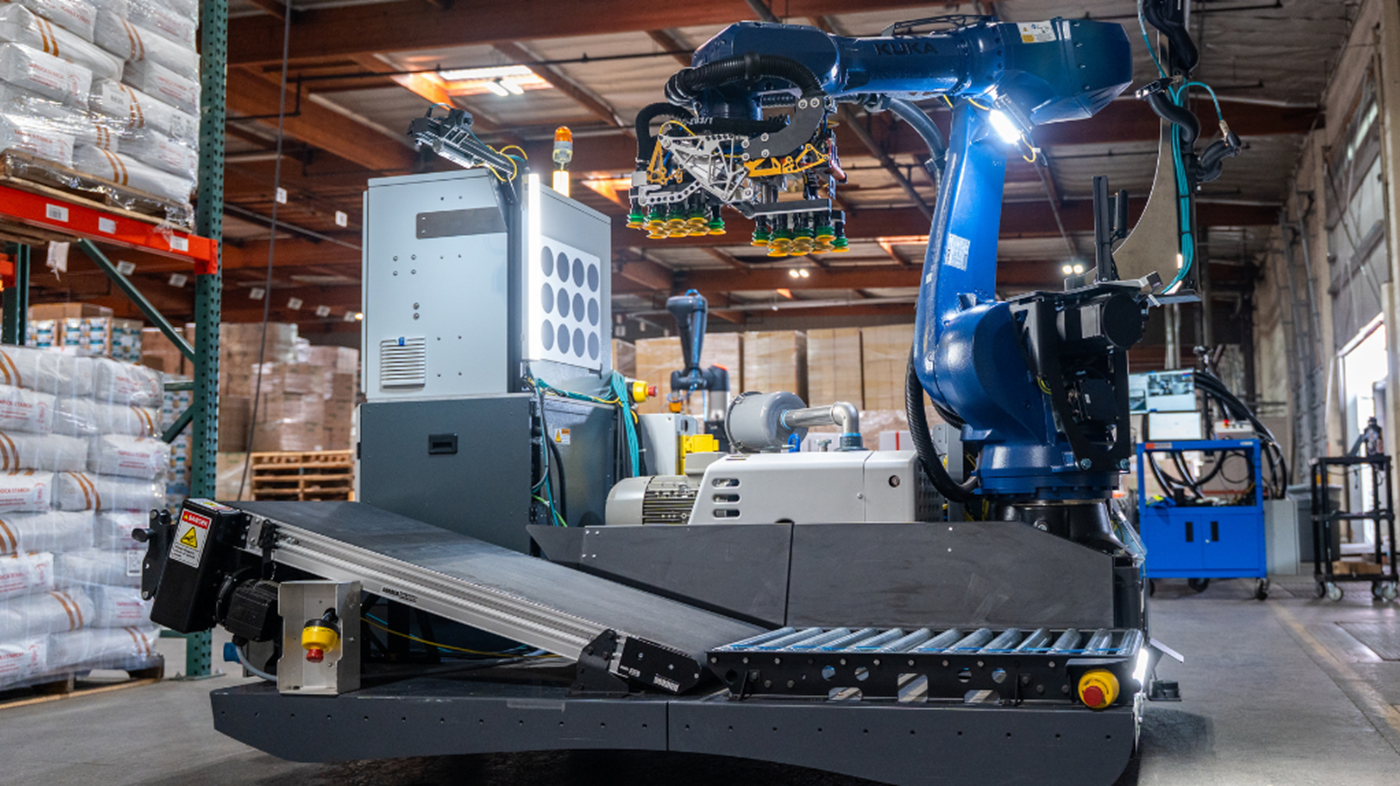
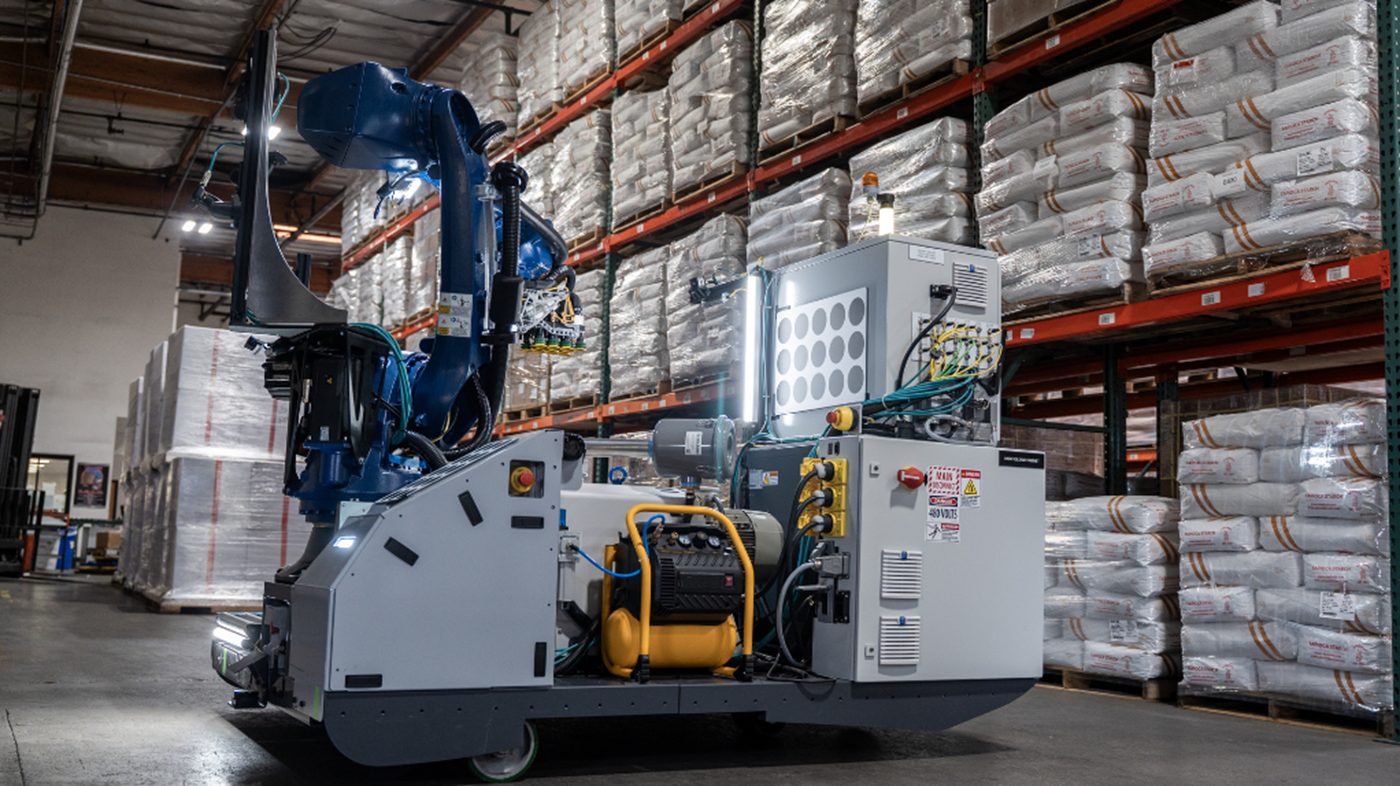
A mobile robotic platform allows the KR IONTEC to move dock-to-dock, supporting flexible deployment across multiple unloading bays.

Easing Labor Strain and Increasing Efficiency

Prior to adding automation to its workflow, States Logistics Services, Inc. employees working an eight-hour shift were only able to offload two or three truck containers. Now, the robots can do four to five containers per shift with Contoro.

Most standard containers are either 20 feet or 40 feet long, but the company deals with refrigerated containers as well, which have special grooved floors for air circulation that posed a bit of a challenge in automating the container offloading operations.

"The unevenness of the refrigerated containers meant we needed to rethink the mobile base that the robotic arm is mounted to and the conveyer system, so they could traverse into the trailer,” said Cook. Contoro met the challenge of refrigerated trailer floors by altering the wheels of the conveyor.  The Contoro team also edited the perception array to accommodate the unique environment that the walls and air handling presented in the reefer trailers. “The mobile base not only holds the arm, but also a vacuum unit for the end effectors, an air compressor, a control box, and the conveyor. The robot and base are tethered to a customer-provided power supply located on the dock.”
The robotic unloading system has reduced physical strain on employees and created a more consistent unloading process that results in improved efficiency, better production times, reduced turnover, and lower labor and injury-related costs.

Setting Up the Robotic System

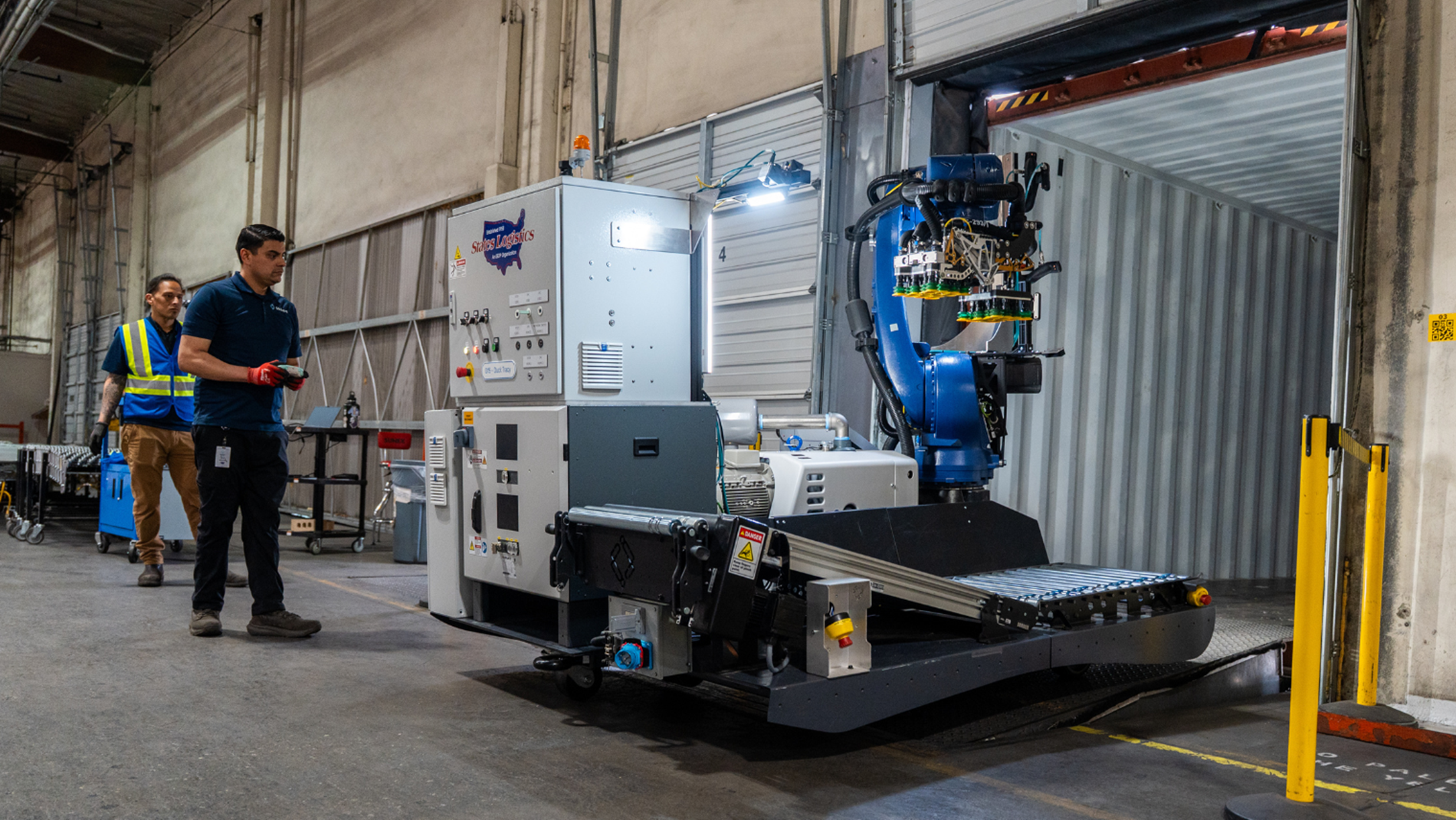
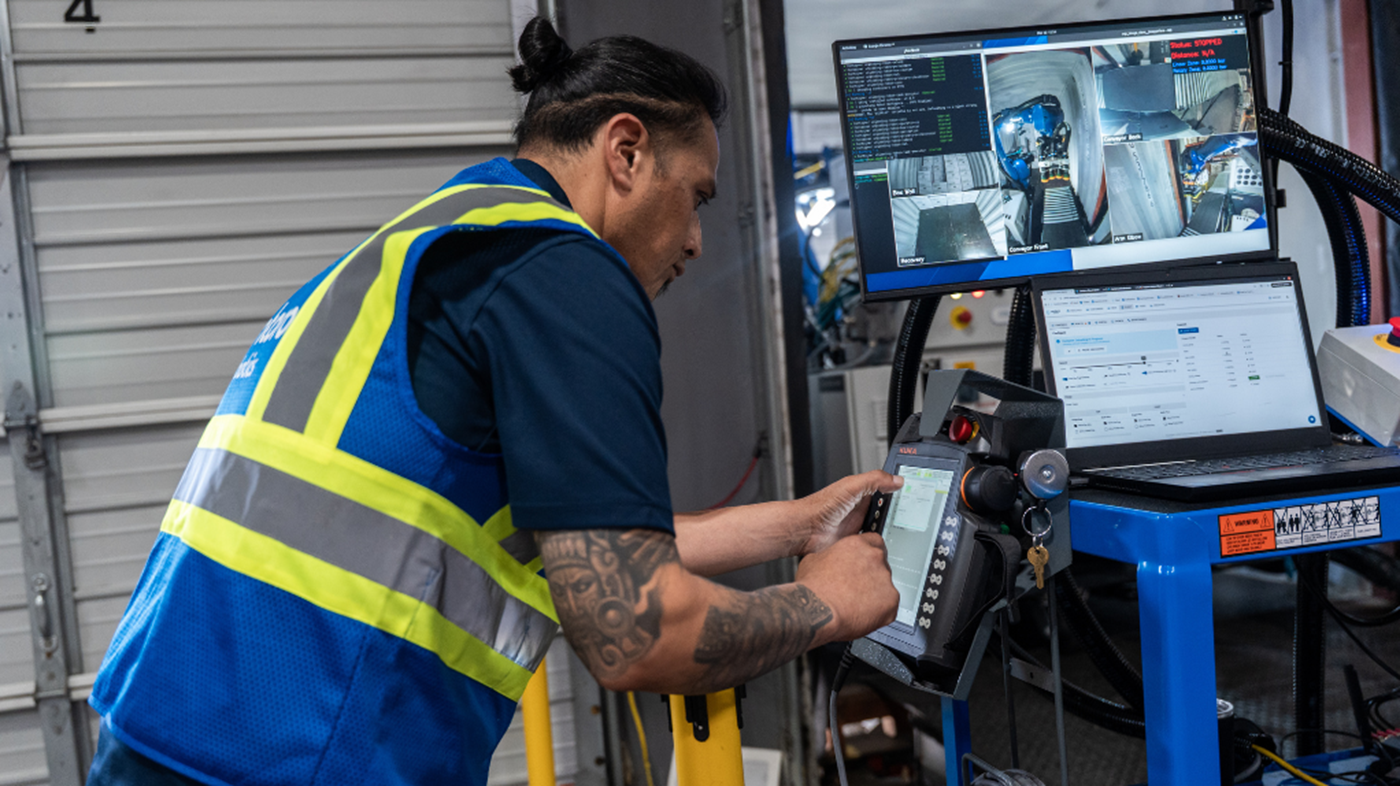
Operators drive the robot in the warehouse and from one trailer dock to the next using a handheld control device. For safety reasons, the movement is comparable to that of a forklift.

The automation system takes about 15 minutes to set up. Using a joystick control, the team aligns the robot to the container. As cartons are unloaded, the robot advances further into the trailer autonomously.  

The mobile robotic platform enters the trailer and positions a KR IONTEC arm for automated unloading, enabling flexible operation directly at the dock.

Spatial Awareness and Adaptive Grasping Through LIDAR and AI Vision

A light detection and ranging (LIDAR) system on the front of the robot allows it to know where it is spatially within the trailer. The system keeps the robot at equal distances away from the walls and ceiling of the trailer and guides it to autonomously drive forward as the walls of cartons are removed.

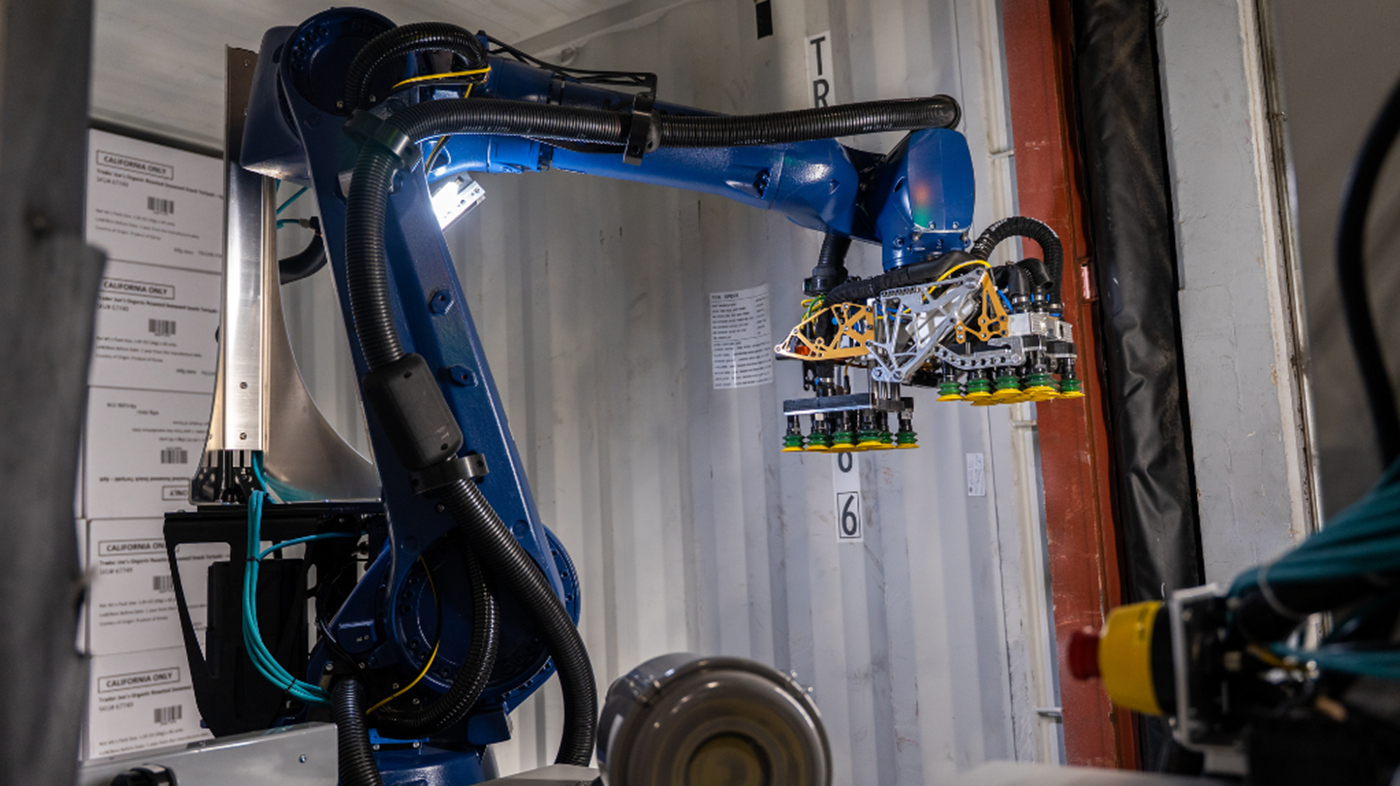
The KUKA KR IONTEC’s compact design and large working envelope enable efficient operation inside confined trailer spaces.
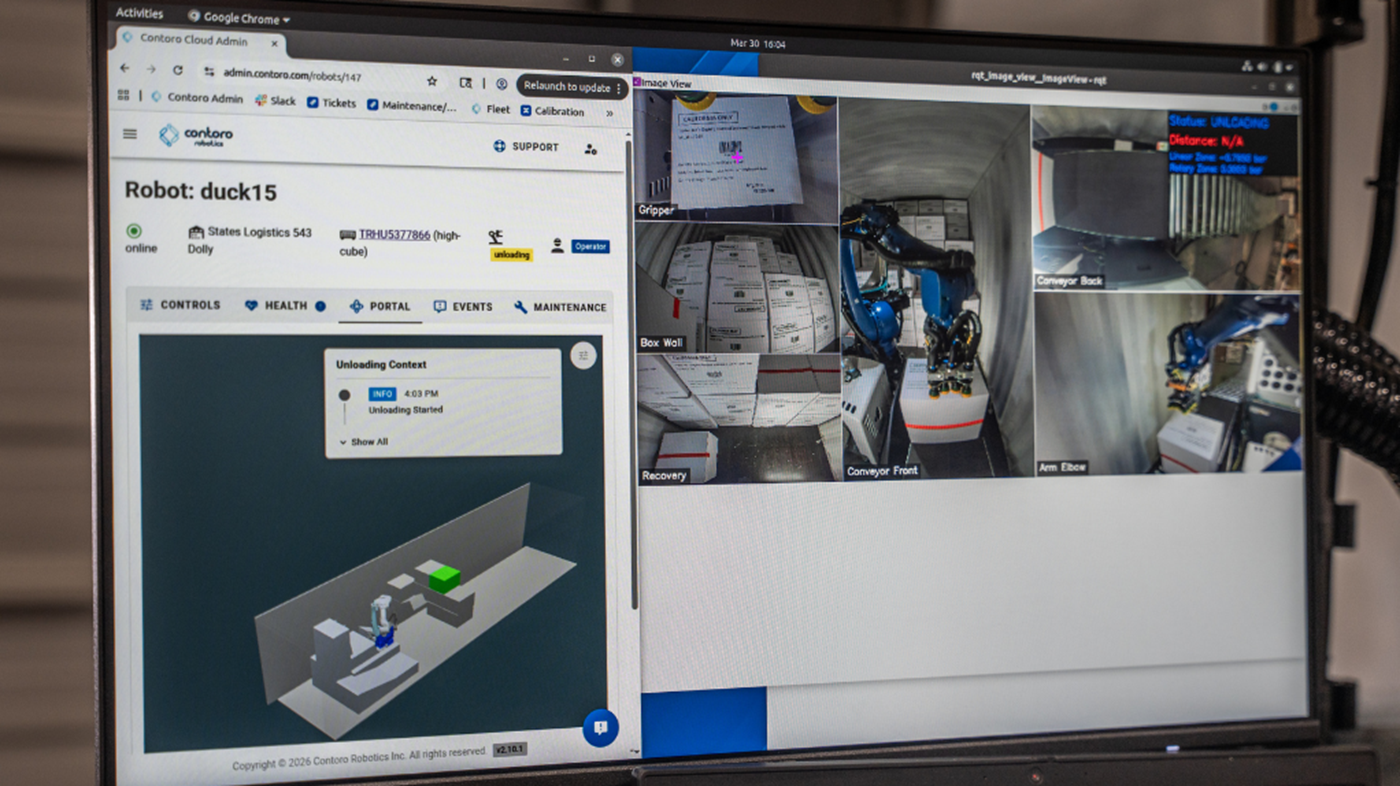
Several cameras mounted at various locations on the robot arm essentially take images of the walls of cartons. These images feed back to the control that uses a Contoro Robotics AI-powered algorithm to assign tasks to the robot arm and its grippers, essentially telling them how to grasp cartons, whether from the top or sides. Basically, the robot learns from the cartons that are offloaded how to grasp the next carton, and the more freight of the same size the robot “sees,” the more efficient its operation gets.
Using integrated sensor data and KUKA.SensorInterface allows the system to process camera and spatial inputs to guide each pick in real time.
In the case of extreme load shifting, human interaction could be required to correct it. Once corrected, the robot is deployed for unloading. When there’s product damage, the automation’s video cameras document that the carton or cartons arrived damaged.

The KR IONTEC’s adaptable payload range and mounting flexibility support a wide range of handling scenarios without fixed automation constraints.

Human–Robot Interaction and Safety Design

From a human/robot collaboration aspect, States Logistics Services, Inc. uses a cobot for palletizing, so any human contact stops its motion. The industrial robot arm, on the other hand, performs its tasks within the truck trailer’s contained space. As such, there’s no need for any humans within the area. There is, however, portable fencing placed at the trailer opening, and if its magnetic lock is breached, the robot automatically stops, to keep the team safe.

The robot, using AI-guided vision, picks up the cases and places them on a powered conveyor that moves them out of the trailer.
States Logistics Services, Inc. employees have embraced the automated technology and are always eager to learn more about it and be involved. Because of fluctuating workflows, much of the manual unloading was done by contracted labor, so very few of the company’s actual employees were affected by the integration of the new automation. Although, the company has retained some of the key contract employees and assigned them to other tasks that are much more productive for the company.
Dual-sided gripping technology stabilizes cartons during extraction, improving handling consistency across mixed-SKU loads.
Advanced perception systems feed data into the robot, enabling dynamic path planning and collision-free motion in constantly changing environments.

Scaling Automation for Long-Term Efficiency

With an employee stock ownership plan (ESOP) in place, States Logistics Services, Inc. and its team have a very forward-thinking, long-term vision on throughput improvement and cost savings. They make sure that every penny they spend is spent well, always maintain their equipment and constantly look for new technology that could further improve the customer experience as well as employee productivity.

According to Sevilla, KUKA is a global leader in robotics with proven reliability and strong engineering capabilities. Most importantly, its robots seamlessly integrate with the advanced AI solutions from Contoro Robotics.

“Both companies were responsive and committed to ensuring this solution created a better work environment for our employees,” said Sevilla. “Looking ahead, we see strong potential for scalability across our facilities, along with improved service levels for our customers. We’re planning to expand automation further across additional facilities and workflows. Exploring AGV transportation of pallets, case picking, and potentially loading loose cases to leverage AI-driven systems, and other autonomous technologies could be in the future for States and Contoro.”

States Logistics looks forward to implementing additional automation across processes, both in-bound and out-bound.

Find KUKA system partners in your area

Find the right partner for your industry or specific challenge here.