You are using Internet Explorer and will not be able to use our website properly. Please change to an up-to-date browser for ideal presentation of the website.
Welding aluminium with industrial robots: How can you optimise your automation in manufacturing?
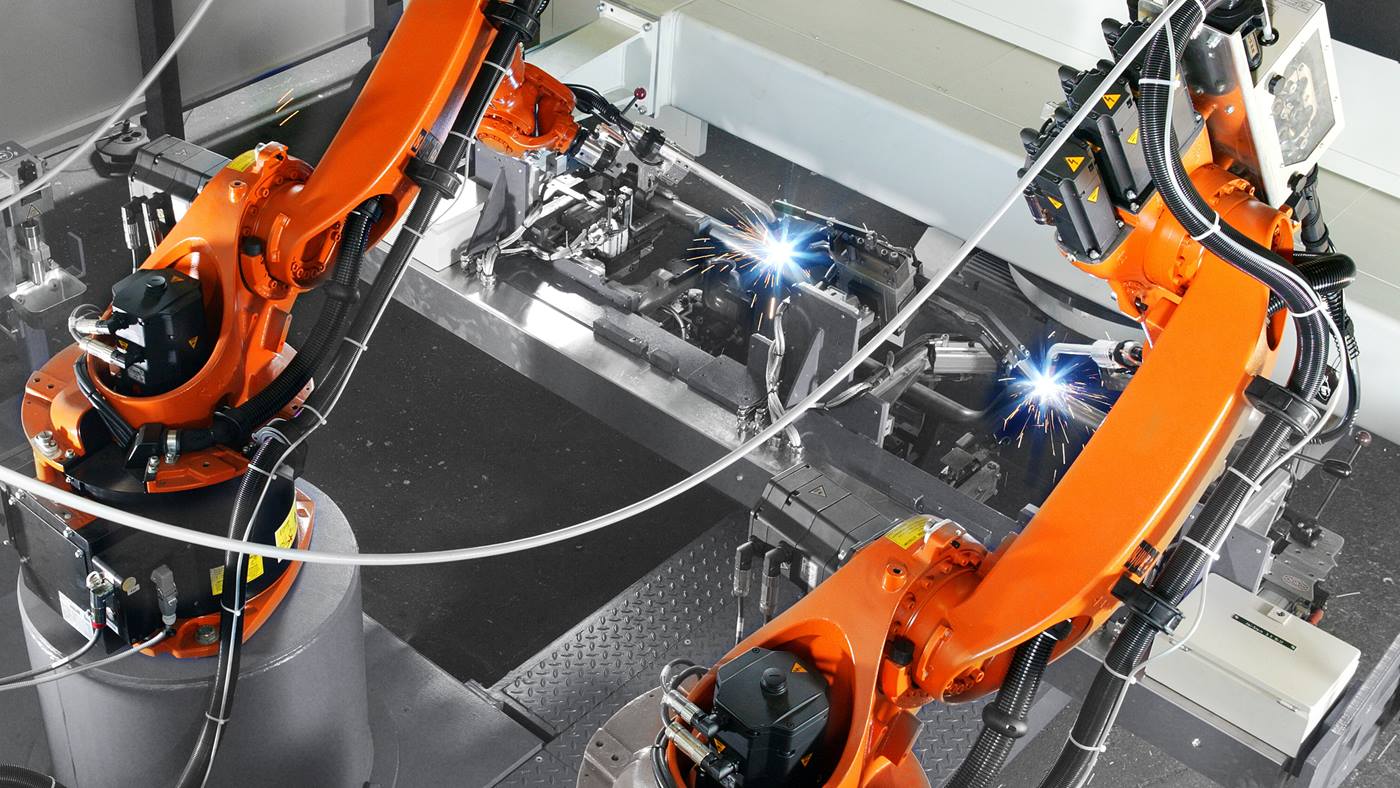
As a material, aluminium has many advantages in processing, but demands specialized control and skills for best results. At KUKA, we are the perfect partner for implementing complex welding techniques such as aluminium welding. We accompany you throughout the entire process and equip you with arc welding robots, welding cells and appropriate software.
Robot-based welding of aluminium components
Aluminium is a lightweight material that is indispensable in modern manufacturing. Aluminium is lighter than other metals, because it has a lower density. It also has an exceptionally low melting point. Compared to steel, aluminium has four times the thermal conductivity and twice the thermal expansion. The preparation, particularly removing the oxide layer, is crucial. The oxide layer that aluminium forms on the surface in combination with air presents challenges in welding.
This is exactly where KUKA comes in as your trustworthy partner in automation. We possess many years of experience in the field of automated welding. We equip you with the necessary robotics solution and offer you comprehensive services for optimising your welding processes. We offer many welding options. This includes MIG, TIG, spot welding, laser welding, and brazing. Our wide range covers almost every process.
Welding aluminium: quicker, easier, further
Aluminium offers high strength in relation to its density, which makes it a popular material for lightweight construction. This property makes the use of aluminium interesting for practically every industry: The need for clean and precise welds is paramount in these applications.
Automotive industry
Body
Hoods
Chassis
Tailgates
Doors
Transportation and traffic industry
Aircraft
Rail vehicle construction and streetcars
Bicycle and motorcycle frames
Commercial vehicles (body structures such as platform gates)
Electromobility
Heat exchangers
Battery compartments
Chassis
Aluminium welding system from KUKA - simple processing with top quality
Thinking about the future: welding at extremely high temperatures, with a wide variety of gases and a perfect aluminium weld seam - KUKA robots can do it all.
Expert knowledge in all aluminium welding processes
Various methods are used for processing aluminium. These differ in terms of the gases and welding wire used. From MIG welding to special welding methods, we support our customers and integrators with our expertise in automation solutions as well as our process knowledge.
Aluminium spot welding
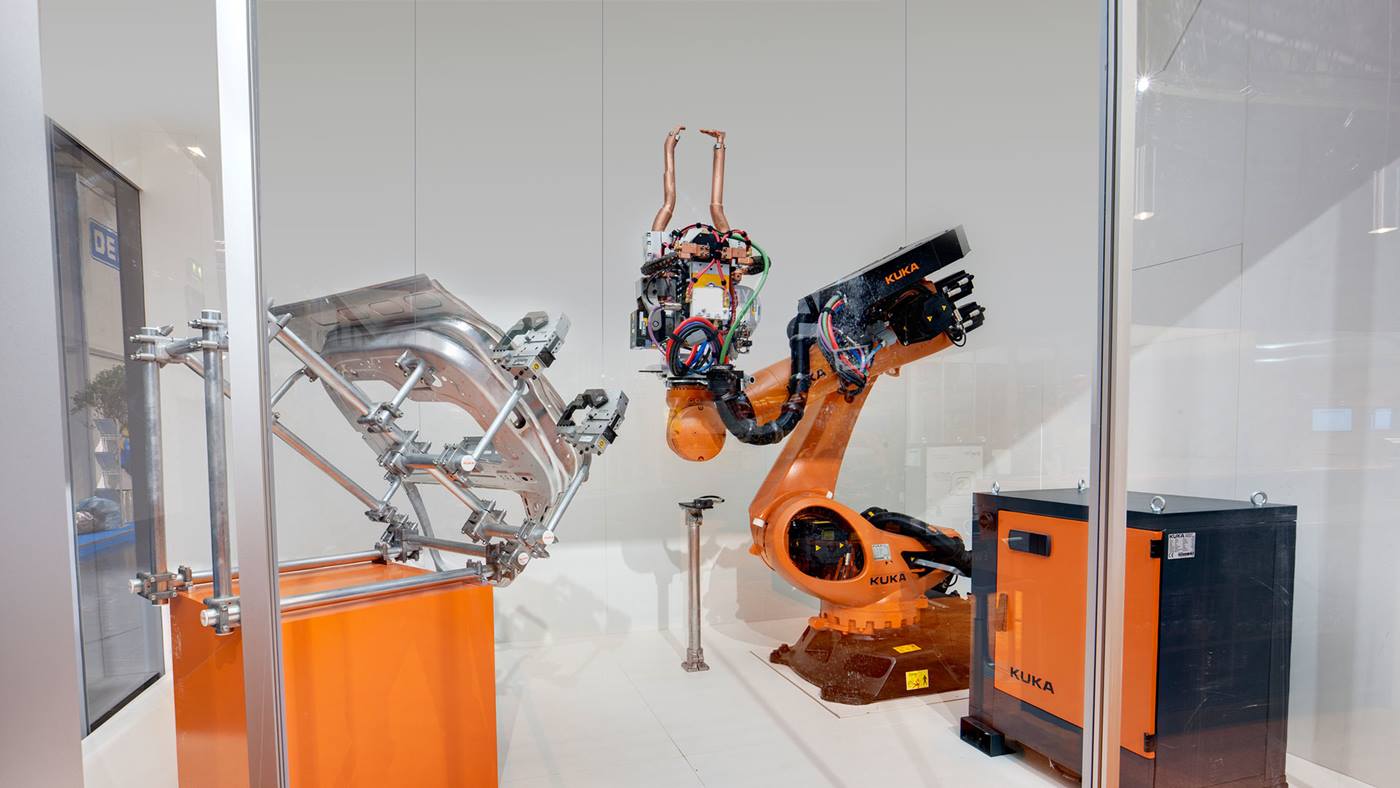
In spot or resistance welding, strong pressure is applied to a relatively small area. Electrodes provide a large amount of energy as an electric current. Local melting of the aluminium sheets between the electrodes leads to a strong joint between the components.
The KUKA.Robospin application software optimises the spot welding of aluminium joints. The special feature is that the robot movies in a circle around the weld while welding. This reduces contact resistance and lowers the aluminium alloying of the electrode tips.
Advantages
Improved weld quality
Longer electrode tips
Time savings because of less frequent tip dressing or changing of electrode tips
Watch the YouTube video to see how easy it is to weld aluminum with RoboSpin. Sheet metal joints that are difficult to weld and coated panels can be processed with ease.
Arc welding
Both TIG and MIG processes require clean surfaces to avoid porosity. Gas metal- arc welding is a type of arc welding process. In this processes, an electric arc forms between an electrode and the workpiece. This arc melts the workpiece and, if required, a filler metal to join them together. In aluminium arc welding, an inert gas flows around the electrode and the weld pool. This creates a shield to stop a unwanted chemical reactions between the oxide and molten material. Choosing the right electrical settings and shielding gas can directly affect seam formation, weld pool temperature and welding speed.
MIG welding (metal inert gas welding): In MIG welding processes, a melting aluminium welding wire is used as an electrode. This filler metal serves to bridge gaps, if necessary, or increase the strength of the joint. The choice of aluminium alloy for the filler wire can affect the joint's properties in MIG welding. Argon is the most commonly used shielding gas in welding aluminium, often essential in MIG welding aluminium. MIG welders work well for thicker pieces of aluminium steel. This is because MIG welding thin pieces can cause burn-through. A TIG Welder is best suited for thin materials to prevent burn-through. The minimum aluminium thickness for MIG welding should be 14 ga to 18 ga. If the alloy is thinner TIG welding is the more appropriate process.
TIG welding (tungsten inert gas welding): In this process, a burning arc forms between the aluminium part and a tungsten electrode that does not melt. TIG robotic welding uses alternating currents. It has a high-frequency electrode that does not touch the alloy. This helps reduce contamination and remove impurities during TIG welding aluminium.
Plasma welding: Plasma welding is a type of TIG welding. In this process, a water-cooled nozzle narrows the arc. An etxra plasma gas is also added. This creates a focused arc with higher energy density. It also impedes oxide formation creating a strong aluminium alloy weld seam. A TIG Welder's control helps produce high quality welds.
Advantages of the process
High welding speed
First-class aluminium weld seam
High deposition efficiency and welding depth
Simple handling
Application
Wide range of materials and material thicknesses
Laser welding
In laser welding, a laser heats the material to melting temperature. The radiation is focused with the aid of optics. The low melt amount and high thermal conductivity of aluminium cause a fast cooling rate, which often leads to hot cracks. This is why manufacturers often use appropriately alloyed filler wire for sensitive aluminium alloys.
Advantages of the process
High welding speed
Large welding depth
Low energy per unit length and thus low thermal distortion
Material combinations with copper, for example, also possible
Application
Thin sheets
Demanding components that require a low heat input
Laser hybrid welding
In laser hybrid welding, the laser welding process works together with a gas metal-arc welding. This if often MIG welding. In laser welding, a filler wire is often used to prevent hot cracking. Therefore, it is smart to feed liquid filler wire through the welding arc.
Advantages
High welding speed
Large welding depth
Low energy per unit length and thus low thermal distortion
Material combinations with for example copper are also possible
Application
Alloys sensitive to hot cracking
Components subject to tolerances
Thick aluminum alloy sheets
Friction welding
Friction welding is a joining process that produces full-surface contact joints. Rotating one workpiece under pressure against another workpiece creates friction. This creates heat between the two surfaces and plasticizes the material. No filler materials, additional flux or shielding gases are required for processing the alloys.
Advantages of the process
Exceptional joint quality
Fully homogeneous joint over the entire joint area
Joining of different metals
Materials do not melt
Increased speed and joint integrity
Application
Material with low melting temperature
Rotationally symmetric components
Friction stir welding
Friction stir weldingis a process in which a rotating pin is traversed along the contact surfaces between the workpieces. The frictional heat plasticizes the material, which is welded together.
Advantages of the process
First-class weld quality
No welding defects such as pores or cracks
Joining of different metals and alloys possible
Comparatively low heat input
High seam strength with minimal welding distortion
Application
Welding of non-ferrous metals with low melting temperature
Welding of mixed-material combinations
Make us your port of call for your welding production
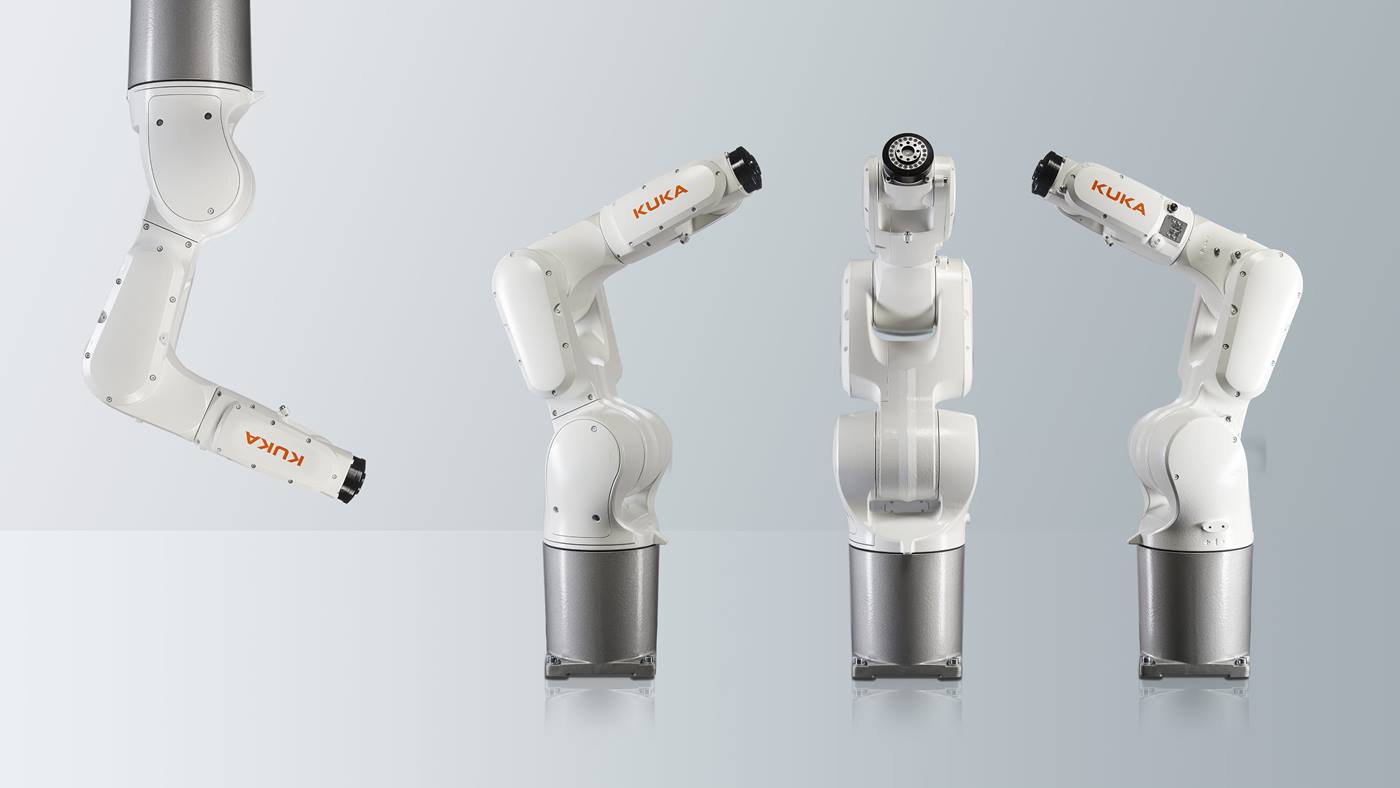
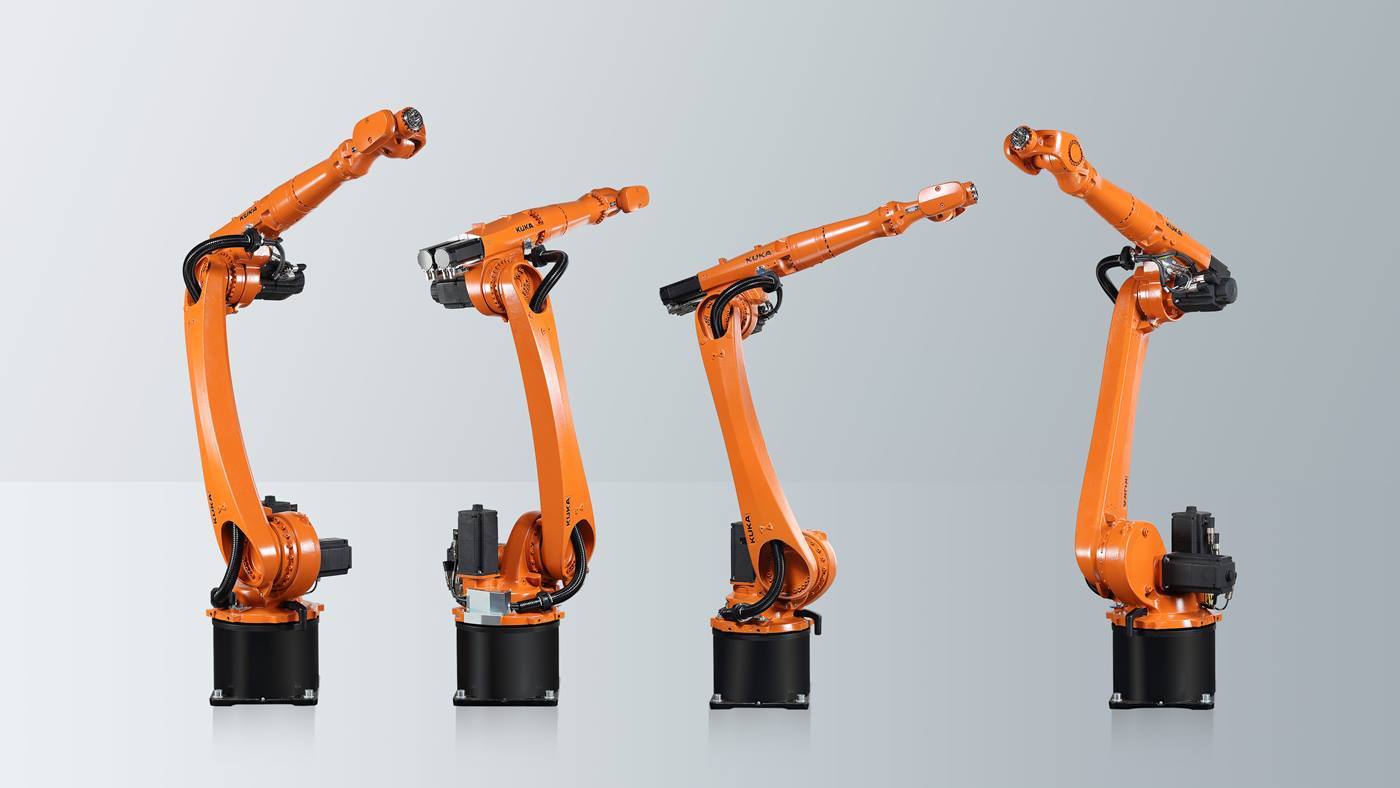
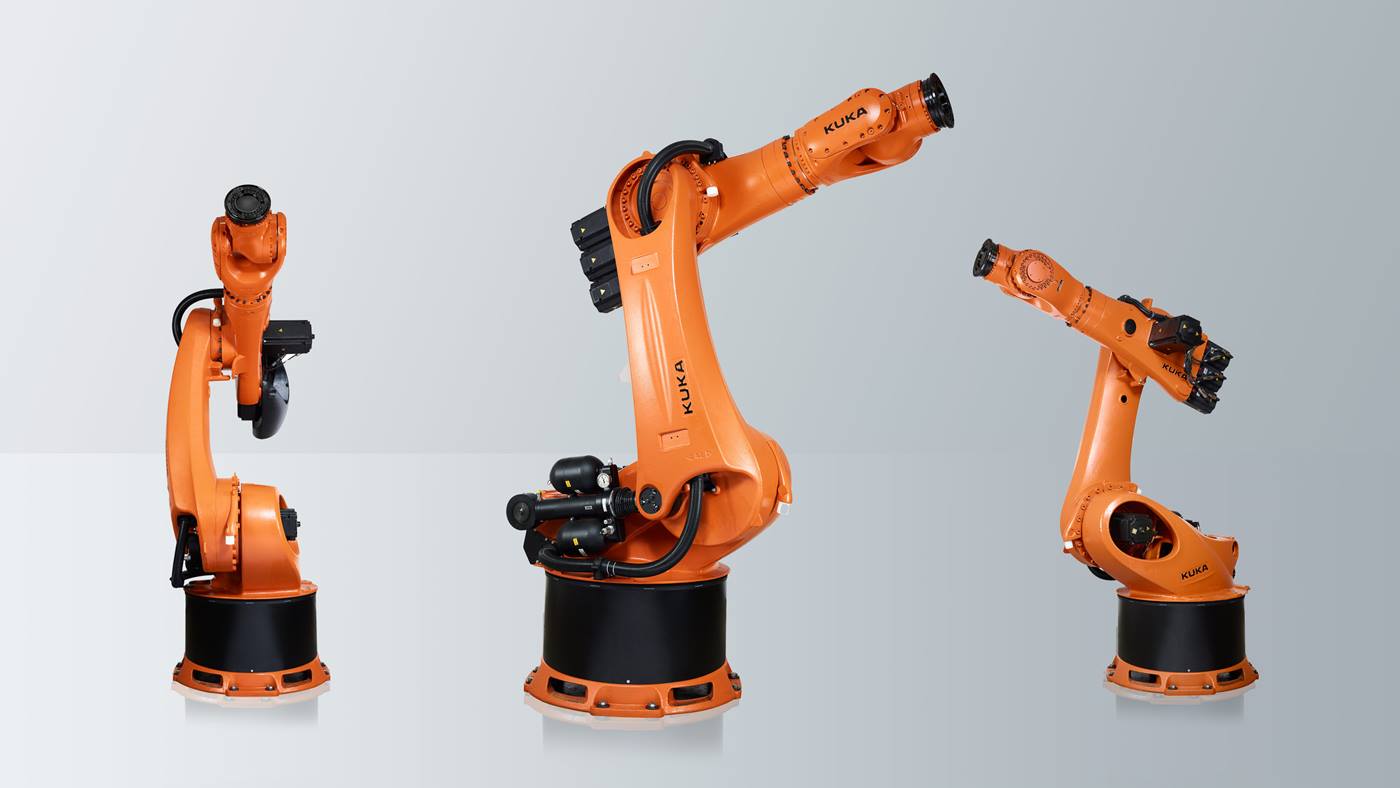
We provide everything you need for welding aluminium. This includes robots for arc and laser welding . We also offer robots for friction stir welding and complete production cells.
White Paper: Welding aluminium? No problem! Score high now in production for electromobility.
Due to its ideal combination of strength and light weight, aluminium – unlike steel – plays an important role in electromobility. KUKA makes you fit for the technological transformation towards electromobility. The battery compartment example shows how industrial robots enable the production of aluminium components to the highest quality standards.
Read about what is important for aluminium welding.