You are using Internet Explorer and will not be able to use our website properly. Please change to an up-to-date browser for ideal presentation of the website.
Touchless Car Washing Business Cleans Up With Industrial Robots
Autowash is reimagining the touchless car wash with industrial robotics. See how the company is using KUKA robots, 3D vision and intelligent automation to deliver faster, more precise washes while reducing water and energy use.
Mention industrial robots, and car wash facilities aren’t an application that typically comes to mind. However, for Dennis and Erin Dreeszen, these robots have proven the key to business success and continued growth.
Neither Dennis nor Erin originally worked in the car washing industry. Fourteen years ago, Erin was a school administrator in the Denver school system, and Dennis was a former CPA working in tax and employee benefits. However, both had a dream of doing something more that also positively impacted their community – creating touchless, scratch-free car washes.
The idea stemmed from a 3-day financial seminar they attended during their honeymoon. After which, they decided to venture into starting a side business alongside their successful careers. The couple considered turnkey businesses such as parking facilities, storage units, and other existing businesses, but became fascinated with the idea of a car wash and decided to build from the ground up.
What ultimately swayed their decision was their favorite local car wash. After touring the facility and meeting several other experts within the industry, they made the decision to build their first car wash facility which opened in 2013.
With the initial location successful out of the gate, the couple wanted to expand their unique car wash brand quickly. Three months after the first facility opened, they purchased a second property to develop another new car wash on the opposite side of the neighborhood. In 2014, a little more than one year in business, they acquired their first existing car wash and within 12 months revenue grew by 50% for that second facility. This led to their third location later opening in 2015. Within a few years, the Dreeszens added four more sites for a total of seven new locations by 2019 and now have26 locations serving customers.
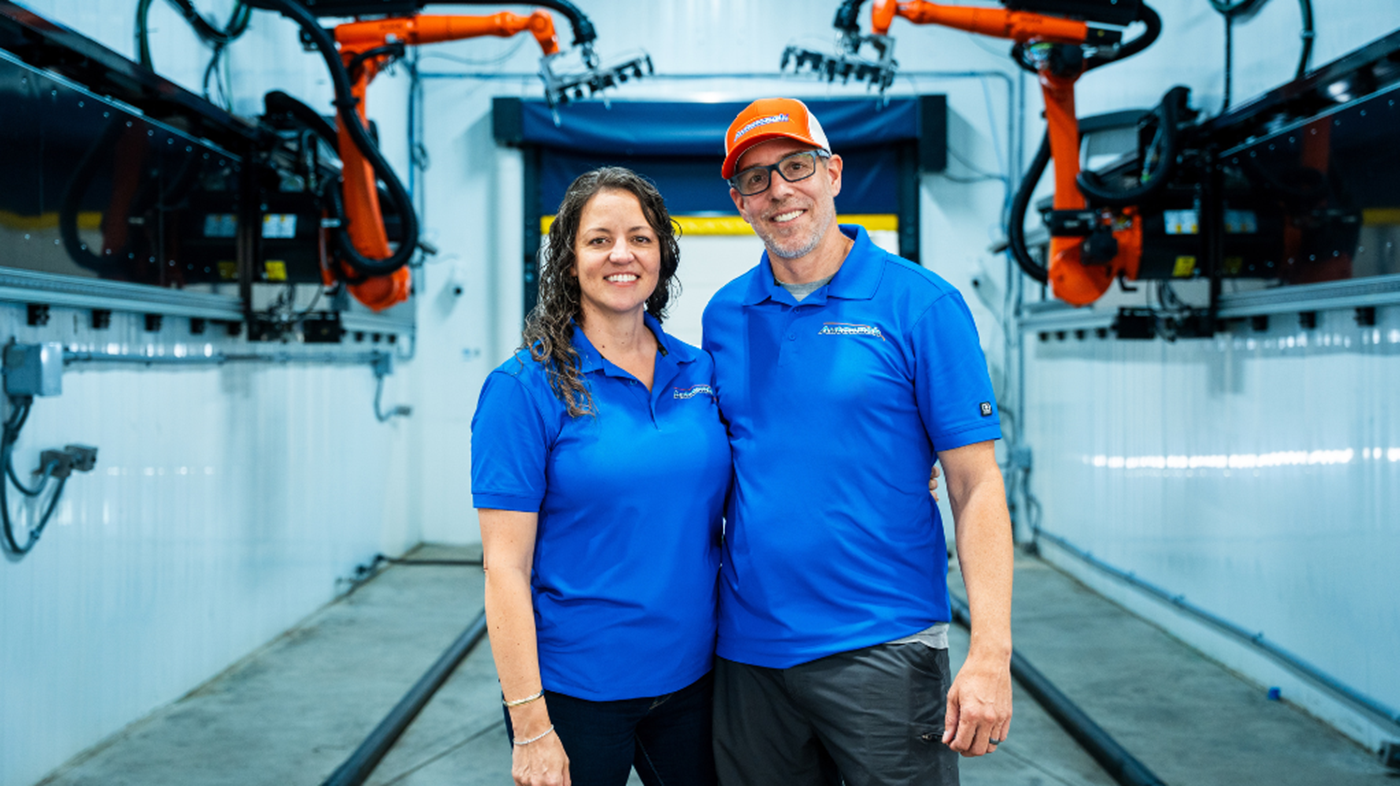
Autowash founders Dennis and Erin Dreeszen set out to create a safer, completely touchless car wash experience and are now using robotics to help bring that vision to life.
Autowash is now a chain of completely touchless, self-serve car wash facilities with its headquarters located in Denver, Colorado. The co-founders are currently in the process of incorporating KUKA industrial robots into all 26 of their facilities to provide an even safer user experience for damage-free car washes. With this automation technology, their car washing system will reduce electricity by up to 50% and water by up to 80%.
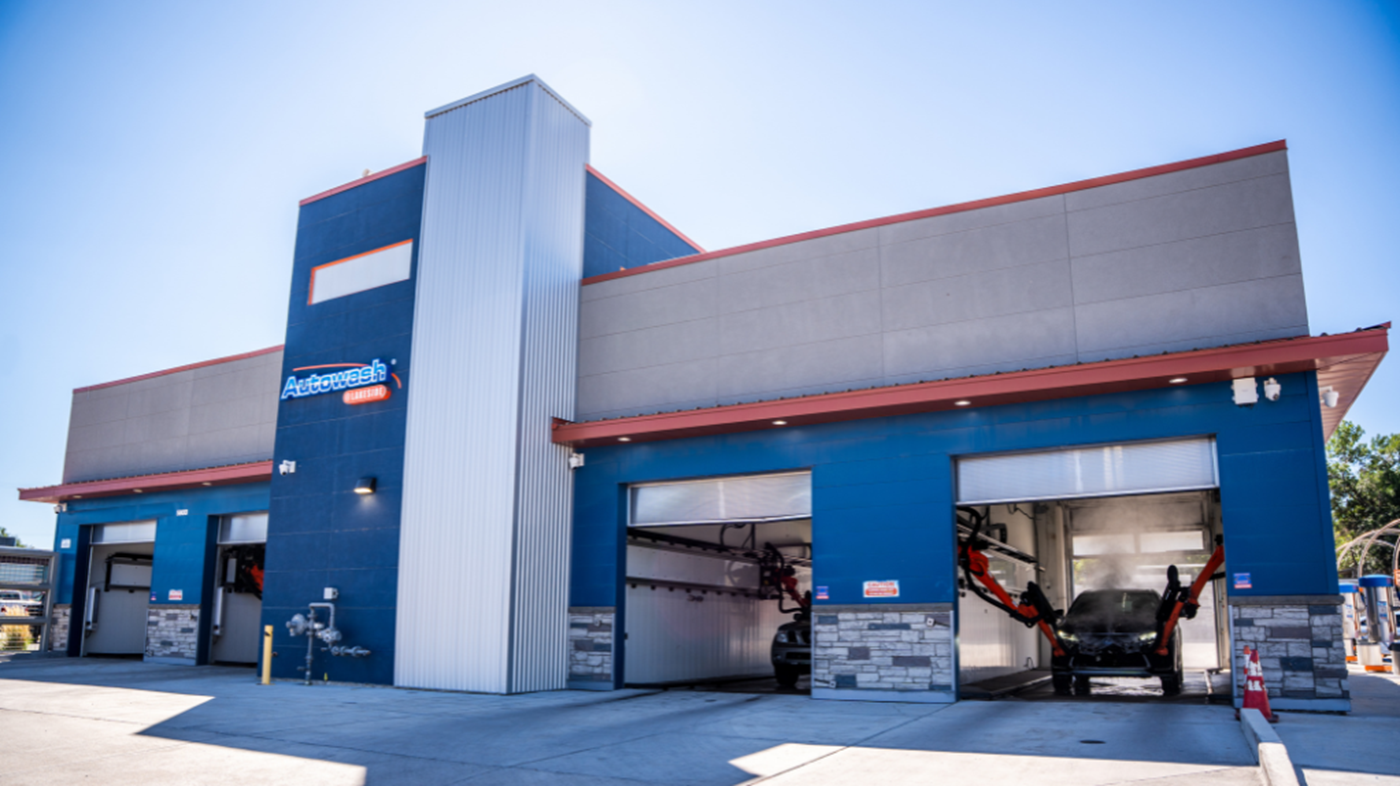
What began with a single location in 2013 has grown into a 26-location Autowash network, with plans to bring KUKA robotic technology to every facility.
Implementing Robotic Automation to Redefine an Industry
Autowash is reimagining the touchless car wash with KUKA industrial robots, 3D vision, and intelligent automation.
Rethinking the Touchless Car Wash
Being well entrenched in the automatic car wash world, Dennis, the company CEO, and Erin, COO, decided to venture out and see what technology would best fit their needs for a more modern touch-free car wash. They ended up visiting the 2025 Automate show, where they met with KUKA Robotics and further solidified their existing idea of implementing industrial robots into their car wash operations.
“We were fast approaching a cliff in terms of our current equipment,” said Dennis. “We had two options: we could give in and purchase 30-year-old technology like our competitors, or seize the opportunity to re-invent our operations with industrial robots.”
Current car wash technology is only designed to wash square vehicles, where today’s automobiles are far from perfect box shapes. They have contours, intricate areas that are hard to reach, and sensors and cameras that traditional car washes can damage.
On top of that, today’s electric vehicles (EVs) are constantly sending out frequencies that interfere with older, less modern car wash technology. According to Erin, many EV owners’ manuals even warn against using automated car washes. “Besides our passion for touchless car washing, the lack of updated technology that today’s cars need to safely get a wash has further driven the demand for automated touchless washing,” she said.
A Smarter Wash for Every Vehicle
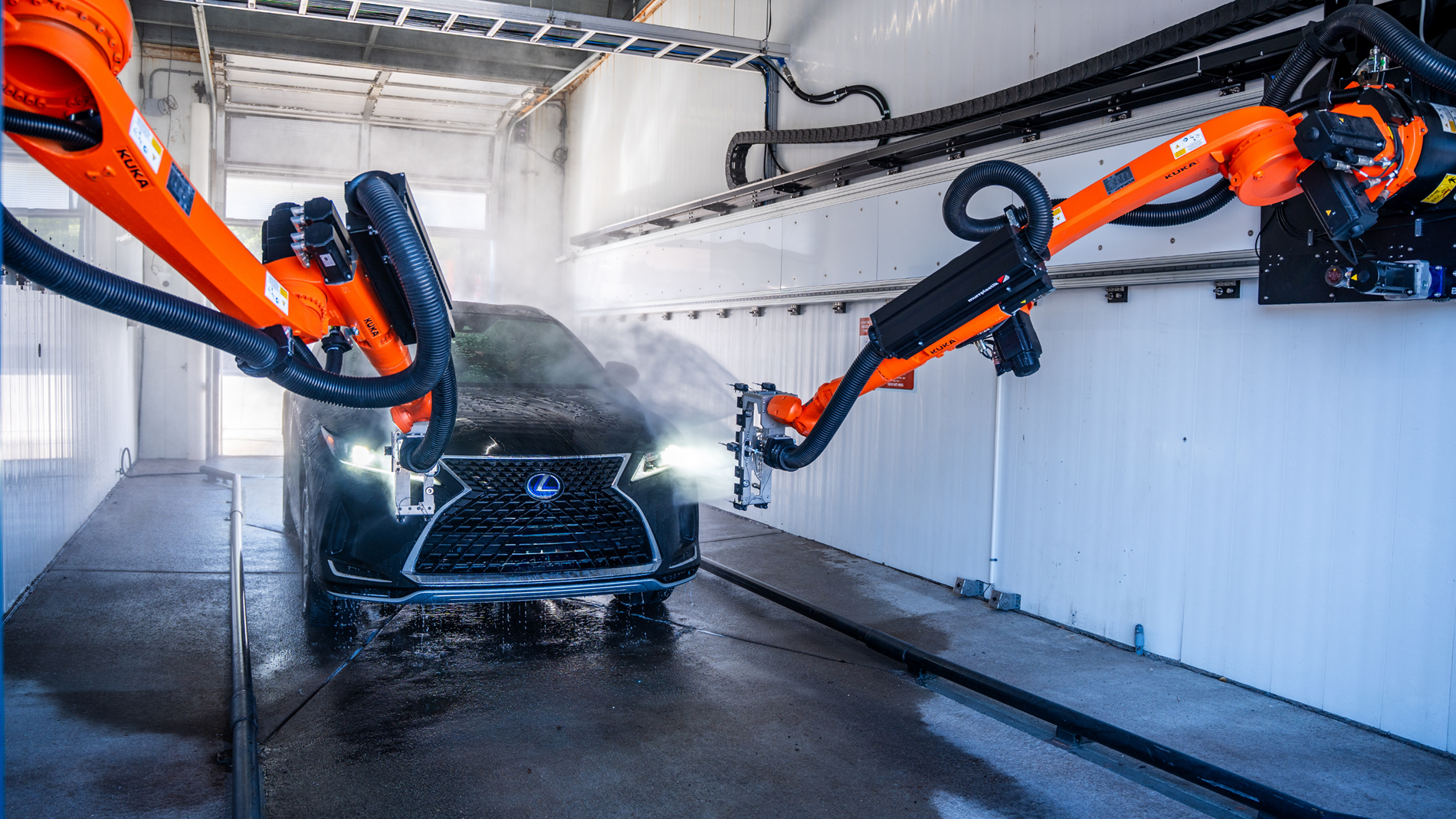
The couple’s new automation system uses two KR CYBERTECH industrial robots from KUKA, operating software, 3D vision technology, and surveillance cameras. The sophisticated system scans vehicles and generates 3D images of each individual car and all its unique details. The images are then used to program robot paths on the fly. Even if the same vehicle returns two weeks later, the system performs a fresh scan to ensure every wash is tailored to its current condition.
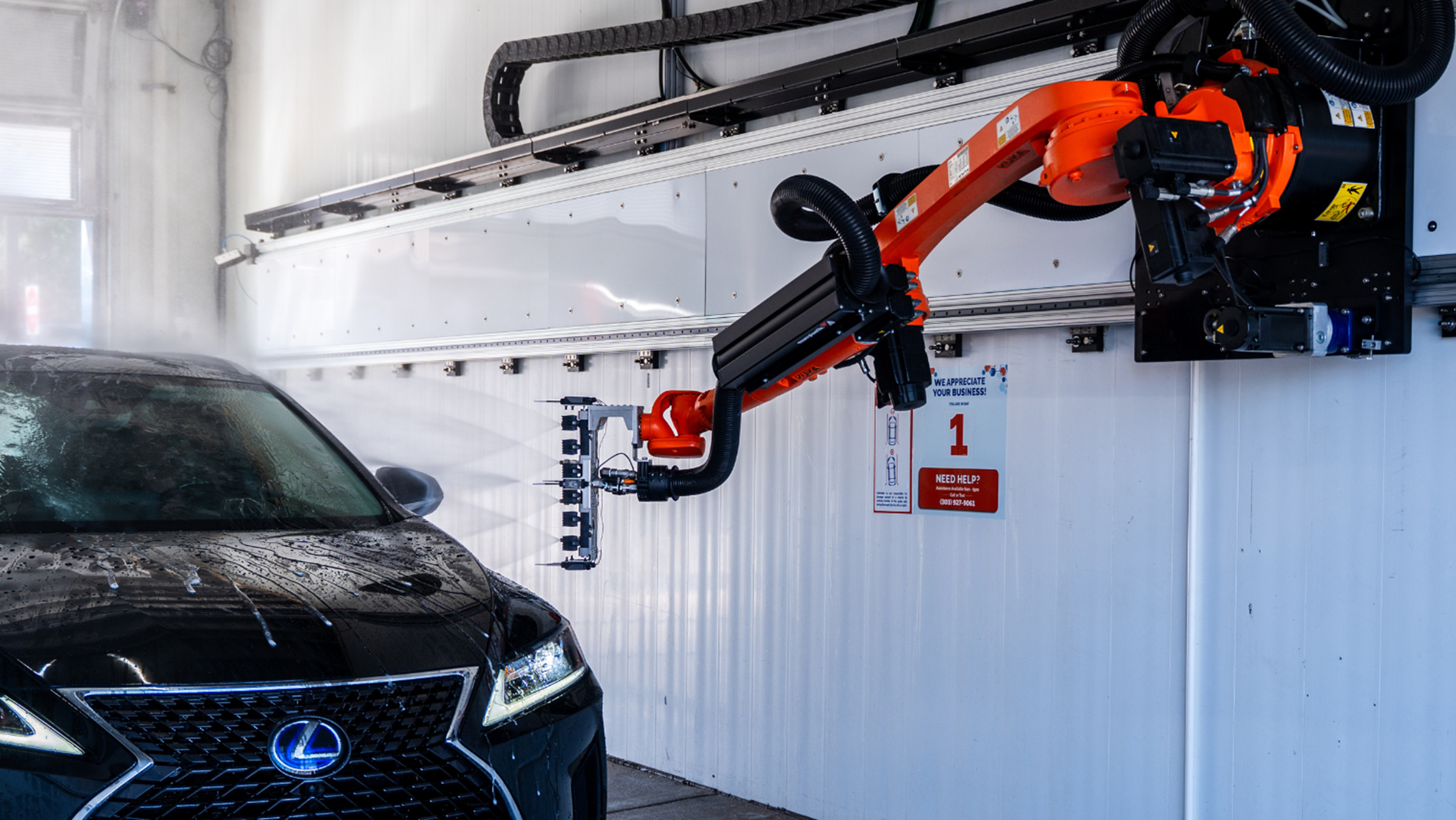
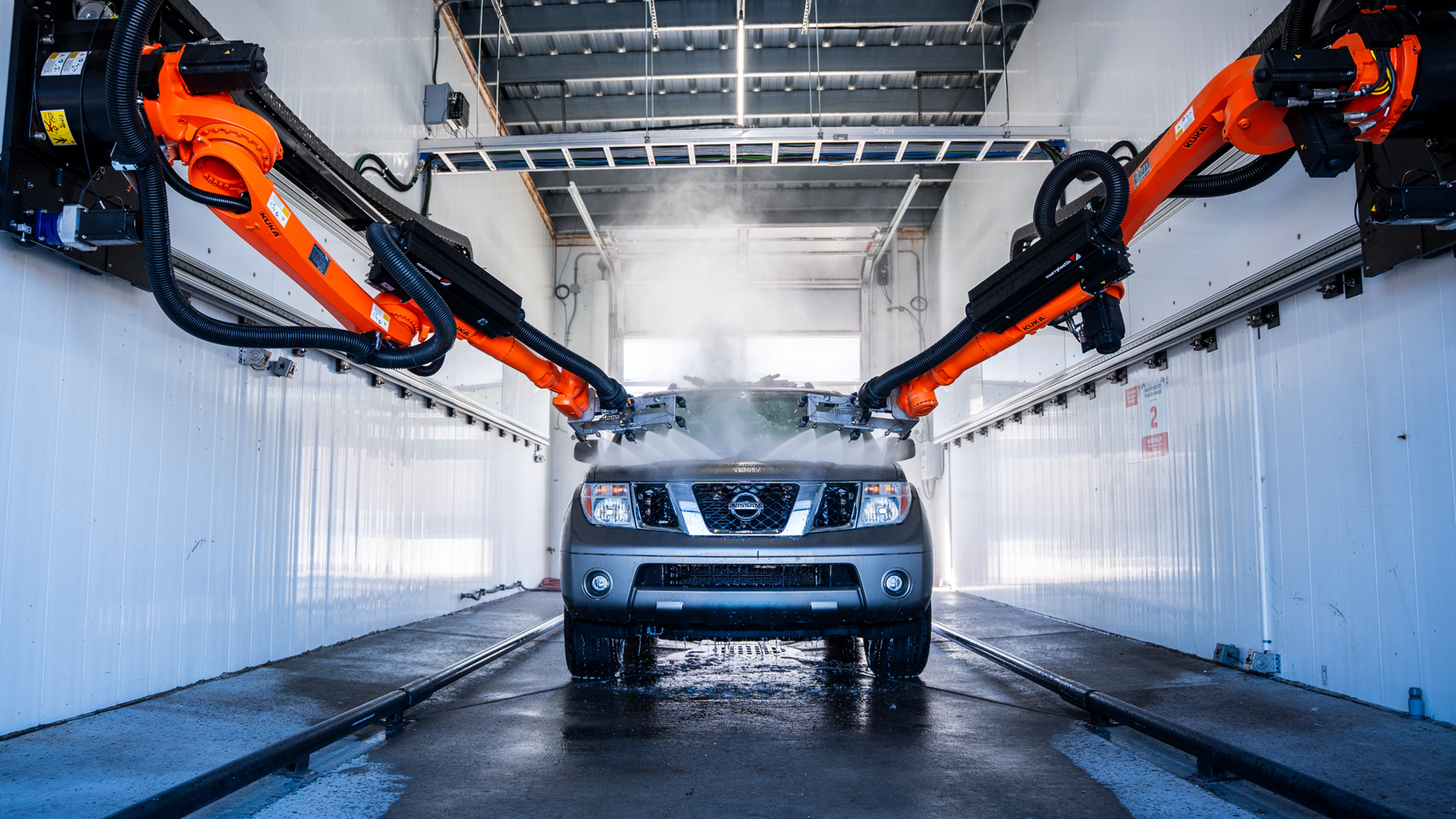
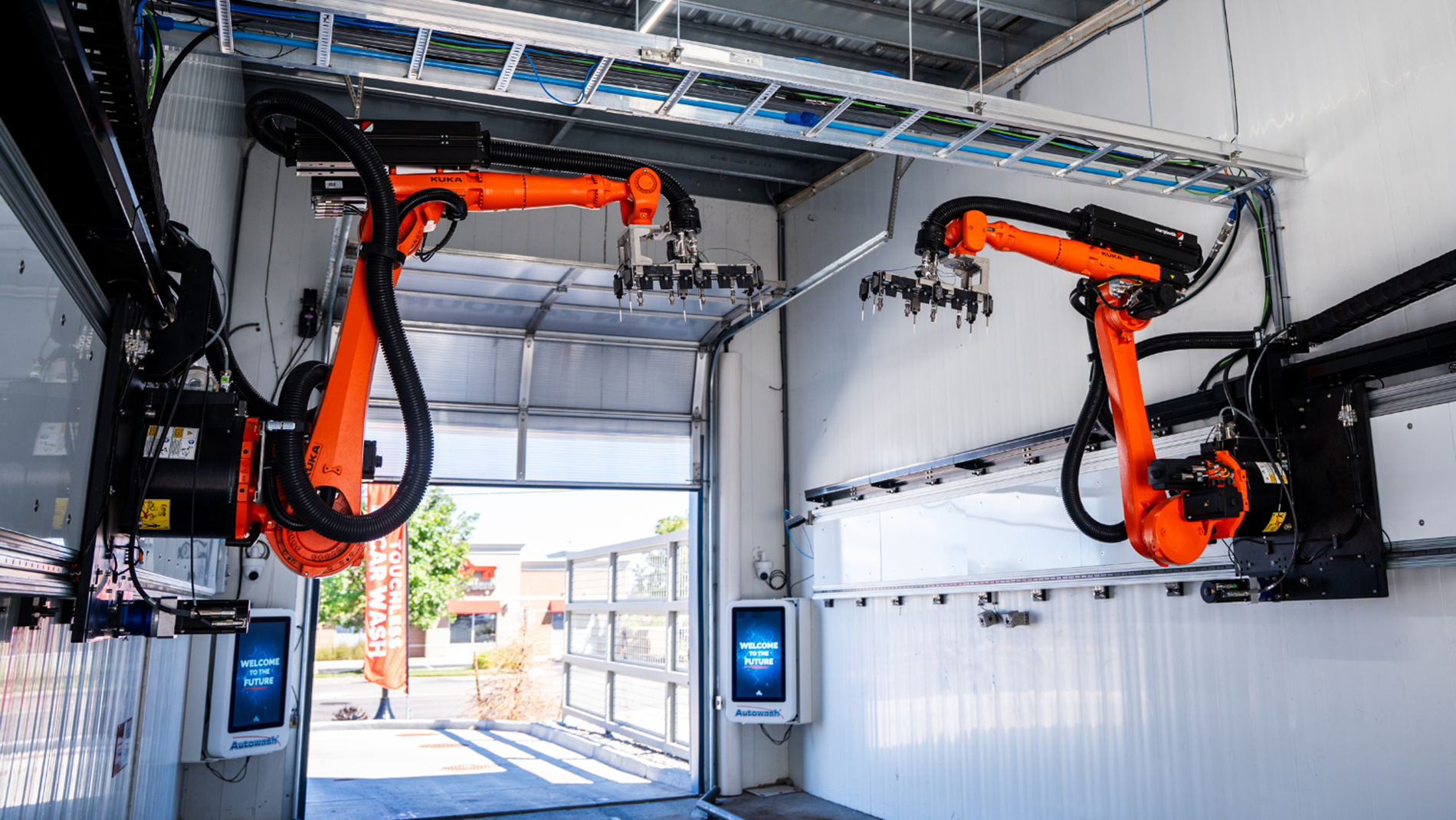
Two KR CYBERTECH robots work from wall-mounted linear rails, providing an additional axis of movement to reach the front, rear, and sides of each vehicle.
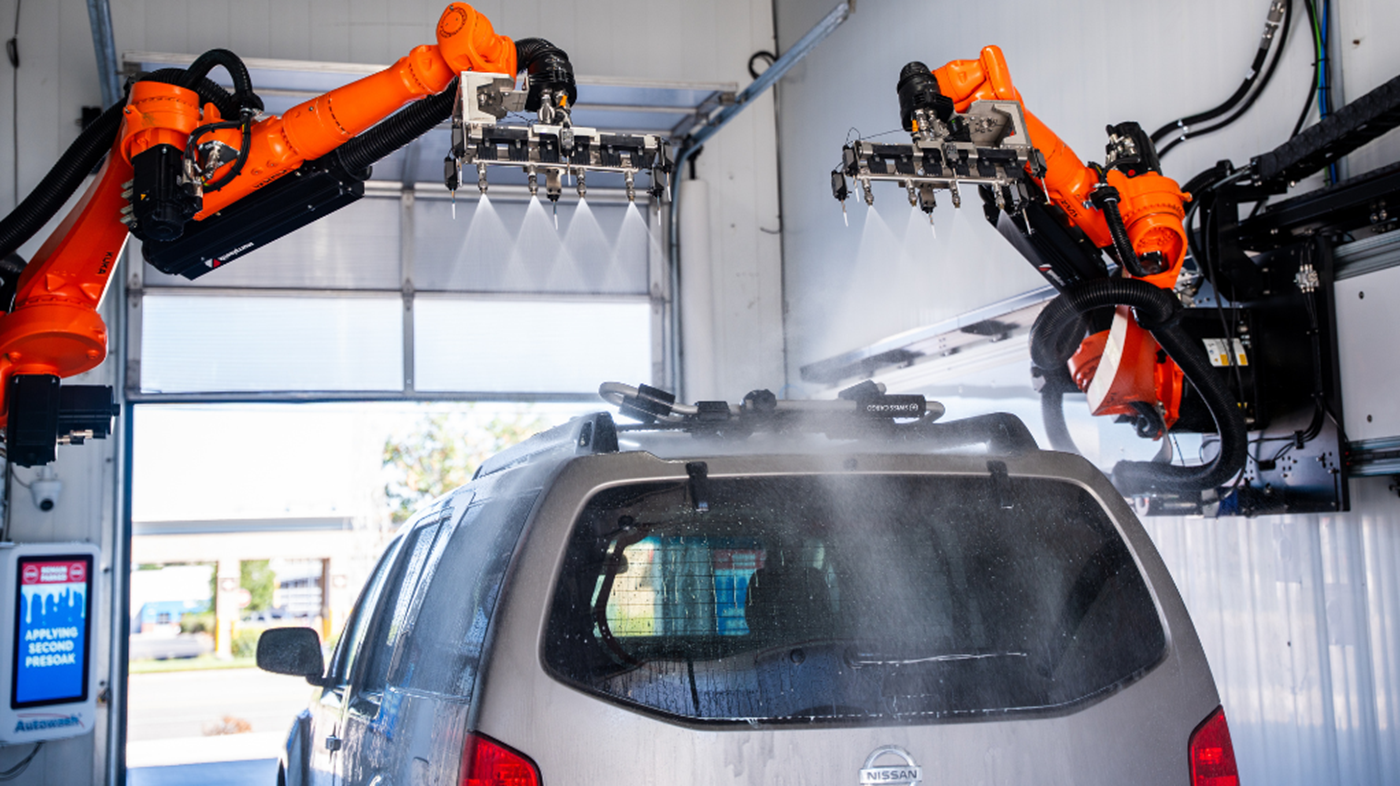
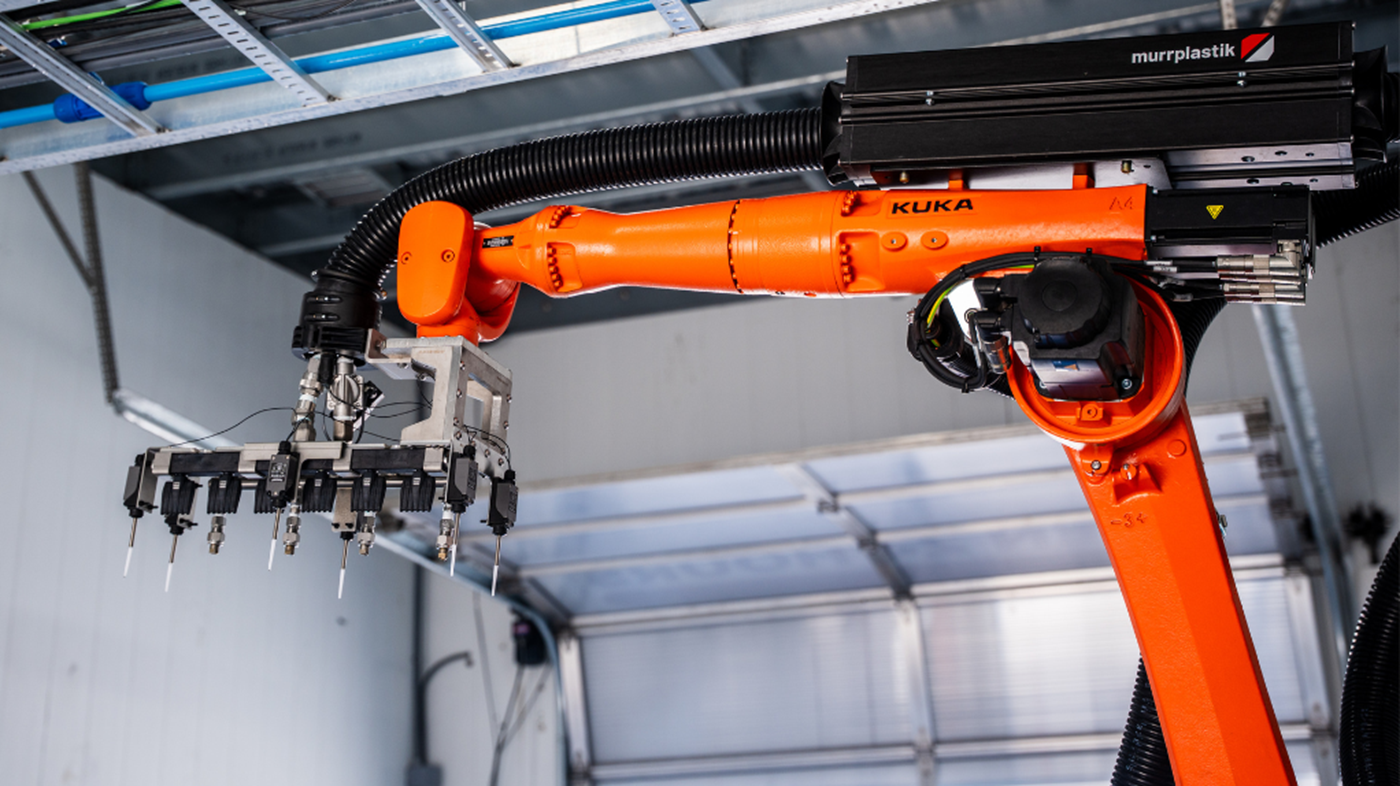
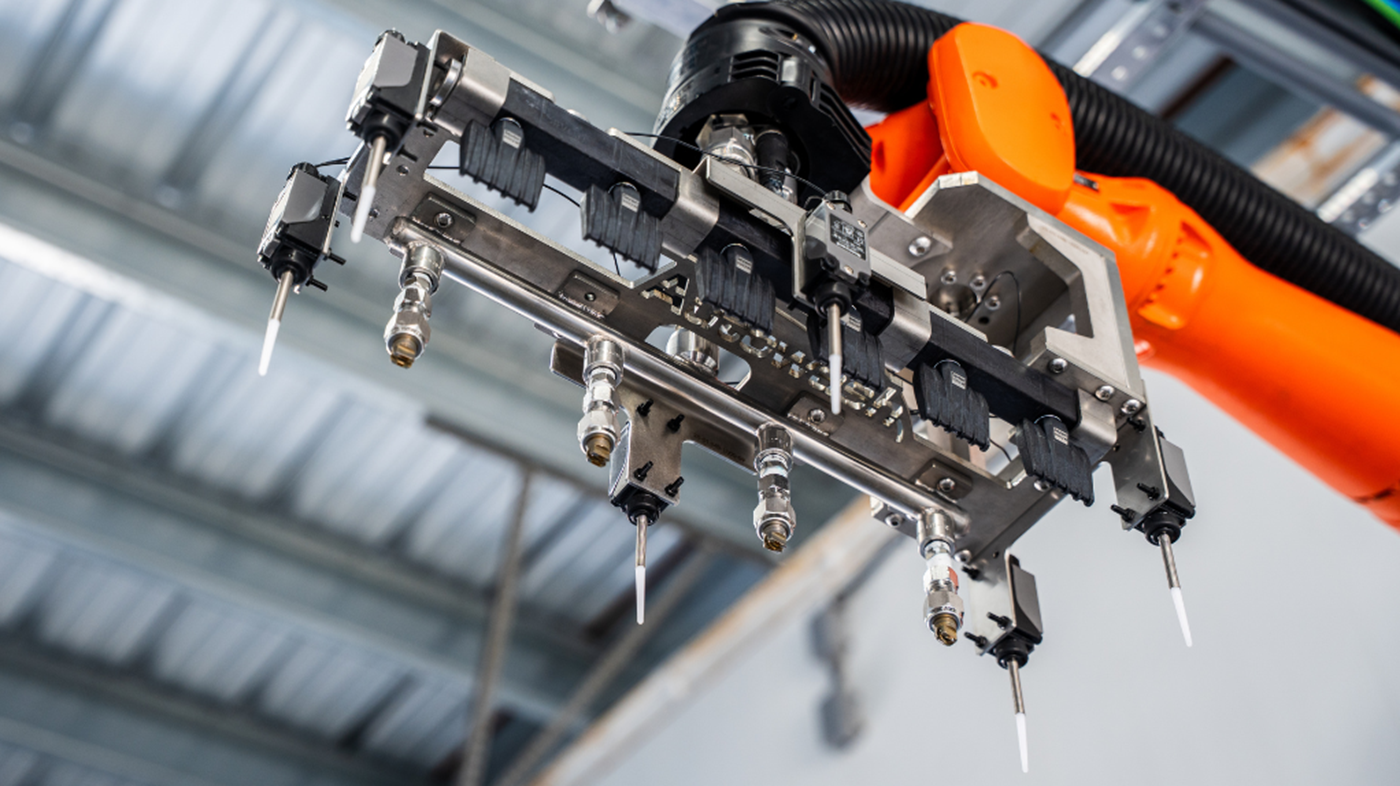
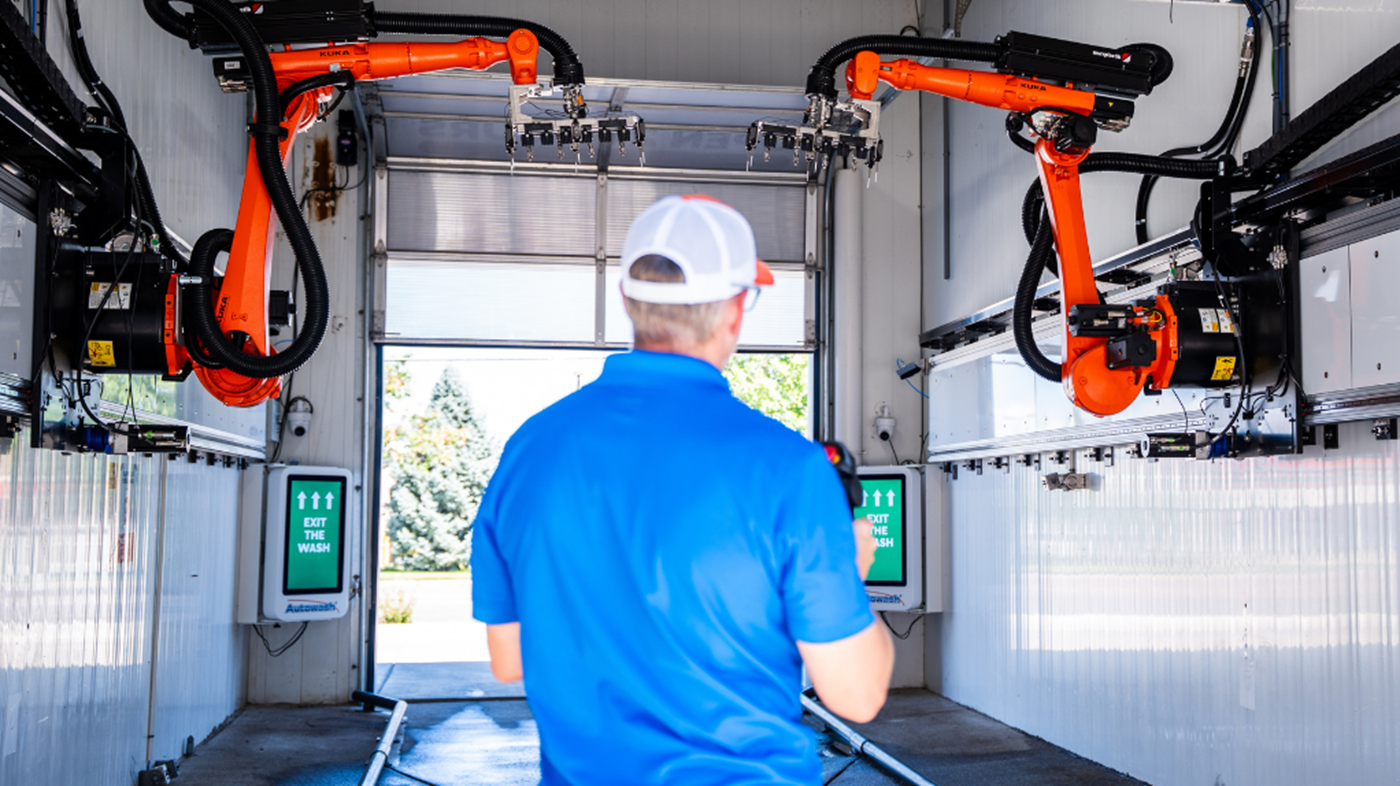
The six-axis robots are mounted on low-profile, linear wall-rail systems that provide a seventh axis of movement, allowing them to travel the length of a vehicle and reach its front and rear. Each robot performs all necessary rinse, wash, and dry operations. To do so, robots are outfitted with end-of-arm tooling that includes both water, soap and air nozzles.
Faster, More Precise and More Efficient
After washing, the robots dry the cars with compressed-air blades rather than large blower systems that require massive amounts of electricity. In terms of time, an Autowash standard wash is now 50% faster than conventional systems, and the Dreeszens expect that speed to increase by at least another 20%. Compared to its previous record of an 8-minute wash, the company now can provide a wash in about 4 minutes.
In an average touch-free car wash, the majority of the water used ends up all over the bay walls and floor, not necessarily on the car. With this updated technology, the KUKA robots are able to be very precise and maintain a distance of about 6" to 8" away from car surfaces during high pressure passes, so there’s practically zero wasted water, soap, or air.
“During testing, we were shocked at how precise the robots and end-of-arm tooling were,” said Erin. “There was little, if any, overspray happening, so the robots aren’t really exposed to a lot of water and dirt, which allowed us to use standard KUKA robots without any added protective coverings.”
The KUKA automation is incredibly easy to use. Robot maintenance has been straightforward, the support has been excellent, and the robots have lived up to their reputation for durability and reliability.
Precise robotic motion keeps the wash tools approximately 6 to 8 inches from vehicle surfaces during high-pressure passes, helping minimize wasted water, soap, and air.
Adapting to Whatever Drives In
The system scans and maps every vehicle that enters the wash area. It doesn’t care what the vehicle type is or what accessories or attachments they have, such as luggage or ski racks, externally rear-mounted spare tires, or any other protruding objects. The Autowash system is extremely effective because of the high wash pressure together with the impingement angles of the robot heads. The robots adapt to all the variables much like a professional vehicle detailer.
The wall-mounted rail system allows each six-axis robot to travel the length of the vehicle while keeping the wash bay open and accessible.
To program the robots, the couple relied on KUKA.Sim software to model different configurations before selecting a wall-mounted robot arrangement. According to Dennis, the software simplified deployment while the robots have proven easy to maintain.
"The KUKA automation is incredibly easy to use," Dennis said. "Robot maintenance has been straightforward, the support has been excellent, and the robots have lived up to their reputation for durability and reliability."
Specialized end-of-arm tooling combines water, soap, and air nozzles, allowing the robots to perform rinse, wash, and dry operations.
“We base many of our relationships on ease of communication, responsiveness, and accessibility,” added Erin. “Most importantly, KUKA was open, receptive, and allowed us to lead the design in terms of exactly what we needed. We spoke with all the industrial robot OEMs, and KUKA provided the experience we wanted.”
Integrated control software and vision technology allow the robots to respond to each vehicle’s unique shape and features.
3D vision scans each vehicle and generates a unique model that allows the robots to adapt their paths to its shape, features, and accessories.
Building Safety Into Every Wash
The robotic wash system uses several built-in safety measures. Sensors on the end-of-arm tools stop the robots if they ever make contact with a surface, while torque monitoring prevents excessive force by automatically halting robot movement. Additional safety functions are integrated into the control software and vision systems.
From an artificial intelligence (AI) and surveillance perspective, AI-enabled monitoring provides an extra layer of safety. In addition to the 3D cameras used for robot guidance, each wash bay is equipped with surveillance cameras that monitor for people, open vehicle doors, or other obstacles that could be damaged during a wash. If an obstruction is detected, the software immediately halts system operation.
The robotic system has cut Autowash’s standard wash time from approximately eight minutes to four, with further cycle-time improvements expected.
According to Dennis, the new robotic systems have a lot fewer moving parts and thus fewer failure points, which simplifies operating them. The current conventional units have upwards of 900 parts as compared to the robot system, which has only 202 (not including the internal workings of the KUKA Cybertech).
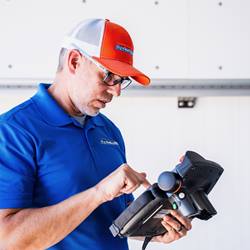
Besides providing a completely damage-free, touchless wash, Autowash automation has empowered the company’s employees who are transitioning into being technicians. They are being trained to understand the automation and the necessary vision system error monitoring involved, and Autowash sends them to KUKA for even more extensive training that includes robot preventive maintenance.
According to Erin and Dennis, KUKA's willingness to embrace their vision was just as important as the technology itself. Rather than pushing back on the concept, the KUKA team worked alongside them to bring the automated car wash to life. Routine preventive maintenance is simple, and when support is needed, the response has been timely.
"Preventive maintenance is as painless as an oil change," Erin said. "What really stood out was KUKA's openness to building this dream."
Taking the Robotic Wash to 26 Locations
With its successful first robot-automated facility that took about a year from concept to reality, the Dreeszens are moving forward and replacing the old technology in every one of their current locations with KUKA industrial robots. In doing so, they will eliminate 30-year-old technology to improve the customer experience and conserve resources, while growing the Autowash business and pioneering the future of the touchless car washing industry.